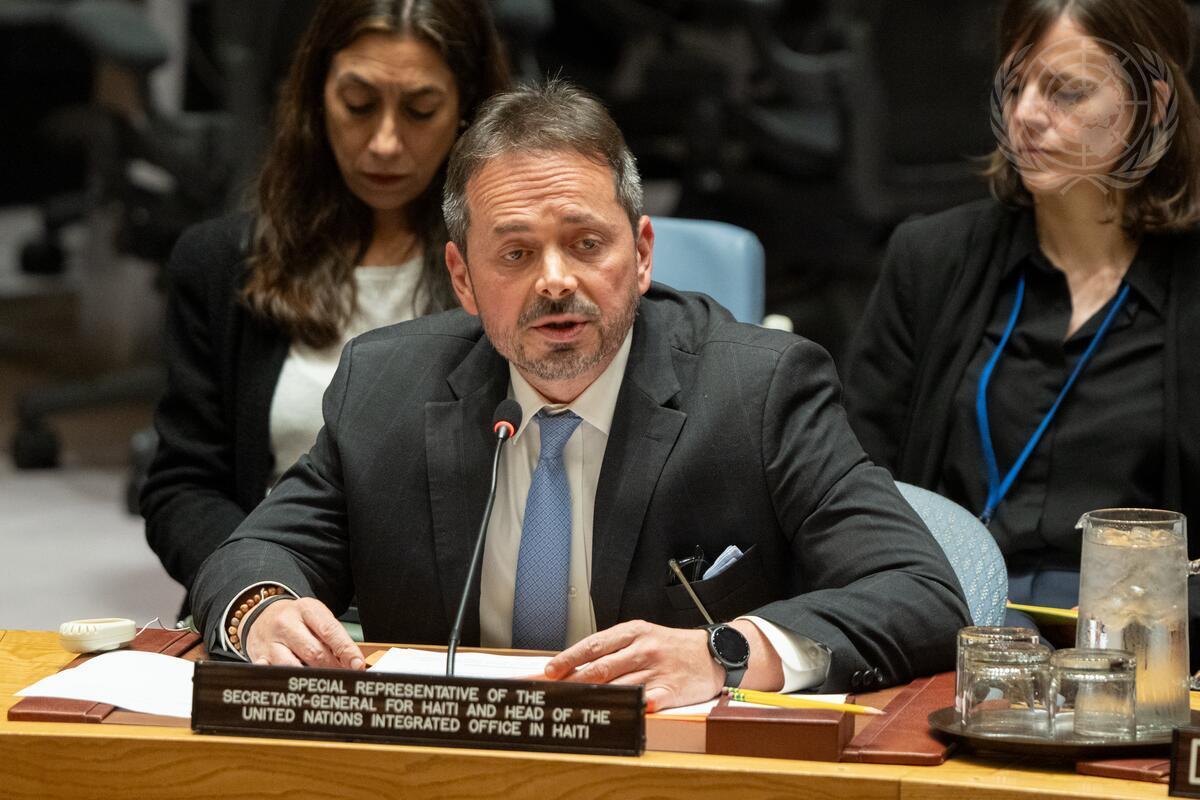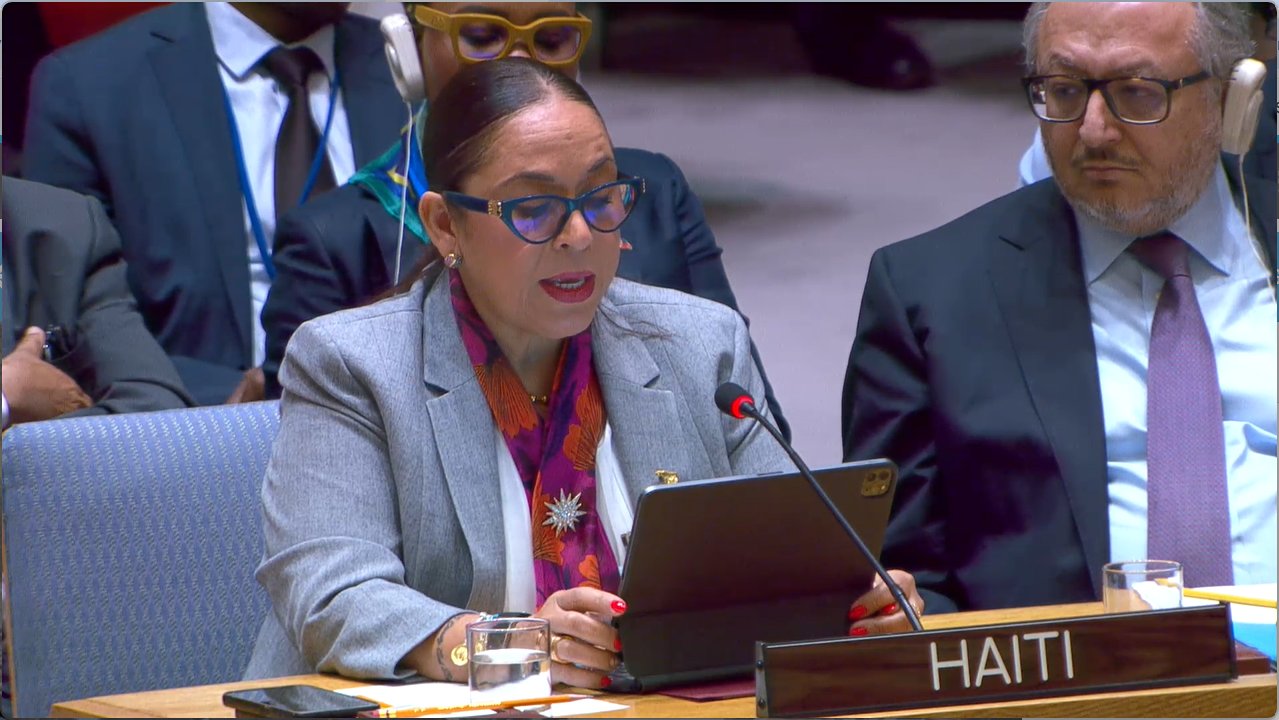



U.S. Ambassador Mike Waltz told the UN Security Council on Monday that armed gangs have turned Haiti’s capital into “a kill zone,” burn police officers alive, and force families to hand over children at gunpoint, and he pledged that “the United States stands with Haiti.”
Four days earlier, an Immigration and Customs Enforcement flight carrying 111 deported Haitians landed at Cap-Haïtien. Haitian officials say they have been told to expect roughly two such flights a week going forward. Within days, more than 350,000 Haitians in the United States are scheduled to lose Temporary Protected Status, which shields them from deportation to Haiti.
Both actions are official U.S. policy, carried out in the same week. This article sets out what the U.S. government said at the United Nations and what its immigration and enforcement agencies are doing, and lets readers weigh the two.
Waltz, the U.S. Representative to the United Nations and a former national security adviser, addressed the Council during its periodic briefing on Haiti.
He described a state that has lost control of much of its territory. Gangs, he said, “have literally turned entire neighborhoods, an entire city, the capital of Port-au-Prince, into a kill zone.” He said they “have taken over roads, ports, the main port, hospitals, prisons,” and are “exporting their crime far beyond Port-au-Prince.”

Waltz said gangs were “valorizing” their violence on social media, “celebrating it on social media sites like TikTok and Facebook and Instagram, portraying themselves as revolutionaries as they recruit children to their cause.” He said the U.S. would work “in the very near future” to stop gangs from profiting off those platforms.
He recounted attacks he described as almost too brutal to repeat. In one, he said, a police patrol’s armored vehicle became stuck in a ditch: “The gang surrounded it, lit a fire underneath it,” forcing the officers to choose between burning alive or climbing out. “They were flayed alive in the streets, pinned to the side of their burning armored vehicle to send a message.” In another, he said, gang members “kidnapped the young man’s family and held them hostage until literally he came and traded his life. They executed him in the streets.”
Waltz defined the goal of the international effort in terms that described how much of the country gangs control. “Success looks like gangs no longer control half of Haiti,” he said. “It means Haitian families can leave their homes without paying gang tolls, or in many cases, often having to sell their children to the gangs, or even provide their children at gunpoint to the gangs.”
Much of his statement was directed at building support for the Gang Suppression Force (GSF), the UN-authorized force now beginning operations in Haiti, ahead of a mandate renewal this fall. He praised the troops — “from the Mongolian commander on down, these men and women are the real deal” — and cited contributions from El Salvador, Jamaica, Chad and Sri Lanka. He backed the Haitian National Police’s “P4000” plan to add 4,000 officers by early 2027, and commended Haiti’s electoral council for steps toward the first elections in a decade.
He closed: “We will continue to work with the Haitians, with the GSF, and with other international partners to restore security, share the burden, and help the Haitian people take its country back.”

As Waltz spoke, the U.S. government was carrying out a separate set of actions affecting Haitians.
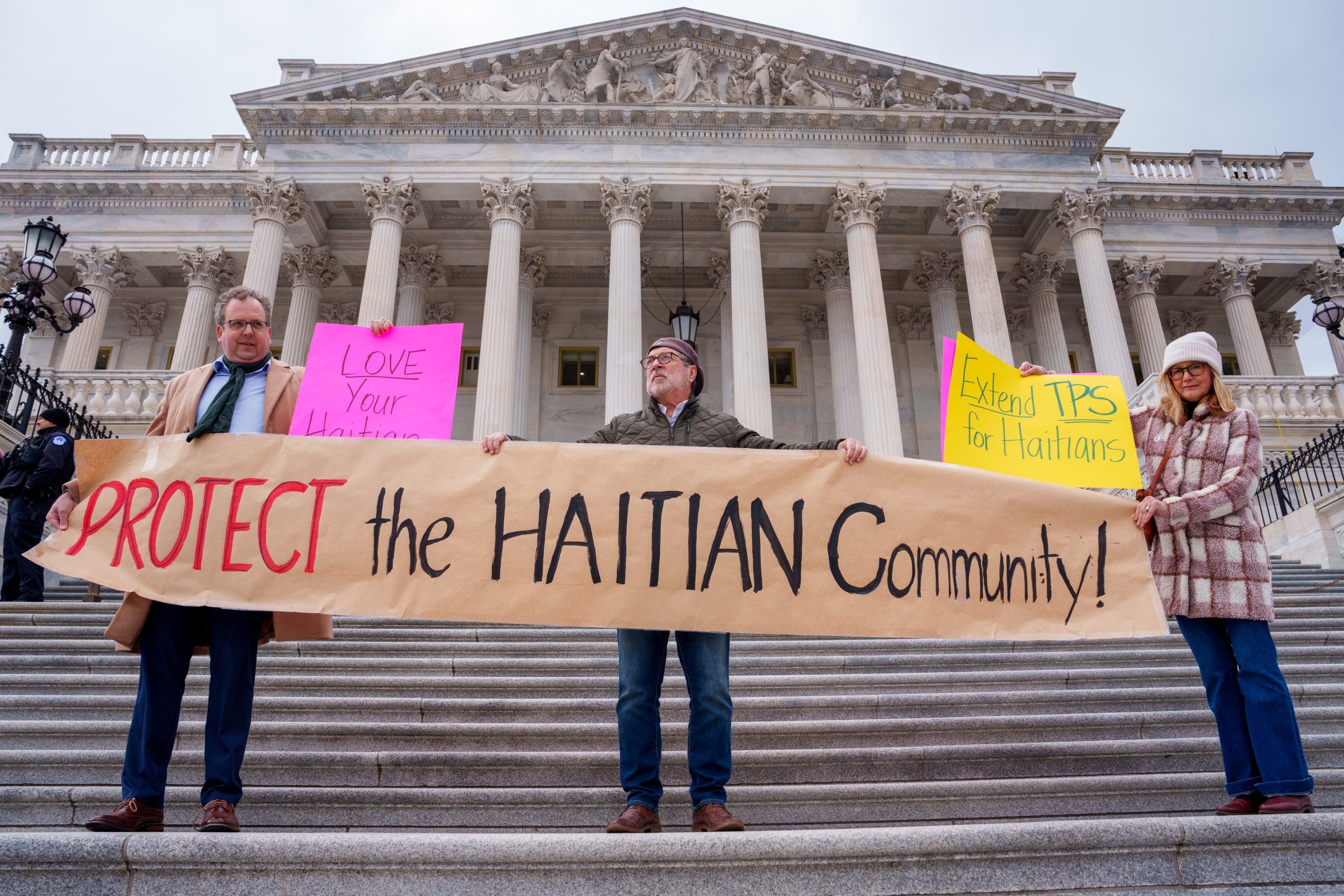
The Department of Homeland Security is ending Temporary Protected Status for Haitian nationals. Work authorization for many Haitian TPS holders is set to lapse around July 24, with status ending in the days that follow. More than 350,000 Haitians are affected — the largest single national group holding TPS in the United States. The termination follows the Supreme Court’s June ruling in Mullin v. Doe, which cleared the way for the designation to end.
Deportations to Haiti are increasing, not pausing. The ICE flight that landed on July 16 carried 111 people; according to the Miami Herald, Haitian authorities were told some aboard were TPS beneficiaries but were given no information to verify it. The plane arrived on the same day the United Nations confirmed that a gang attack in the hills above Port-au-Prince had killed at least 61 people, including 14 children. Earlier flights to Cap-Haïtien this year have included women and children removed alongside family members, according to Haiti’s National Office of Migration.
Haitian officials say the administration has notified them to expect a surge in removals. Haiti’s government has said it cannot absorb them. Katia Bonté, coordinator of the Haitian migrant-rights group GARR, told reporters: “Haiti is truly not prepared to receive these people.” Two of the country’s largest prisons remain unrebuilt after gangs emptied them in coordinated attacks in 2024, and more than half of Haiti’s population is unable to find enough to eat. Haitian officials have warned U.S. counterparts that a sharp rise in returnees would exceed the country’s capacity to provide humanitarian assistance.
Prime Minister Alix Didier Fils-Aimé, asked about the TPS decision, said: “We understand it’s temporary.”
The country conditions both messages describe
The conditions Waltz described match those cited by other officials at the same session and by the U.S. government’s own advisories.
At Monday’s briefing, Carlos Ruiz Massieu, head of the UN Integrated Office in Haiti (BINUH), told the Council that “as many as one in every two gang members today is a child.” The U.S. State Department’s travel advisory places Haiti at its highest level, warning Americans not to travel there because of kidnapping, armed violence, and civil unrest, and citing the government’s limited ability to respond. Gangs are estimated to control roughly 85 percent of Port-au-Prince, and more than 1.4 million people have been displaced by the violence.
Those are the conditions the United States cites when it asks the Security Council to support the anti-gang force. They are the same conditions immigration advocates and Haitian officials cite in objecting to the removals.
For Haitian communities in Boston, Brockton, Randolph, Miami, and elsewhere, the practical stakes are immediate. TPS holders whose status lapses in the coming days lose both their work authorization and their protection from removal to Haiti.
CTN has reported separately on the resources still available to Haitian TPS holders — including the one-year asylum exception for people who held valid TPS, family-preparedness steps, and free legal channels in Massachusetts — and on the parallel UN briefing describing the GSF’s early operations.
The U.S. government has now stated, at the Security Council, both that Haiti is a country where gangs burn police alive and recruit children by the thousands, and that it is a country to which hundreds of thousands of Haitians can be returned as their protections end. CTN will continue to report on how the two policies proceed in the weeks ahead.
https://ctninfo.com/?p=43841&preview=true
https://www.facebook.com/CaribbeanNewsMedia
This article was originally written in English. The French and Haitian Creole versions are produced using AI translation software, and errors are possible — the English version is authoritative. CTN also uses AI to convert text into audio.