

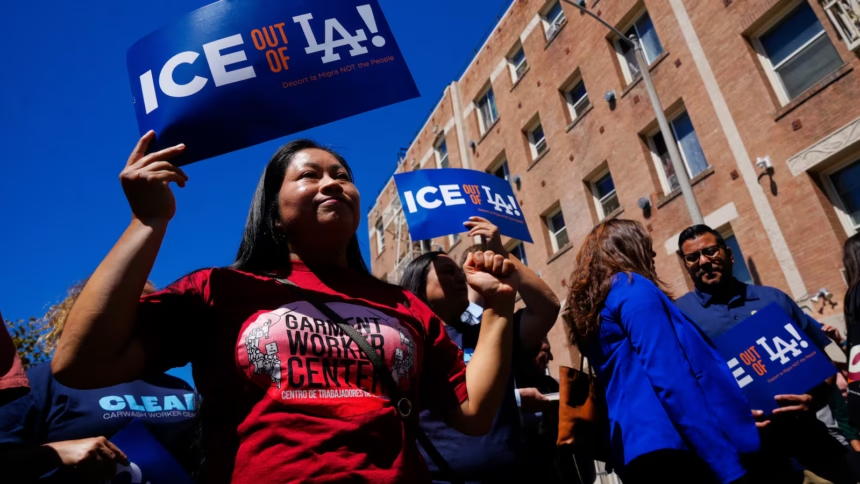
Immigrant rights organizations are not waiting for the new Congress to settle in. In the days since Democrats won back both chambers in the midterm elections, advocacy groups, mutual-aid networks and legal nonprofits have begun pressing the incoming majority to deliver on what candidates promised, greater accountability in immigration enforcement and action for undocumented immigrants, according to USC Annenberg Media, which reported on the groups’ objectives in an article by Michelle Cisneros.
For organizations that have spent the past year absorbing the impact of stepped-up enforcement, the election is less a finish line than a starting point. The mood among advocates, Annenberg Media reported, is a mix of relief and urgency: hope that a Democratic Congress can change course, tempered by the knowledge that the families they serve cannot afford to wait.
The groups’ push is grounded in what has happened on the ground since enforcement intensified in June 2025.
Within the last two years, nearly 15,000 people arrested by Immigration and Customs Enforcement in Southern California have been deported, according to a UCLA and UC Berkeley study cited by Annenberg Media, with Los Angeles recording the most arrests in the region. Nationally, nearly 66,000 people were in immigration detention as of July — and about 70 percent of them had no criminal record, according to the Transactional Records Access Clearinghouse. That noncriminal majority, Annenberg Media noted, is at odds with President Trump’s pledges to focus on removing noncitizens with criminal histories.
The issue weighed heavily on voters. About 45 percent of registered voters said immigration was one of the most important issues facing the nation, according to an Associated Press poll cited in the report.
‘These families can’t wait’
The urgency is sharpest for the volunteers who see the consequences day to day. Monarchs Del 805, a Central Coast mutual-aid group within the 805UndocuFund, has spent the past year providing families with basic needs. Its volunteers told Annenberg Media that the election results are only a beginning.
“I feel like a lot of us felt like we could breathe for a second,” said Anita Vazquez, one of the volunteers. “There’s a possibility for change, not that there is a guarantee of change, and I think that’s the hardest part for us. [It’s] like there’s no end in sight for what is happening.” Her colleague, Julie Hanson, described helping several toddlers whose parents had both been detained. “The government is creating these situations where they’re tearing families apart and providing no support, even though these children are citizens,” Hanson said. Vazquez put the stakes plainly: “These families can’t wait until something is implemented or changed.”
Across the organizations, the asks are converging on enforcement accountability, due process and a functioning legal immigration system. The Public Law Center, an Orange County nonprofit that serves people regardless of immigration status, said it hoped the election would prove a turning point. “Regardless of which party controls Congress, the low-income communities we serve need to see greater accountability in immigration enforcement, stronger due process protections, and that the wheels of lawful immigration get moving again,” the center’s chief executive, Monica Glicken, said in a statement to Annenberg Media. “We all need a system that works — one grounded in fairness, dignity, and justice rather than fear and unpredictability.”
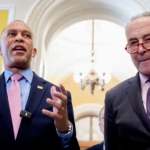
Newly elected officials have signaled they intend to fight the federal enforcement agenda. California Governor-elect Xavier Becerra used his victory speech to make the point directly, Annenberg Media reported: “The California dream is universal. It’s non-negotiable. And yes, it is undeportable.” Representative Robert Garcia — one of the Democrats expected to lead oversight of the administration in the new Congress — has likewise said he plans to push back on the federal government’s immigration policies.
A realistic timeline
Advocates’ hopes come with a dose of realism about how quickly a new majority can act. Dowell Myers, a professor at the USC Price School, told Annenberg Media it will take time before the new Congress produces meaningful changes to immigration policy, in part because next year’s federal budget is already set. One tool available to lawmakers in the meantime, he said, is the congressional hearing.
“I would think that they’re going to focus on aspects of the Trump administration where he’s really overstepped his bounds and where he has misjudged the nature of the problem and where there’s been the most publicity of abuses,” Myers said. He also pointed to the broader toll of mass enforcement, arguing it destabilizes communities well beyond the families directly affected. “It’s not good for society to lose the workers who provide needed services,” he said, suggesting that the cost of deportations to communities could itself become the subject of a hearing.
For the Haitian and Caribbean communities that CTN serves, the stakes are familiar. The same enforcement surge that these California groups are organizing against has reached immigrant families across the country, including Haitians who lost Temporary Protected Status this year. What the advocates are asking of the new Congress — accountability, due process and a path for people already here — is the agenda they intend to press from the first day of the new session, rather than waiting to see what the Democratic majority offers on its own.


https://ctninfo.com/?p=45173&preview=true
Source: USC Annenberg Media
AI Use Policy:
Some of CTN’s journalists are not native English speakers and draft their work in French or Haitian Creole. We then use AI-assisted translation software to produce the English versions, and traces of machine-generated phrasing may occasionally remain. Every article — in any language — is written, reviewed, and edited by CTN’s staff writers and editors, who remain responsible for its accuracy. CTN also uses AI to convert text into audio.