


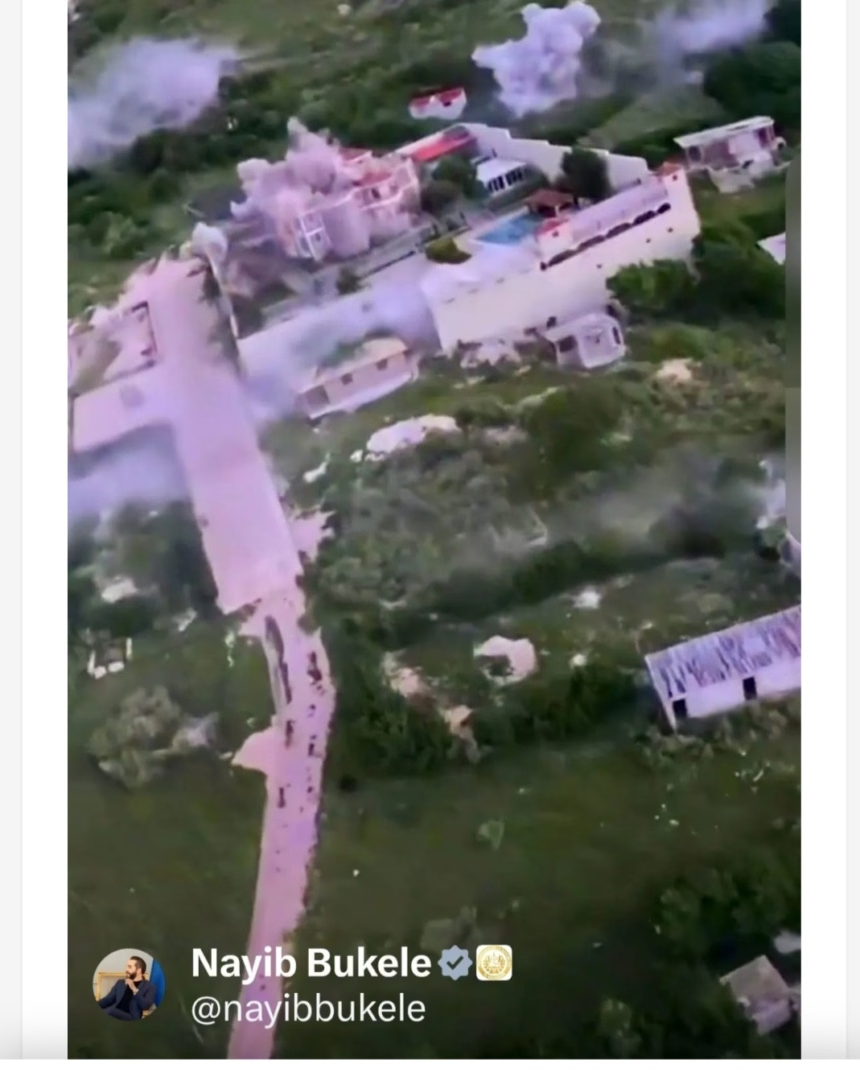
As Haiti commemorated the 223rd anniversary of the Battle of Vertières this Wednesday, November 18, Salvadoran President Nayib Bukele announced the destruction of the residence of Canaan gang leader Jeff Gwo Lwa. The Central American leader presented the operation as a “gift” to the Haitian people on this highly symbolic day, when the country celebrates the legacy of the victory of enslaved people who rose against Napoleon’s armies.
In a statement relayed on his digital platforms, the Salvadoran head of state stressed that this destruction was part of the continuity of operations conducted by his troops alongside other forces present on the ground. This new blow against criminal structures adds to a series of successes claimed by the security coalition, which has already destroyed the residence of Lanmò San Jou as well as the headquarters of the formidable “400 Mawozo” coalition, one of the most powerful and violent armed groups in the country.
The forces engaged have also retaken the Sylvio Cator stadium, long considered a strategic gang stronghold where they imposed their law, and have penetrated into the “Village de Dieu,” the fiefdom of the equally formidable “5 Segonn” gang, led by the crime boss Izo. According to observers, this incursion into one of the most emblematic strongholds of organized crime sends a strong signal regarding the determination to regain control of territories lost to armed groups.
The destruction of Jeff Gwo Lwa’s residence comes less than twenty-four hours after a major day of popular mobilization in support of the Salvadoran military and in recognition of President Bukele. On Tuesday, thousands of citizens had flooded the streets of Port-au-Prince and several provincial cities to salute the Salvadoran leader’s commitment and demand the continuation of operations against the gangs. This demonstration of popular fervor, rare in a country grappling with a deep security crisis, illustrates the hope that the Salvadoran intervention inspires among a significant segment of the population.

The timing of this announcement is not insignificant.
By choosing the day of the Vertières commemoration to announce the destruction of a gang leader’s lair, Nayib Bukele symbolically places himself in the lineage of the 1803 fighters, presenting his action as an extension of the struggle for freedom and dignity. This skillfully constructed parallel aims to consolidate his image as a liberator in the eyes of Haitians and to further legitimize the engagement of his forces in the country.
On the ground, supporters of the intervention hail tangible results and a new dynamic. The recapture of strategic sites, the destruction of criminal hideouts and the penetration into areas previously considered inaccessible demonstrate, in their view, an operational effectiveness that local forces had not been able to show. Haiti’s Minister of Justice and Public Security, Patrick Pélissier, had also traveled to San Salvador to discuss a possible extension of the mission, according to available information, a sign of the Haitian authorities’ growing confidence in their Salvadoran partners.
However, behind the enthusiasm, voices continue to rise to highlight the limits and risks of this approach. Analysts from the International Crisis Group had already warned that, without a long-term strategy or a clear exit plan, the operations could create a dangerous security vacuum. Reports also indicate deadly reprisals by gangs, which allegedly targeted civilians after discovering evidence of support for Bukele on their phones. These reprisals are a reminder that the civilian population remains the primary victim of the ongoing escalation.
On this November 18, 2026, Haiti thus celebrates Vertières in a paradoxical context: that of a nation commemorating its historic victory over colonial armies while depending, for its immediate security, on foreign forces from Central America. Bukele’s promise—that of a “gift” offered to the Haitian people—resonates as a strong symbolic gesture, but it raises a fundamental question: can a people’s liberation truly come from outside? The answer belongs to history, but also to the ability of Haitian institutions to transform these military successes into lasting peace and restored sovereignty.
https://ctninfo.com/vertieres-2026-bukele-offers-haiti-the-destruction-of-jeff-gwo-lwas-lair-as-a-gift/
https://www.facebook.com/CaribbeanNewsMedia