


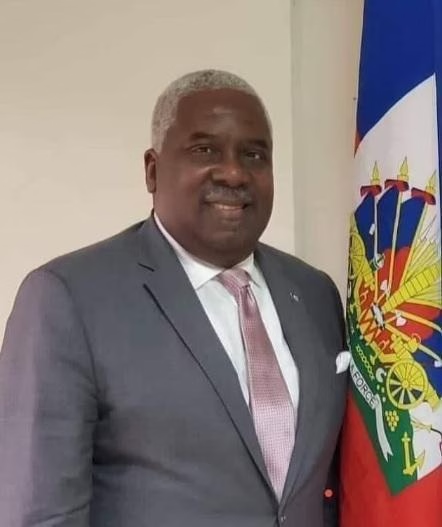
A Haitian-American pastor, Christian Emmanuel Sanon, once positioned to replace Jovenel Moïse as Haiti’s president was convicted on Wednesday of conspiring to kidnap or kill him, a verdict that adds another name to the roster of people found responsible for the 2021 assassination that threw the country into deeper turmoil. The outcome was reported by the Miami Herald, whose correspondent Jacqueline Charles has covered the case closely.
According to the Herald, a federal jury in Miami found Christian Emmanuel Sanon, 68, guilty on all counts tied to the sprawling international conspiracy that ended with Moïse’s killing on July 7, 2021.
Sanon becomes the fifth defendant convicted in the case. He faces a possible life sentence on the most serious charge and is scheduled to be sentenced at 10 a.m. on February 10.
Already in custody, Sanon asked through his lawyers to remain at the Federal Detention Center in Miami to keep doctor’s appointments, the newspaper reported.
The jury returned its decision after deliberating for just one day, and the reading of the verdict took less than 10 minutes, according to the Herald. Sanon, who had maintained his innocence across the eight-week trial, remained stoic as the counts were read, turning to his attorney Zeljka Bozanic to speak in her ear, the paper reported. His family, present throughout the proceedings, was not in the courtroom for the verdict. Afterward, the Herald reported, the trial judge, U.S. District Judge Jacqueline Becerra, went to the jury room to thank each of the 12 jurors.
Sanon’s defense signaled it would fight on. “We are of course very disappointed in the verdict, and we plan to file a motion for a new trial and an appeal,” defense lawyer Humberto Dominguez told the Herald. He added that Sanon was in “very good spirits because he’s a man of faith.”
Two competing portraits
The trial, as recounted by the Miami Herald, turned on a sharp disagreement over who Sanon really was: the mastermind of the plot, or a credulous figure used and then discarded by more ruthless partners.
Federal prosecutors cast him as the origin of the scheme. “He founded it. He came up with the idea. He gathered all the people who joined it virtually, and he was the one who set in motion the series of events that led to the assassination of President Moïse,” Assistant U.S. Attorney Jason Wu said, according to the Herald. Wu rejected the argument that Sanon was unaware of what the operation would become, telling jurors, in the paper’s account, that the claim “is akin to Steve Jobs saying he didn’t know the iPhone was going to come out of Apple in the mid-2000s.”
A second prosecutor, Assistant U.S. Attorney Sean McLaughlin, described Sanon in his closing as a man driven by ambition and facing financial ruin. “This case was about greed, arrogance, and … his lust for power, and you all saw that on full display in this trial,” McLaughlin said, as reported by the Herald. He dismissed Sanon’s self-description as a doctor, pastor, and humanitarian as a performance: “all bluster, all nonsense,” part of a con “designed to get people to believe in him … follow him, give him their money.”

Sanon’s attorneys pressed the opposite case. Bozanic argued the government had not shown her client knew the conspiracy’s true aim.
“There is no testimony or no text messages that show that Mr. Sanon had any knowledge of what the ultimate conspiracy to kidnap or kill the president would be,” she said, according to the Herald. “There was no agreement, and he did not provide any material support.” Bozanic acknowledged that Sanon had helped provide food to the Colombian former soldiers recruited through the Miami-area security firm, but said the men were providing security to him and that the gesture did not make him part of a criminal plot.
Taking the stand in his own defense, Sanon told jurors he was “shook” and “very upset” when he learned what had happened to Moïse. “It hurt,” he testified, according to the Herald, saying he had backed a constitutional reform effort by Moïse that would have allowed naturalized U.S. citizens like himself a larger role in Haitian political life.
The plot and the charges
The case the government laid out, as detailed by the Herald, described a plan in which conspirators would install Sanon as president after Moïse’s removal and then secure lucrative infrastructure contracts from him. The group hired Colombian mercenaries to carry out the assault, the paper reported. Although the plotters dropped Sanon as their presidential candidate before the attack, prosecutors said he remained in contact with group members and supplied the Colombian ex-soldiers with ballistic vests used in the raid on the president’s home near Port-au-Prince.
Prosecutors told jurors the attackers falsely identified themselves as American law enforcement, shouting “DEA operation” and “U.S. Army” as they stormed the presidential compound, according to the Herald. Wu also told the jury that the conspirators spoke in code, saying that when witnesses referred to an “arrest,” they meant a kidnapping. “None of these random men, private citizens … had any authority to arrest the president of a nation,” Wu said, as quoted by the paper.
Sanon was charged with eight crimes, the Herald reported. The three most serious — conspiring to kill or kidnap a person outside the United States, conspiring to provide material support resulting in Moïse’s death, and providing that support — each carry a maximum sentence of life in prison. The remaining counts included participating in a military expedition against Haiti, smuggling ballistic vests from the United States, and submitting false information on export forms.
A widening web
Sanon’s conviction follows those of four South Florida men found guilty earlier this year in the same courtroom. As the Miami Herald reported, that group included Antonio “Tony” Intriago and Arcángel Pretel Ortiz, owners of the security company known as CTU; James Solages, a Haitian-American handyman who served as CTU’s representative in Haiti; and Walter Veintemilla, a Broward County financier who loaned CTU $175,000 on Sanon’s behalf.
The financing, prosecutors said, also ran through Sanon’s longtime friend and business associate Frederick Bergmann, who pleaded guilty before the first trial and received a nine-year sentence for shipping 20 ballistic vests to Haiti, according to the Herald. In all, the paper reported, 45 people have been indicted in the case, some of them charged with fraudulently obtaining pandemic-era and other government loans. Three names remain redacted in court records, and among the figures discussed at trial were former FBI and DEA informants described as being in frequent contact with Sanon as the plot unfolded.
The assassination of Moïse, shot inside his home in the hills above Port-au-Prince, left a power vacuum that Haiti has yet to climb out of, as armed groups expanded their grip in the years that followed. More than five years later, the Miami prosecutions have answered some questions about how the plot was assembled on U.S. soil, even as others — including who ultimately ordered the killing — remain unresolved.
Sanon’s sentencing is set for February 10. His lawyers have said they intend to appeal.
AI Use Policy:
Some of CTN’s journalists are not native English speakers and draft their work in French or Haitian Creole. We then use AI-assisted translation software to produce the English versions, and traces of machine-generated phrasing may occasionally remain. Every article — in any language — is written, reviewed, and edited by CTN’s staff writers and editors, who remain responsible for its accuracy. CTN also uses AI to convert text into audio.
https://ctninfo.com/haitian-american…sassination-case/
Source: Miami Herald