While the eyes of Haiti were still turned toward the symbolic gestures of Vatican diplomacy and the fervor of a Mass for Peace celebrated in Rome, the grip of insecurity was tightening dramatically on the metropolitan region of Port-au-Prince, and more particularly on the Plaine du Cul-de-Sac. In just a few days, this strategic area of the capital has become the epicenter of a new outbreak of armed violence.
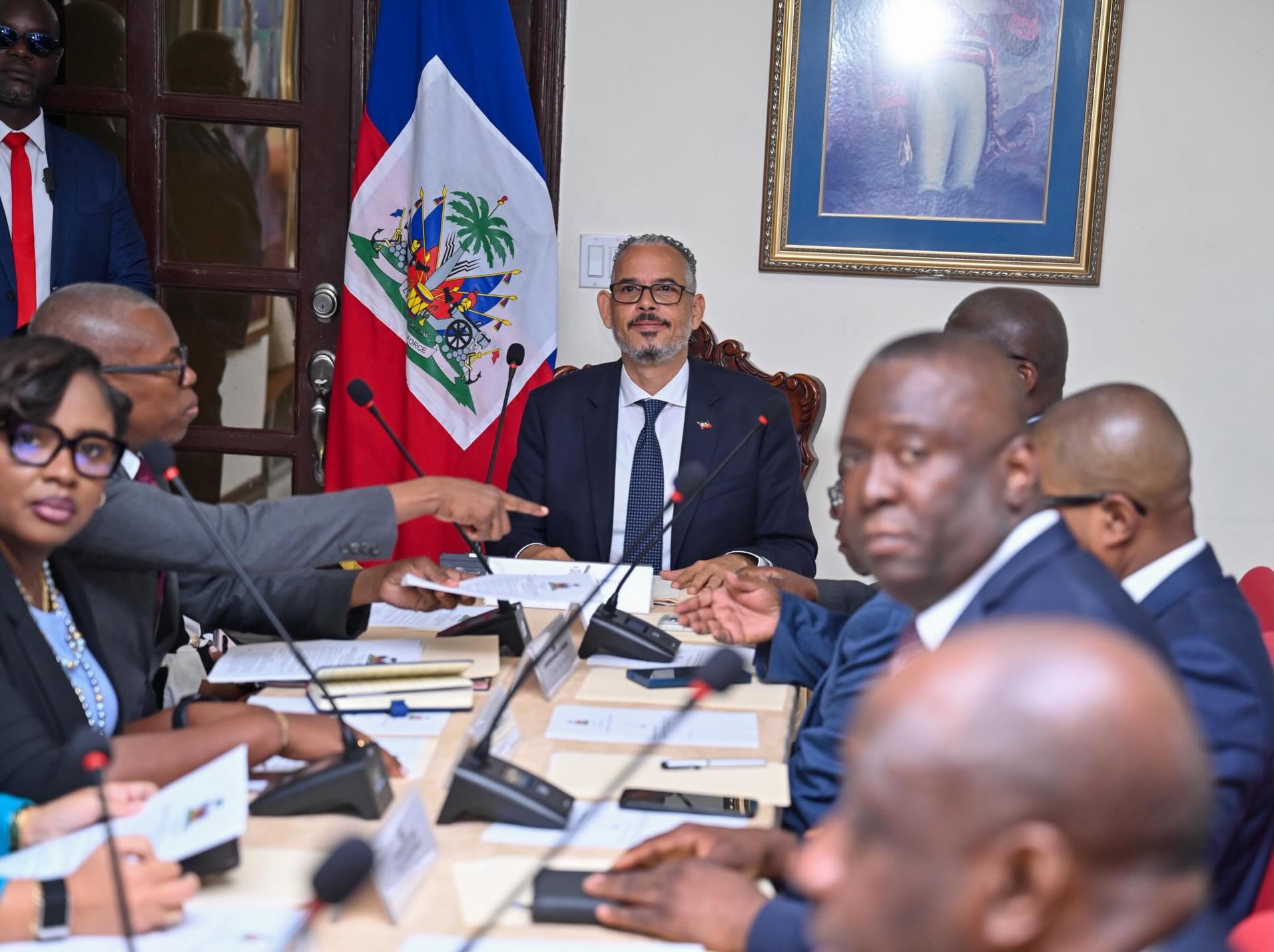
Back on national soil after an official mission to Europe – marked by a private audience with Pope Leo XIV – Prime Minister Alix Didier Fils-Aimé landed in a climate of absolute urgency. As soon as he stepped off the plane, he suspended all non-essential protocol to convene an extraordinary Council of Ministers at the diplomatic lounge of Toussaint Louverture International Airport. An unprecedented decision that reflects the gravity of the events that occurred in his absence.
In recent days, the populations of the Plaine du Cul-de-Sac, the communes of Croix-des-Bouquets and Cité Soleil, have been living a true waking nightmare. Testimonies concur: violent clashes between rival gangs, numerous civilian casualties, and the mass displacement of residents. Images are circulating on social media, showing the charred shells of trucks and families fleeing on foot, mattresses on their heads.
“Legitimate anguish” and declared firmness

The Head of Government did not evade reality. In his opening address to ministers and high-ranking officers of the Armed Forces and National Police, he spoke of a “legitimate anguish of the population,” according to a statement from the Prime Minister’s office. A rare and direct admission from a Haitian leader, recognizing that the upsurge in criminal acts has now reached an intolerable threshold.
In response, the Council of Ministers adopted measures of “absolute rigor.” Without revealing operational details, the communiqué mentions an “immediate reinforcement of operational capabilities” and a “coordinated, energetic, and sustainable response.” Clear instructions have been issued to dismantle criminal networks in this sector.
On Monday, the National Police of Haiti announced the deployment of officers from its specialized units to the Plaine du Cul-de-Sac in order to rescue and protect the population, as well as to secure areas and limit the movement of “terrorist gangs.”
The State will neither yield to fear nor intimidation
The Prime Minister hammered home a message of firmness: “The State will neither yield to fear nor intimidation,” the Prime Minister’s office communiqué states, reaffirming that all available resources would be “mobilized to render the bandits incapable of causing harm.” The goal, according to the Prime Minister’s office, is to “durably restore public peace” and “lead the country out of this crisis.”

Alongside this tough security announcement, the government calls on the population for “vigilance and national solidarity.” A delicate balance between a resurgence of authority and managing the collective psychosis spreading through peripheral neighborhoods.
The roman echo, between symbols and realities
This brutal escalation on the ground contrasts strangely with the tone of events in Rome. On Saturday, May 9, Prime Minister Alix Didier Fils-Aimé was granted an audience with Pope Leo XIV, a meeting described by the government as one of “mutual respect and consideration.” To mark the spirit of this trip, a highly symbolic gesture was made: the presentation to the Sovereign Pontiff of a jersey from the Haitian national team, which has qualified for the 2026 FIFA World Cup – a symbol of unity and pride for a beleaguered nation.
Later, after the Mass for Peace in Haiti celebrated in a Roman basilica, the Head of Government pleaded for “increased support from the international community” and relaunched the idea of an international solidarity conference. On paper, the Church and the Haitian State score diplomatic points. But in Cité Soleil and Croix-des-Bouquets, where families are counting their dead from the past week, these exchanges seem distant.
Elections, diaspora, and daily battle
Away from the spotlight, the Prime Minister did not forget to link security to a resolution of the political crisis. He reiterated his commitment to preparing “inclusive elections,” a sine qua non condition for donor countries. He also praised “the essential role of the Haitian diaspora” in the national reconstruction process, a clear appeal to the capital and skills of Haitians abroad.
However, before any elections or international conference, it is the battle for the Plaine du Cul-de-Sac that will determine the credibility of this executive branch. National roads must be reopened. Farmers must be able to return to their fields without fear of gunfire. And food trucks must be able to reach public markets without being looted.
The government promises to “continue to regularly inform the Nation.” This is no longer a time for declarations, but for results. In this decisive fight for stability, the Plaine du Cul-de-Sac is now the ultimate test of the State’s real will to retake lost ground. The Prime Minister, who has just lived through a week oscillating between Roman prestige and the powder keg of the peripheries, knows that it is on this plain that his “personal commitment to relentlessly lead this battle for collective security” will be judged.