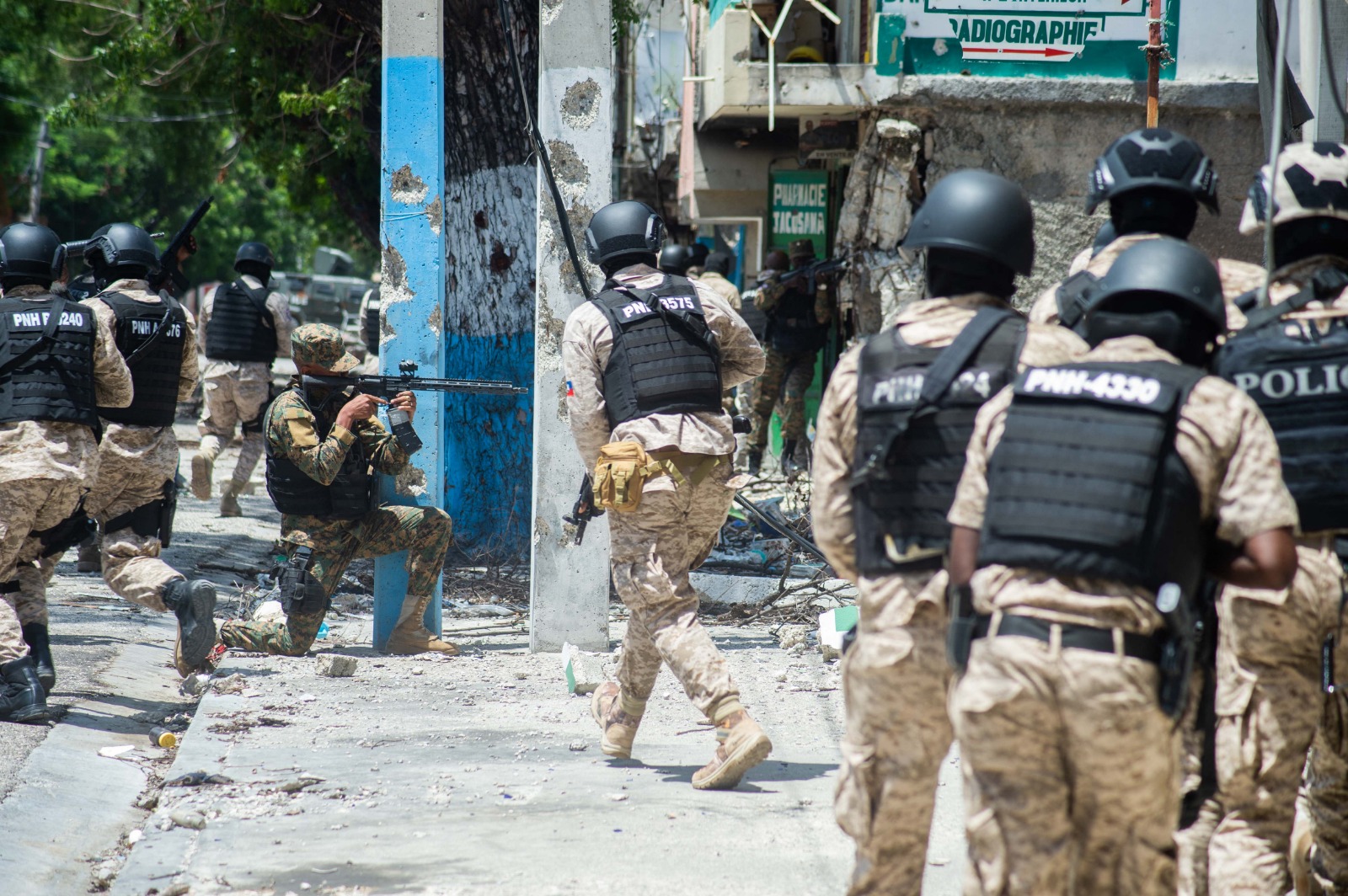


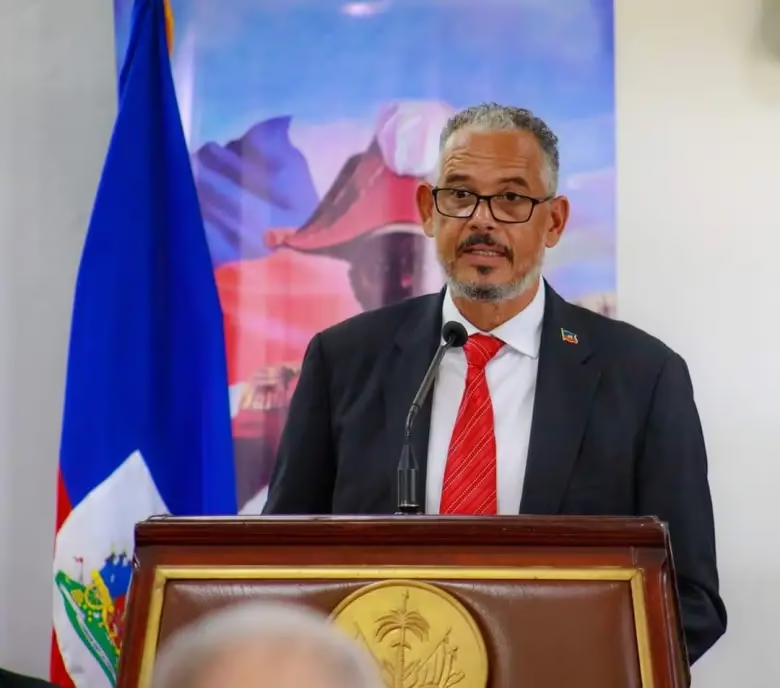
As deaths mount in Haiti and national roads remain cut off, the government of Prime Minister Alix Didier Fils-Aimé finds itself caught between the harsh criticism of organized civil society and the increasingly radical warnings of political groups. Within just a few days, two public statements – an open letter from the signatories of the National Pact for Stability and the Organization of Elections, and a declaration from the UNIR/AYITI-INI party – have highlighted a shared sentiment: the executive branch stands accused of not wanting to organize elections, of allowing security to systematically deteriorate, and of governing outside the Constitution.
On May 28, 2026, the Assembly of Signatories of the National Pact for Stability and the Organization of Elections published a scathing open letter addressed to the head of government. These signatories, who present themselves as guarantors of a political compromise meant to lead the country toward credible elections, recall having formally invited the Prime Minister to a “crucial meeting” on May 20. According to them, he issued a categorical “refusal.”
“This refusal, far from being trivial, illustrates a troubling detachment from the realities affecting our fellow citizens,” they write. For these signatories, the government is no longer simply open to criticism – it has become deaf to calls for dialogue and blind to the national emergency.
The letter does not limit itself to political controversy. It paints a grim picture of the security situation. “The security situation is now out of control,” the signatories state, citing Marchand Dessalines, Seguin, Cité Soleil, and “several other neighborhoods” where “lives are being cut short daily.”

As a symbol, the signatories cite the assassination of a doctor, owner of the Gama laboratory, described as a “competent and responsible pillar of our society.” For them, this murder is just “one of the many signs that violence is spreading unchecked.” Every citizen who falls to bullets or “into the clutches of insecurity” becomes a “tragic reminder of the government’s inability to protect life.”
The electoral dispute: 30,000, 100,000, and a “villainous decree”
The heart of the conflict lies in the organization of elections, the cornerstone of any resolution to the crisis. The text accuses the Prime Minister of wanting to impose his views against the advice of the Electoral Council, whose independence is enshrined in the amended 1987 Constitution.
The signatories note that the Electoral Council had planned a mechanism of 30,000 members to bring together the 300 registered and approved parties. However, “in Mr. Fils-Aimé’s laboratory,” this figure was allegedly inflated to 100,000 members, without consultation with the political sector. They also denounce a “villainous decree” – without naming it further – that would place the government above the law.
“We must understand at this point that Mr. Fils-Aimé’s government does not want to organize elections,” concludes the open letter from the signatories of the National Pact for Stability and the Organization of Elections.

UNIR: “Nou bouke!” – popular exasperation
On June 1, 2026, it was the turn of the political group UNIR-Haiti, led by Clarens Renois, to add its voice to the chorus of grievances. In a statement, the party denounces a “criminal-political-imported ambush” trampling the country.
The more time passes, the more Haiti seems bogged down in this trap of criminal-political-imported insecurity, the political formation of Jean Clarens Renois charges, in an even more incisive tone.
The party deplores the recent deaths of several police officers, killed or wounded by gang bullets. But beyond the traditional tribute to law enforcement, UNIR raises a troubling question: what are all these international forces in Haiti actually doing?
Mission after mission, nothing changes, it asserts.
Clarens Renois’s party makes a merciless assessment: despite 17 months of government under Alix Didier Fils-Aimé (who came to power in January 2025 after the previous cabinet resigned), security is non-existent.
Two concrete facts are put forward:
The airport remains closed (or partially functional), a symbol of the country’s isolation.
National roads remain blocked, paralyzing the economy and the free movement of citizens.
UNIR also denounces contracts signed with mercenary companies worth millions of dollars. “The drones fall, the bandits stand firmer.” In other words, the technological and foreign resources deployed have not reversed the balance of power on the ground. Entire territories remain under gang control.
UNIR calls on the people to take responsibility
UNIR’s message goes beyond simple criticism of the government. It speaks directly to the population, with a phrase that has become a rallying cry: “Nou bouke!” (We are exhausted!). The party believes the international community must stop “making a mockery of Haiti”: a country so close to the United States, neighboring the Dominican Republic, at the heart of the Caribbean, cannot simply be handed over to national and international criminal forces.
Our eyes are open! We are not children! We understand what is happening! The conclusion is almost insurrectionary in its wording, though non-violent: “Haitian people: it is time, it is high time for us to take responsibility!”