


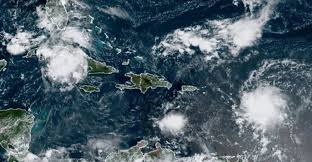
Port-au-Prince, Tuesday, June 2, 2026 – Haiti’s Hydrometeorological Unit (UHM) officially announced on Monday the start of the 2026 hurricane season in the Caribbean, the Gulf of Mexico, and the North Atlantic. It is a dreaded period in a country where each rainy season painfully highlights the flaws of an exhausted, deforested, poorly urbanized territory lacking adequate protective infrastructure.
According to a note consulted by CTN, this season, which runs from June 1 to November 30, marks the most favorable period for the formation and development of tropical systems in the Atlantic basin. The UHM emphasizes that these six months are generally characterized by the appearance of tropical depressions, tropical storms, and hurricanes, some of which may pose a direct threat to territories in the region.
While these natural phenomena worry all Caribbean nations, they take on a particularly tragic dimension in Haiti. The country accumulates vulnerabilities: massive deforestation (less than 2% of original forest cover), denuded soils that no longer retain water, drainage channels clogged with plastic waste and sediment, slums built on flood-prone areas or unstable slopes, and a road network already destroyed by years of neglect and insecurity.
The UHM is fully aware of this. In its note, it reminds that a season considered “normal” – or even “below normal” – in no way means an absence of risk for Haiti. “A single cyclone directly hitting the national territory can cause significant loss of life, flooding, landslides, and considerable damage to infrastructure and people’s livelihoods,” the institution warns.

According to forecasts available to date, the 2026 hurricane season is expected to be near normal or slightly below normal, due to the anticipated development of the El Niño phenomenon, which may limit cyclonic activity in the Atlantic. However, the UHM cautions, Atlantic Ocean surface temperatures remain slightly above average, and trade winds are weaker than normal – conditions that could favor the formation of certain tropical systems.
Numerical forecasts for 2026 indicate approximately:
8 to 14 named tropical storms
3 to 6 hurricanes
1 to 3 major hurricanes, categories 3, 4, or 5 on the Saffir-Simpson scale

But in Haiti, the danger is not limited to major hurricanes. A simple tropical storm or even a depression can be enough to devastate entire neighborhoods when gutters are clogged, rivers have not been dredged for years, and thousands of families live under rusted tin roofs clinging to steep slopes. Landslides, frequent in the south and southeast, have already killed thousands in the past, such as during Hurricane Matthew in 2016 (over 500 dead, 200,000 homes destroyed) or the floods of 2023.
Call to prepare: UHM’s instructions
Faced with this alarming picture, the UHM, in coordination with the National System for Risk and Disaster Management (SNGRD) and the Directorate General of Civil Protection (DGPC), urges the population to exercise the utmost vigilance and provides concrete instructions:
Regularly follow official weather bulletins
Identify risk zones in your area (gullies, riverbanks, unstable slopes, low-lying areas)
Prepare a family emergency plan (assembly point, evacuation routes, contacts)
Inspect and secure homes (roofs, windows, drainage systems)
Assemble an emergency kit containing drinking water, non-perishable food, essential medications, flashlights, battery-powered radio, and important documents in a waterproof bag
Strictly follow instructions issued by competent authorities in case of alert (evacuation, sheltering)
A Broad call to media and institutions
On the occasion of the opening of this hurricane season, the SNGRD, DGPC, and UHM are issuing a call to spoken, written, television, and online press, as well as to public and private institutions, local authorities, and non-governmental organizations. The goal: to strengthen collaboration, awareness, and preparedness actions throughout this period, particularly in rural areas and disadvantaged neighborhoods where access to information is limited.
The UHM, in collaboration with relevant institutions, will continue to provide permanent monitoring of weather conditions and to disseminate in a timely manner all information regarding the development of tropical systems that may pose a threat to the country.
“Prevention remains the best protection. Everyone’s preparation contributes to everyone’s safety,” the note concludes.
Finally, the World Meteorological Organization has already defined the list of names assigned to storms and hurricanes for the 2026 season, alternating alphabetically between male and female names:
Arthur, Bertha, Christobal, Dolly, Edouard, Fay, Gonzalo, Hanna, Isaias, Josephine, Kyle, Leah, Marco, Nana, Omar, Paulette, Rene, Sally, Teddy, Vicky, Wilfred.
By Marie Farah Fortuné and Darbouze Figaro