


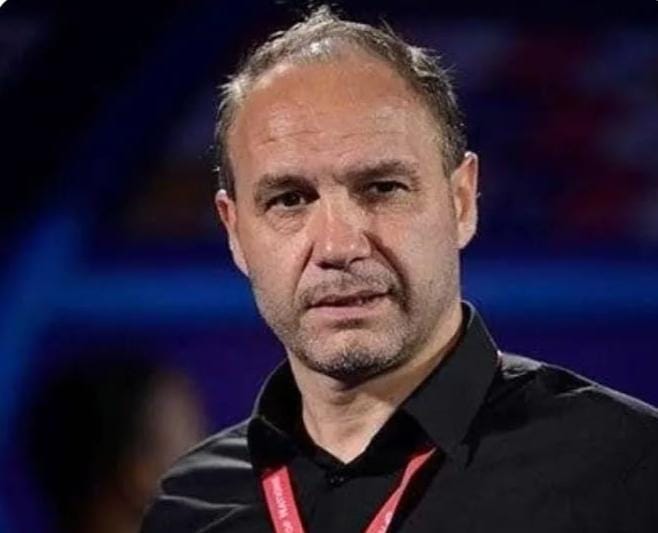
The Haitian Football Federation (FHF) officially announced on Tuesday, July 14, 2026, the end of its collaboration with national team head coach Sébastien Migné. A decision reached “by mutual agreement and amicably” that brings to a close a historic yet contrasting tenure, marked by a resounding achievement and increasingly sharp criticism.
One fact is undeniable: Sébastien Migné will remain in Haitian football history as the man who brought the country back to the global stage. The qualification for the 2026 World Cup, fifty-two years after the Grenadiers’ last appearance, will be forever etched in memory. An achievement that, on paper, fulfilled the primary mission entrusted to him by the FHF upon his appointment in March 2024: to guide Haiti to the World Cup.
However, behind this resounding success, the French technician’s tenure never won unanimous support. From the very first weeks, his style and methods divided opinion. While the World Cup qualification somewhat obscured the reservations, the team’s performance in the competition reignited tensions.
The “Grenadiers” performance at the 2026 World Cup only confirmed the doubts. Eliminated in the first round with three losses in three matches, Haiti exited the competition, having conceded eight goals while scoring only two, finishing last in the “group of death.”

Rather than galvanizing the team, the World Cup exposed the tactical flaws for which Migné was criticized. Observers pointed to his overly cautious system, particularly during the match against Brazil, and his lack of offensive ambition. The use of a 4-4-2 or 5-4-1 formation, far removed from the proven 4-2-3-1, was seen as a sign of fragility and a lack of clear tactical identity. This absence of a coherent game plan left offensive talents isolated and without solutions.
Beyond tactical choices, it was his squad management that crystallized discontent. The sidelining of certain key players, the lack of clarity around hierarchy, and a perceived absence of dialogue fueled a tense atmosphere. Sébastien Migné himself seemed to alienate some supporters and the media by dismissing criticism of his system as “low-level comments,” a stance that widened the gap between him and parts of the public.
Despite the criticism, Migné’s record cannot be reduced to his failures alone. Beyond the historic qualification, he significantly expanded the pool of available players by integrating several high-level dual-nationals competing in Europe (Jean-Kévin Duverne, Jean-Ricner Bellegarde, Wilson Isidor, and others), foundational work that constitutes a valuable legacy for the future.
However, this recruitment drive was not enough to convince the skeptics, who felt the Grenadiers’ individual talent was not adequately showcased as a collective. Football figures, such as former American striker of Haitian descent Jozy Altidore, believed that this generation had the potential to achieve much more but lacked the right leadership to guide them.
The FHF’s decision, even if presented as a mutual agreement, appears to acknowledge the deadlock. While some of Migné’s defenders point out that he achieved the objectives set, the majority of supporters—as evidenced by online petitions and social media debates—were calling for change.

Sébastien Migné’s departure, therefore, ushers in a new era. The challenge for the FHF is now immense: they must find a high-profile head coach capable of building on the foundations laid. The objective is clear: they need a manager with a strong tactical identity, experience in the CONCACAF region, and the ability to unite everyone around an ambitious project to propel this talented generation to new heights.
Migné’s departure closes a historic yet turbulent chapter in Grenadiers history. What comes next depends on the federation’s ability to find the right person to turn this qualification into a springboard—not merely a memory.
https://ctninfo.com/sebastien-migne-…a-chapter-closes/
https://www.facebook.com/CaribbeanNewsMedia
Editorial Disclaimer:
This article was originally written in English. Other language versions are produced using AI translation, and errors are possible — the English version is authoritative. CTN also uses AI to convert text into audio. Readers and listeners should rely on the English text where any discrepancy arises.