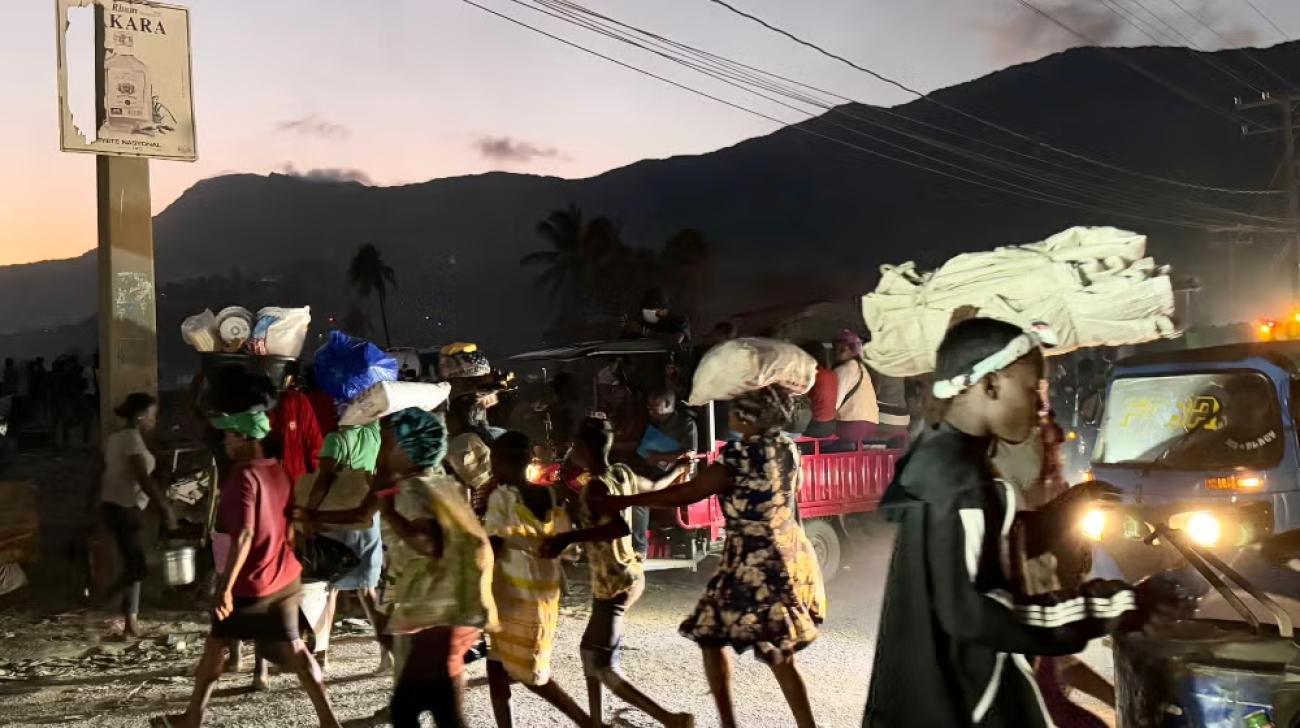


Port-au-Prince, Thursday, July 30, 2026 – In a context marked by escalating violence from armed groups and the displacement of nearly 1.5 million people, women and girls in Haiti are facing growing risks of gender-based violence (GBV).
For many survivors, access to medical care, psychosocial support, and protection services remains difficult, even dangerous, according to the United Nations Population Fund (UNFPA).
Liline, 51, experienced this firsthand, the organization explains. She and her daughter were victims of sexual and physical violence in Martissant, in the southern part of Port-au-Prince. Her daughter subsequently suffered another assault and faced serious health complications.
Today, Liline lives with her four children in a displacement camp. She lost her home and her means of livelihood after her house and merchandise were set on fire by armed men.

“Every day, I ask God what I did wrong to be paying this price,” she says, before lamenting the absence of state protection for victims of violence.
Survivors Facing Multiple Vulnerabilities
Louna, 45, is also among the victims. She was living in Pacot, a residential neighborhood of Port-au-Prince, when she was attacked. Her house was burned down, and she found herself on the street with her three children.
“To this day, I still can’t pull myself together,” she confides. The violence she suffered also had lasting consequences on her health.
These testimonies illustrate the growing vulnerability of women and girls in a country where armed group violence continues to cause mass displacement.

According to United Nations Secretary-General António Guterres, more than 20 women and girls were assaulted on average each day during the first quarter of 2026. The violence, he emphasizes, is contributing to uprooting entire families and worsening an already particularly severe humanitarian crisis.
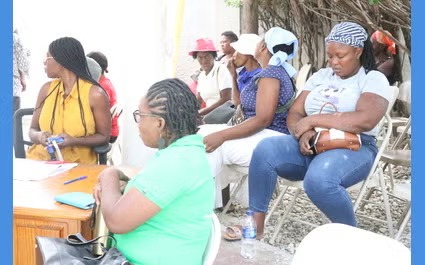
Beyond medical care and psychological support, some survivors also receive financial assistance aimed at promoting their economic autonomy.
On the medical front, needs remain significant. Some survivors still require surgical interventions and specialized follow-up care for complications related to the violence they endured.
According to data from the GBV sub-cluster, more than 8,000 cases were reported by service providers in 2025, representing a 34% increase compared to 2024.
Insecurity and forced displacement further complicate access to services. Movement restrictions and humanitarian access difficulties reduce the operational capacities of organizations working with affected populations.
In this context, the feminist organization Kay Fanm, with the support of the United Nations Population Fund, is developing mechanisms to enable survivors to obtain assistance remotely.
More Than 300 Survivors Supported
According to data provided by Kay Fanm, 308 survivors of gender-based violence received case management through the *322 helpline between January and May 2026.
They received psychosocial support, remote counseling, and referrals to medical, legal, temporary shelter, and socio-economic reintegration services.
During the same period, 324 calls related to information and referrals concerning gender-based violence were also recorded.
Calls come from several departments across the country. The West and Artibonite account for a significant share of survivor-related requests, followed by Centre and the Grand South.
Half of the calls are made directly by survivors. The others come from relatives, neighbors, friends, displacement site managers, women’s groups, or service providers seeking referrals.
The reasons for calling reveal a diversity of violence: 45% concern psychosocial violence, including psychological harassment and economic abuse; 31% involve sexual violence; 18% relate to civil violence; and 6% concern domestic violence and physical assault.
A Worsening Humanitarian Crisis
Haiti is currently experiencing one of the most severe humanitarian crises in the Western Hemisphere. According to the United Nations, 6.4 million people—more than one in two Haitians—are in need of humanitarian assistance.
Nearly 1.5 million people are displaced within the country due to violence. Furthermore, nearly 6 million people are facing severe food insecurity, with a particularly heavy impact on women and children.
By Marie Farah Fortuné and Darbouze Figaro
Credit photo: © UNFPA