

In an official memorandum dated March 23, 2026 (reference GQG/NO: M-007-26), the High Command of the Armed Forces of Haiti (FAD’H) announced the immediate cessation of all escort and close protection missions by military personnel. These missions must end within seventy-two (72) hours.
These missions have until now benefited civilian authorities, former public officials, and various personalities.
These missions have until now benefited civilian authorities, former public officials, and various personalities.
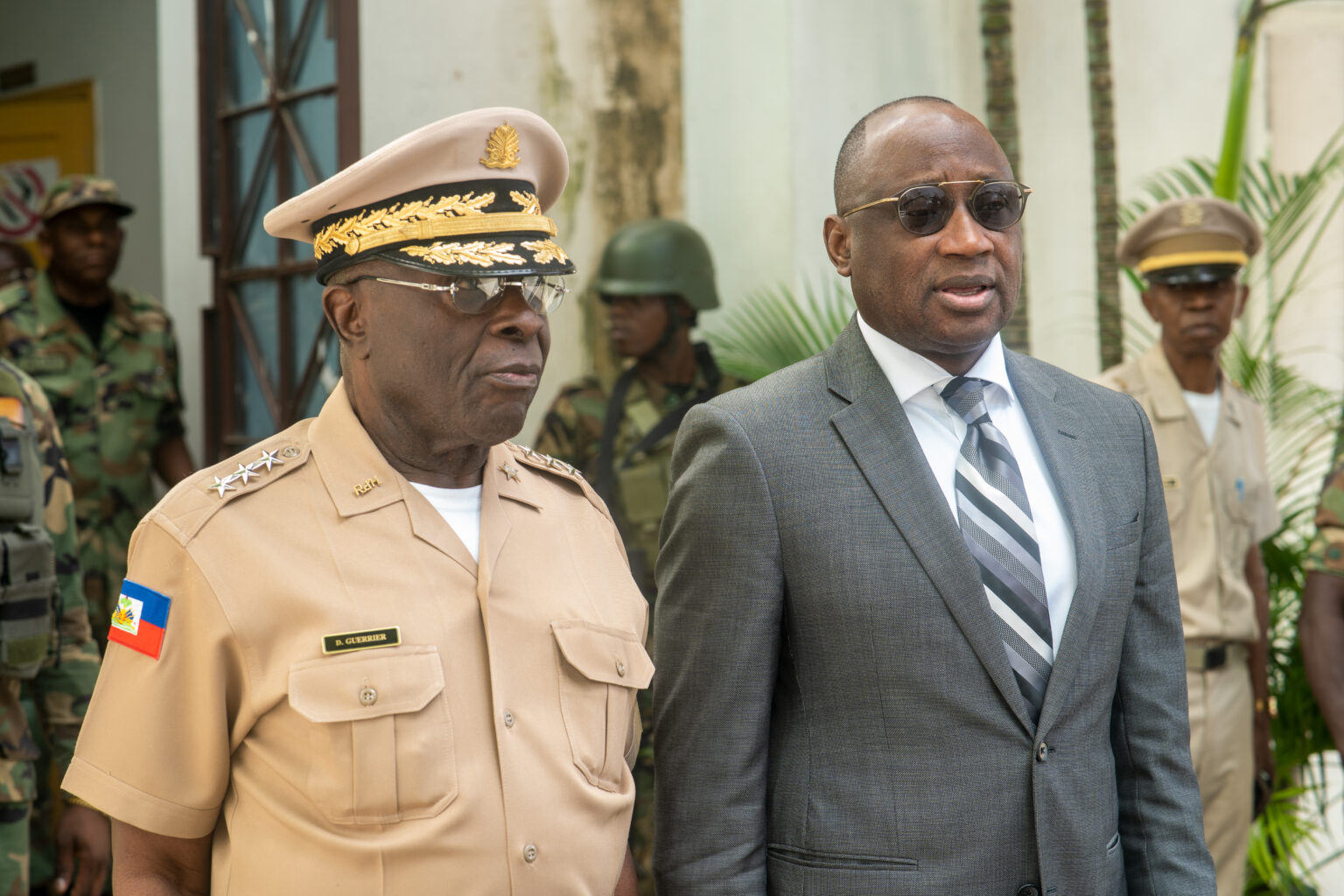
This measure follows formal instructions from the new Minister of Defense, Mario Andrésol, dated March 19, 2026. It aligns with a clear legal and institutional framework that aims to end practices considered contrary to national defense priorities. The memorandum was signed by Major General Jonas Jean, assistant to the Commander-in-Chief, General Derby Guerrier. It emphasizes that the decision aims for rigor in personnel and resource management.
The stated objective is unambiguous: to refocus the Armed Forces of Haiti on their core sovereign missions, namely the defense of national territorial integrity and the protection of the population. In a context where security needs are immense, and every soldier counts on the ground, this direction aims to rationalize the use of defense resources.
The assignment of military personnel to protect former and current political authorities, as well as civilian figures, had sparked strong criticism within the Haitian population. Many denounced the disproportionate use of national defense resources for tasks deemed non-priority, even clientelist.
This feeling grew stronger, especially as armed gangs, well-organized and well-armed, took over large parts of the country. With weak institutions and rising insecurity, interim leaders kept assigning military roles to themselves, top officials, and even close friends, rather than letting the army focus on its main job.
In the streets of the capital and on social networks, people often spoke out against what they called the “privatization of the army” and the “waste of defense resources.” This move by the High Command seems to be a clear answer to these concerns.
According to sources cited by Le Nouvelliste, exactly 81 members of the Armed Forces of Haiti provided close protection for former Presidential Council members, ministers, senior officials, and other figures. These sources are close to the Ministry of Defense and the army’s general staff.
The High Command’s memorandum names several categories of beneficiaries. These include members of the former Transitional Presidential Council; the president and magistrates of the Court of Cassation; former and current ministers; the president and members of the Permanent Electoral Council (CEP); former and current directors general; and any figure currently benefitting from a military detail.
Only Prime Minister Alix Didier Fils-Aimé is exempt from this rule. No clear reason is given, but it may be because he leads the government.
All close protection mission orders will be void after the 72-hour period following the document’s signing, on March 26, 2026. This follows the High Command’s decision.
The memorandum details strict implementation. Military personnel engaged in escort or guard missions must stop all service to beneficiaries at the end of the period allowed.
Unit commanders have formal orders to ensure all personnel return to their barracks within 72 hours. Major General Jonas Jean added a threat of sanctions: “Any failure or delay will be sanctioned in accordance with general discipline regulations.”
The General Staff will supervise the immediate and secure return of weapons, ammunition, and vehicles. This measure is to prevent the loss or diversion of sensitive equipment.
The memorandum tells beneficiaries to contact the Haitian National Police (PNH) to coordinate their security with specialized units. This provision aims to protect these figures and clearly separate the roles of the army and the police, in accordance with their legal powers.
This shift aims for a clearer separation of missions. The army will focus on national defense and protecting the population. The police, through specialized units, will handle the security of people and property, including top authorities.
Army leaders say they trust political leaders to help ensure soldiers return to their bases in an orderly manner.
The announcement brought some relief to the public and observers. For many, it signals a desire to restore institutional discipline and refocus the armed forces on fundamental missions. It answers demands for transparency, resource rationalization, and respect for the Armed Forces’ constitutional missions. It remains to be seen if it will be put into effect on the ground.
https://ctninfo.com/haiti-armed-forces-end-close-protection-missions-for-civilian-authorities-over-80-soldiers-to-return-to-barracks/
https://www.facebook.com/CaribbeanNewsMedia
https://ctninfo.com/haiti-armed-forces-end-close-protection-missions-for-civilian-authorities-over-80-soldiers-to-return-to-barracks/
https://www.facebook.com/CaribbeanNewsMedia