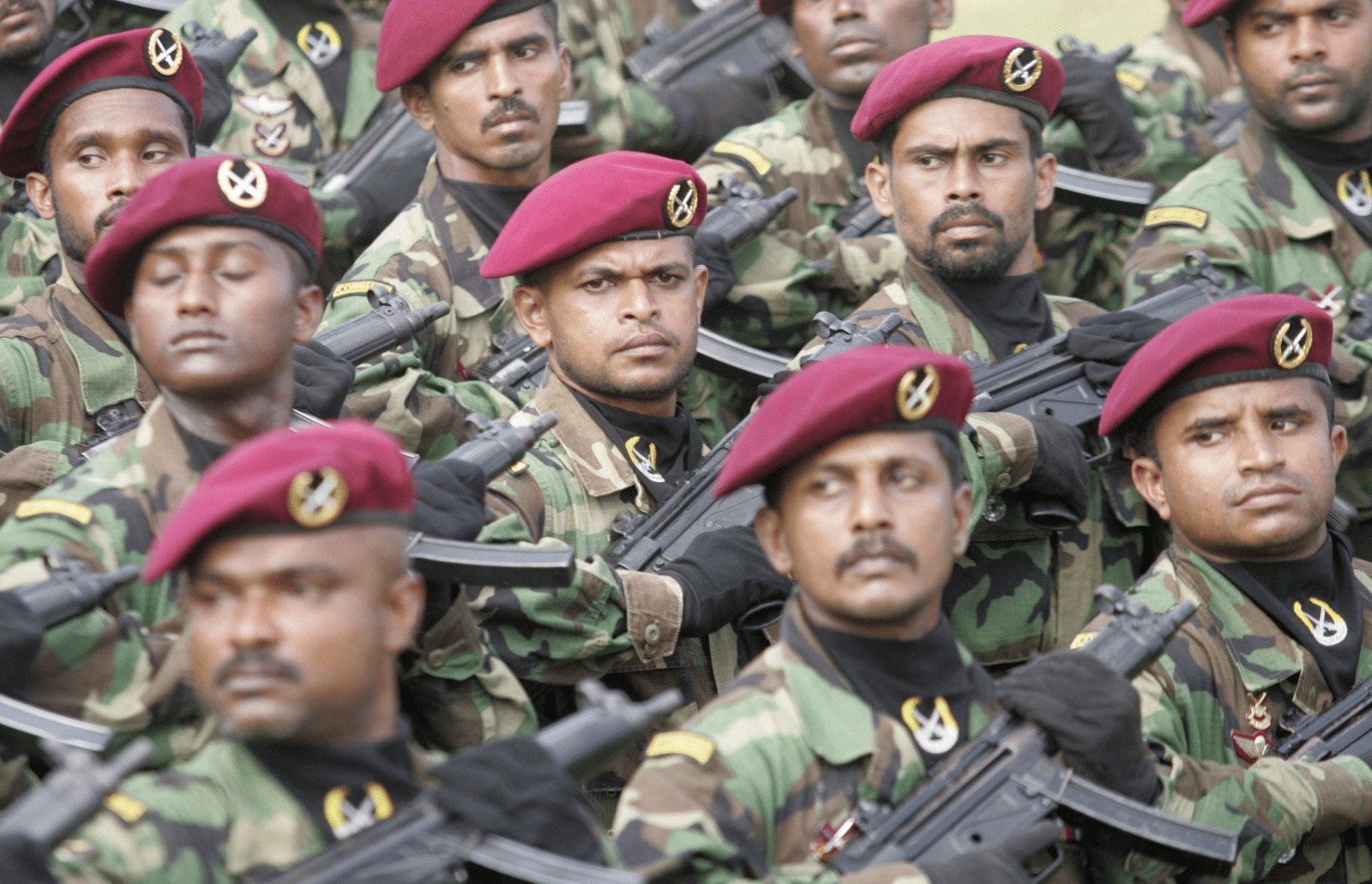
On the night of July 7 to 8, a military aircraft from Colombo landed at Toussaint Louverture International Airport, marking the arrival of 300 Sri Lankan soldiers. This deployment, reinforcing the Gang Repression Force (FRG), aims to raise the UN mission’s strength to nearly 5,500 by year’s end.
Although Haitian authorities welcome this support to address security, it also recalls previous allegations of sexual abuse and exploitation by Sri Lankan Blue Helmets during missions in Haiti from 2004 to 2017.
This arrival on July 8 comes as international diplomacy intensifies around Haiti. U.S. Ambassador to the U.N. Mike Waltz visited Port-au-Prince July 8-9. A government source said this trip aims to secure renewal of the FRG mandate, which expires at the end of September.
“He wanted to see the situation firsthand. He had productive talks with us. We told him what we lack on the ground,” a government source told Le Nouvelliste.
The U.S. Mission to the UN stated the diplomat focused on ongoing results ahead of the Security Council’s mandate renewal for the anti-gang force. The ambassador welcomed progress, saying, “Haiti’s future is moving in the right direction” thanks to the FRG deployment.
A Necessary Military Reinforcement, but a Tenacious Memory
According to the government source, the 300 Sri Lankan officers are only the first wave. “The soldiers will keep arriving until we reach 5,500. Next month, Ivorians will arrive. Equipment will be delivered in the coming days,” the source said, confirming the force’s rapid build-up.
An FRG spokesperson said six countries are now represented: El Salvador, Guatemala, Jamaica, Mongolia, Sri Lanka, and Chad. Other contingents from various continents are expected in the coming weeks.
This deployment meets a dire need. The FRG, created by a UN Security Council resolution to support Haiti’s National Police, must secure strategic infrastructure, restore order, and prepare for credible elections. In his first Security Council report, FRG Special Representative Jack Christofides reaffirmed a strategy based on measurable objectives, with a gradual transfer of responsibilities to Haitian institutions by 2028.
For many human rights organizations in Haiti and abroad, the arrival of Sri Lankan soldiers raises questions related to memory and accountability.
The Ghosts of the Past: Systematically Documented Sexual Abuse
Between 2004 and 2017, the UN Stabilization Mission in Haiti (MINUSTAH) was marred by several sexual misconduct scandals involving Blue Helmets, notably Sri Lankans. Reports from Human Rights Watch and the UN Office for the Coordination of Humanitarian Affairs cite dozens of exploitation and abuse cases, including some involving minors, in Cité Soleil, Port-au-Prince, and northern provinces.
These abuses took various forms, including sexual harassment in exchange for basic necessities such as food and medicine, and gang rapes during peacekeeping operations. In 2007, an internal UN investigation reported that 114 Sri Lankan soldiers had been implicated in allegations of sexual abuse, resulting in the repatriation of an entire battalion. Activists considered the global organization’s response insufficient, with few prosecutions and limited accountability for accused personnel. Several groups now call for assurances with the latest deployment.
A Deteriorating Security Situation: The Kenscoff Massacre
The security situation prompting this reinforcement is supported by recent events. During the arrival of the Sri Lankan aircraft and the conclusion of Mike Waltz’s visit, armed groups continued their operations in multiple regions. On Wednesday, July 8, an attack occurred in the commune of Kenscoff. According to initial information from local authorities, several individuals died, and homes were burned in this agricultural commune, which has experienced frequent gang violence for over 18 months. Armed individuals engaged in actions in the locality of Robin, near the center of Kenscoff, during the night from Tuesday, July 7, to Wednesday, July 8.
Eyewitnesses report that armed men appeared early in the evening, firing on civilians and then setting houses and businesses ablaze.
This attack in Kenscoff reflects ongoing efforts by gang coalitions, including “Viv Ansanm,” that have attempted to expand their activities beyond central neighborhoods of Port-au-Prince into peri-urban and rural zones, presenting additional challenges to local law enforcement.
At the same time, the FRG, which has recently stepped up patrols in the capital, has yet to announce whether it will help secure Kenscoff. This event highlights Haiti’s central dilemma: amid gang violence, military reinforcements may be necessary. However, recent history shows foreign troops, though deemed indispensable by some, heighten the risk of human rights abuses unless command and justice systems are robust.
Amid all this, Special Representative Christofides has stated that this will be a “different mission,” with increased participation from the Haitian police and strengthened oversight of participating contingents. The arrival of 300 Sri Lankan soldiers is seen as an explicit indication of the international community’s involvement and as a reminder of the importance of considering historical context in decision-making in Haiti.
#image_title
Be keep up! Get the latest breaking news delivered straight to your inbox.
📰 Never Miss a Story
Stay informed with breaking news from Haiti, the Caribbean, the United States,
Canada, and around the world. Join thousands of readers who trust CTN every day.