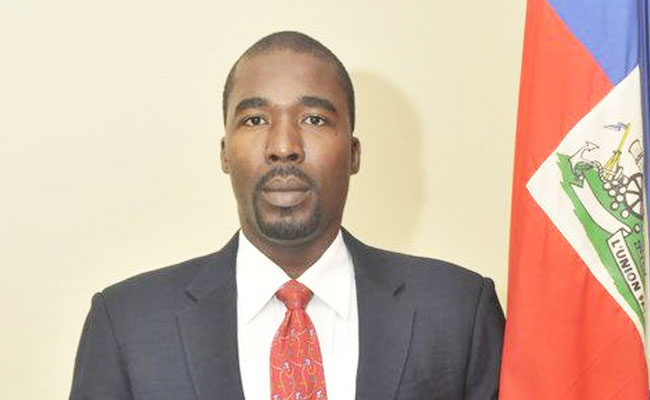


Former Haitian representative Arnel Bélizaire was apprehended on Saturday, March 14, 2026, by the Central Directorate of the Judicial Police (DCPJ) at a hotel in Pétion-Ville. This latest arrest adds to a long history of legal troubles that have marked his career for over three decades and comes at a particularly sensitive time.
A wanted notice had been issued for the former Delmas/Tabarre deputy on February 5, accusing him of financing terrorism, conspiring against state security, criminal association, and money laundering. His arrest followed just two days after he submitted his political party’s registration documents to the Provisional Electoral Council (CEP) for the upcoming elections.
An arrest that recalls that of 2019
This arrest recalls a similar incident just over six years ago, when on the night of November 29–30, 2019, Bélizaire was arrested in Jacmel with his brother, Clermont Bélizaire, and six others: Jean Pierre Fleure, Pierre Killick Cémélus, Joanel Paul, Garry Phillemond, Mackenton Estoril, and Roberson Harry Joanis.
During that operation, authorities seized a significant cache of weapons, ammunition, cash, and communication equipment. Bélizaire was transferred by helicopter to Port-au-Prince on November 30 and questioned by the DCPJ on December 4. The charges then included conspiracy against the internal security of the State, the US Embassy, and Brasserie la Couronne for threatening these institutions.
Between 1995 and 2011, Bélizaire was arrested multiple times, notably on October 27, 2011, while returning from a parliamentary mission in France. This incident drew criticism from his associates and fellow deputies, who deemed the arrest illegal and unconstitutional due to his parliamentary immunity.
International sanctions
The US State Department designated Bélizaire under Section 7031(c) of its appropriations act for significant corrupt acts during his time as deputy, making him and his immediate family generally ineligible for entry into the United States.
According to the State Department, Bélizaire abused his position by interfering in Haitian governmental processes, contributing to instability and hindering democratic governance. Canada sanctioned him as well for his alleged support of armed gangs and for corruption.
Known for his resilience and political comebacks despite a lengthy legal record, Bélizaire now faces a major judicial challenge amid a national and international focus on fighting insecurity and corruption.
It remains to be seen whether this latest arrest marks a turning point in Bélizaire’s long legal history, or whether he will again evade the legal net that has pursued him for over 30 years.