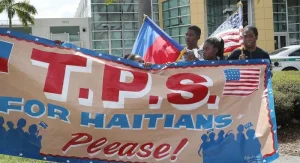



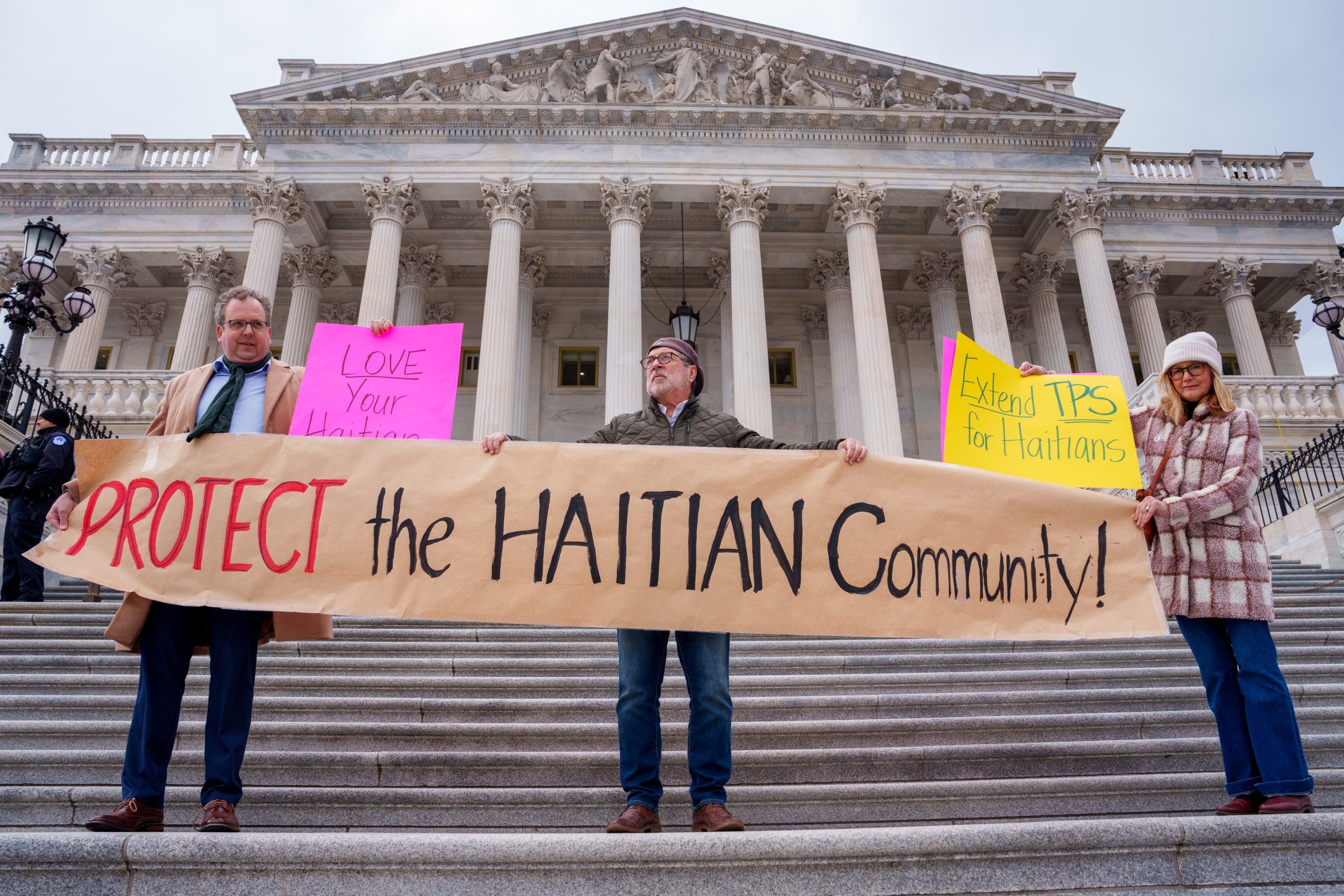
The U.S Court of Appeals for the District of Columbia Circuit placed the Haiti Temporary Protected Status lawsuit on hold on Tuesday.
In a one-page order, the court confirmed that the case now belongs entirely to the Supreme Court of the United States. The fate of nearly 353,000 Haitians living and working in this country will be decided there.
The order, filed March 31 in Miot v. Trump, No. 26-5050, directs both sides to wait. The appeals court is not dismissing the case. It is simply a matter of stepping aside until the nation’s highest court issues its ruling.
The road to the Supreme Court began on November 28, 2025. On that day, the Trump administration announced it would terminate Haiti’s TPS designation, effective February 3, 2026. The Department of Homeland Security, led by Secretary Kristi Noem, concluded that Haiti no longer met the program’s legal conditions. Plaintiffs and a coalition of state attorneys general immediately challenged this, saying the determination was factually unsupported and legally flawed.
One day before the termination was set to take effect, U.S. District Judge Ana C. Reyes of the District of Columbia issued an order blocking it. Judge Reyes found it substantially likely that the administration’s decision violated the Administrative Procedure Act, which governs how federal agencies must conduct and justify their decisions, and potentially the Constitution’s equal protection clause. Her order also cited DHS’s failure to properly consult with other federal agencies before announcing the termination — a procedural step required by law.
In plain terms, the judge found that the government appeared to have broken its own rules when it ended Haiti’s TPS. As a result, she stopped the termination from taking effect while the legal fight continued.
That order maintained TPS protections and work authorization for Haitian holders. The government immediately pushed back.
The Administration’s Losing Streak in Lower Courts
On February 6, the Trump administration appealed to the D.C. Circuit, asking the court to override Judge Reyes’s order and allow the termination to proceed even as the underlying lawsuit moved forward. However, on March 6, a divided three-judge panel of the appeals court, by a 2-1 vote, refused to lift the lower court’s block, leaving it in place.
The two-judge majority found that the government offered only vague, generalized claims of harm from being held in contempt of court. This, they ruled, fell short of the legal standard to suspend a lower court ruling pending appeal. The majority noted that the plaintiffs faced concrete and severe consequences: loss of legal status, threat of detention and deportation, and return to a country the U.S. State Department classifies as Level 4—the highest risk designation—under “Do Not Travel.”
Judge Walker dissented, arguing the government should win based on prior Supreme Court intervention in similar Venezuela TPS cases.
The Supreme Court Steps In
Having lost twice, the Trump administration appealed to the Supreme Court on March 11, seeking an emergency stay — an immediate order allowing the TPS termination to proceed during ongoing litigation.
The Supreme Court declined to issue an emergency ruling. On March 16, the justices took a more significant step: they agreed to hear the case. The Court converted the administration’s request into a petition for certiorari, the formal mechanism for taking a case. The case was consolidated with a parallel TPS dispute involving Syrian nationals. Oral arguments were set for the second week of the April 2026 session.
That Supreme Court decision triggered Tuesday’s D.C. Circuit order. The justices pulled the case up to themselves before the appeals court had ruled on the merits. Now, the D.C. Circuit has no active role left to play—at least not yet. Its order places the case ‘in abeyance,’ meaning suspended or frozen, pending the Supreme Court’s decision.
Both parties have 30 days from the Supreme Court’s ruling to tell the D.C. Circuit how to proceed.
Judge Reyes’s protective order remains in effect. Haiti’s TPS status continues. Haitian TPS holders’ work authorizations, including those that have expired since 2017, are valid under the order. USCIS has issued updated I-9 guidance reflecting extended validity dates.
Based on the Supreme Court’s April argument schedule, a decision is expected in May or June 2026.
The Miot case began with five Haitian TPS holders and has now become the entire community’s main legal battle.
Massachusetts Attorney General Andrea Joy Campbell, leading a coalition of 19 state attorneys general, filed a brief at the Supreme Court urging the justices to keep protections in place. “Haitian TPS holders are essential to the fabric of our communities, contributing every day as neighbors, workers, caregivers, and leaders,” Campbell said. “Without this community, critical industries in Massachusetts, like elder care and health care, would face grave workforce shortages.”
Attorneys for the plaintiffs have argued in court filings that Haiti remains gripped by gang violence, mass displacement, disease, and political collapse — conditions that make forced return not a policy outcome but a humanitarian catastrophe. They describe a country where armed groups control large portions of the capital, and more than one million people have been driven from their homes.
The government’s position is that the TPS statute grants the Secretary of Homeland Security broad discretion to end the program. Courts should have limited power to second-guess those decisions. The government says keeping the court block is an improper judicial intrusion into executive branch powers.
The Supreme Court will decide which side prevails.