


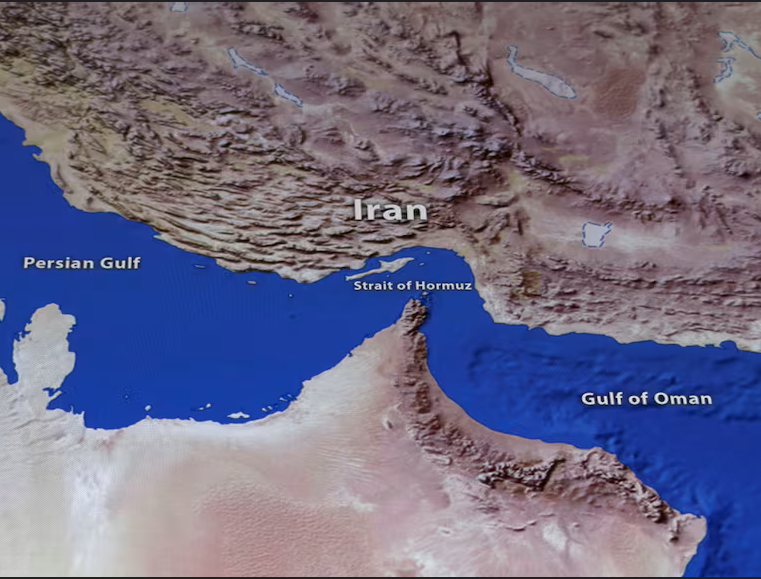
A diplomatic announcement that briefly appeared to signal a breakthrough in one of the world’s most consequential energy crises quickly dissolved into confusion Friday, as Iran declared the Strait of Hormuz open to commercial shipping while the United States said its naval blockade of Iranian ports would remain in full force.
Iranian Foreign Minister Seyed Abbas Araghchi announced on social media that passage through the strait was “declared completely open” for commercial vessels for the duration of the ceasefire between Israel and Lebanon, with ships required to use a coordinated route established by Iran’s Ports and Maritime Organization. President Donald Trump responded by thanking Tehran — then immediately clarified that the U.S. blockade was not going anywhere.
“The U.S. blockade will remain in full force, “until a peace deal is reached, according to CNBC.
A Declaration With Conditions Attached
Araghchi’s announcement left critical questions unanswered almost immediately.

Iranian media affiliated with the Islamic Revolutionary Guard Corps described the opening as limited rather than unconditional. A source close to Iran’s Supreme National Security Council told Tasnim News that commercial ships must coordinate with Iranian forces before transiting, and that vessels linked to hostile nations — or carrying cargo destined for hostile nations — would not be permitted passage. The strait would be closed again, the report warned, if the U.S. naval blockade continues.
Whether Tehran intends to charge tolls for passage also remained unresolved on Friday.
Earlier in the crisis, Iran had been charging tolls of over one million dollars per ship — a practice that became a central sticking point in negotiations between Washington and Tehran.
Financial markets reacted sharply to the announcement, regardless of the ambiguity — stocks surged, and oil prices dropped significantly on the news, though analysts noted it was not immediately clear what the declaration would mean for the mines still present in the waterway.
The Biggest Oil Supply Disruption in History
The backdrop to Friday’s announcement is a crisis without modern precedent.
Before the war, roughly one-fifth of the world’s total crude oil supply transited the Strait of Hormuz daily — the narrow waterway connecting the Persian Gulf to global energy markets. Its near-total closure since the conflict began has produced what energy analysts have described as the largest oil supply disruption in recorded history, sending prices surging past $100 per barrel in recent weeks.
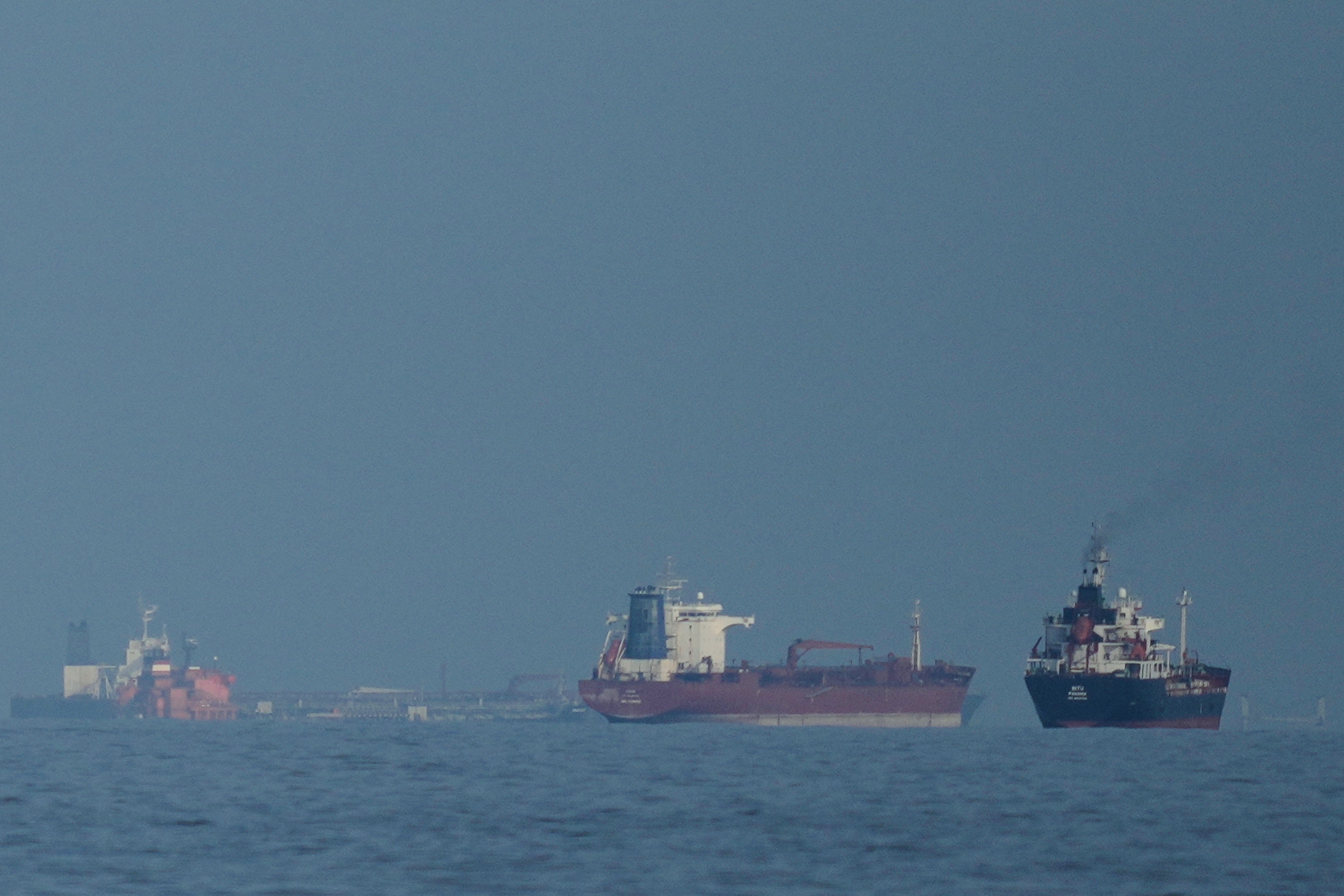
As recently as Thursday, Brent crude had climbed to nearly $100 a barrel as tanker traffic through the strait remained minimal under the U.S. naval blockade, with only a handful of commercial vessels transiting the waterway each day. On Friday, following Araghchi’s announcement, oil fell more than 10 percent to below $90 per barrel.

The Road That Led Here
The current standoff is the product of weeks of failed diplomacy. On April 8, a temporary ceasefire was agreed between the U.S. and Iran, under which Iran was to reopen the strait in exchange for a two-week pause in hostilities. But Iran began exerting control over traffic through the waterway and charging passage tolls, triggering accusations of a ceasefire violation from Washington.
Iran’s parliamentary speaker, Mohammad Bagher Ghalibaf, countered that the U.S. had itself violated the agreement by allowing Israel to continue military operations in Lebanon — a position Tehran had made explicit, arguing that the ceasefire should include Lebanon. Israeli Prime Minister Benjamin Netanyahu rejected that interpretation, asserting the ceasefire did not include Lebanon, a stance backed by Trump and Vance.
On April 11, Vice President JD Vance, accompanied by special envoy Steve Witkoff and Jared Kushner, traveled to Islamabad for direct talks with an Iranian delegation that included Foreign Minister Araghchi and parliamentary speaker Ghalibaf. The negotiations lasted more than 21 hours. On April 12, Vance left Pakistan without a deal.
U.S. officials said Iranian delegates could not agree on ending uranium enrichment, dismantling major nuclear facilities, allowing retrieval of highly enriched uranium, ending funding for Hamas, Hezbollah, and the Houthis, or fully opening the strait without charging passage tolls. Following the collapse of those talks, Trump announced a full U.S. naval blockade of Iranian ports, which took effect on April 13.
Lebanon as the Linchpin
Friday’s limited opening of the strait came directly in response to a separate development: Israel and Lebanon agreed Thursday to a 10-day ceasefire, beginning at 5 p.m. Eastern time. For Tehran, the Lebanon conflict has been inseparable from the Hormuz dispute — Hezbollah, the Lebanese militant group at the center of the Israel-Lebanon fighting, is one of Iran’s closest regional allies.
Araghchi’s announcement made the connection explicit, tying the strait’s opening directly to the Lebanon ceasefire rather than to any breakthrough in U.S.-Iran negotiations.
Trump said the leaders of Israel and Lebanon had agreed to speak directly for the first time in 34 years. He also said U.S. and Iranian negotiators could meet again this weekend in Pakistan for a second round of talks, adding that the war was “very close to over.”
What Comes Next
The two-week U.S.-Iran ceasefire is set to expire Tuesday, April 21 — meaning the window for a negotiated resolution is narrow. With the strait’s status still effectively contested, the mines still unaccounted for in the waterway, and the U.S. blockade of Iranian ports still active, the announcement from Tehran on Friday represents at best a partial and conditional step, not a resolution.
Barclays analysts had warned earlier this week, per reporting from Mettis Global, that oil prices would race past $100 per barrel in any scenario where the strait remained closed, given the limited alternatives for rerouting Persian Gulf energy exports and the constraints that continued closure would place on global spare capacity.
Whether Friday’s announcement holds — and whether it translates into actual resumed traffic through one of the world’s most critical chokepoints — remained an open question as markets closed.
https://ctninfo.com/?p=42256&preview=true
https://www.facebook.com/CaribbeanNewsMedia
Sources: CNBC; NBC News; NPR; Mettis Global; ABC7