

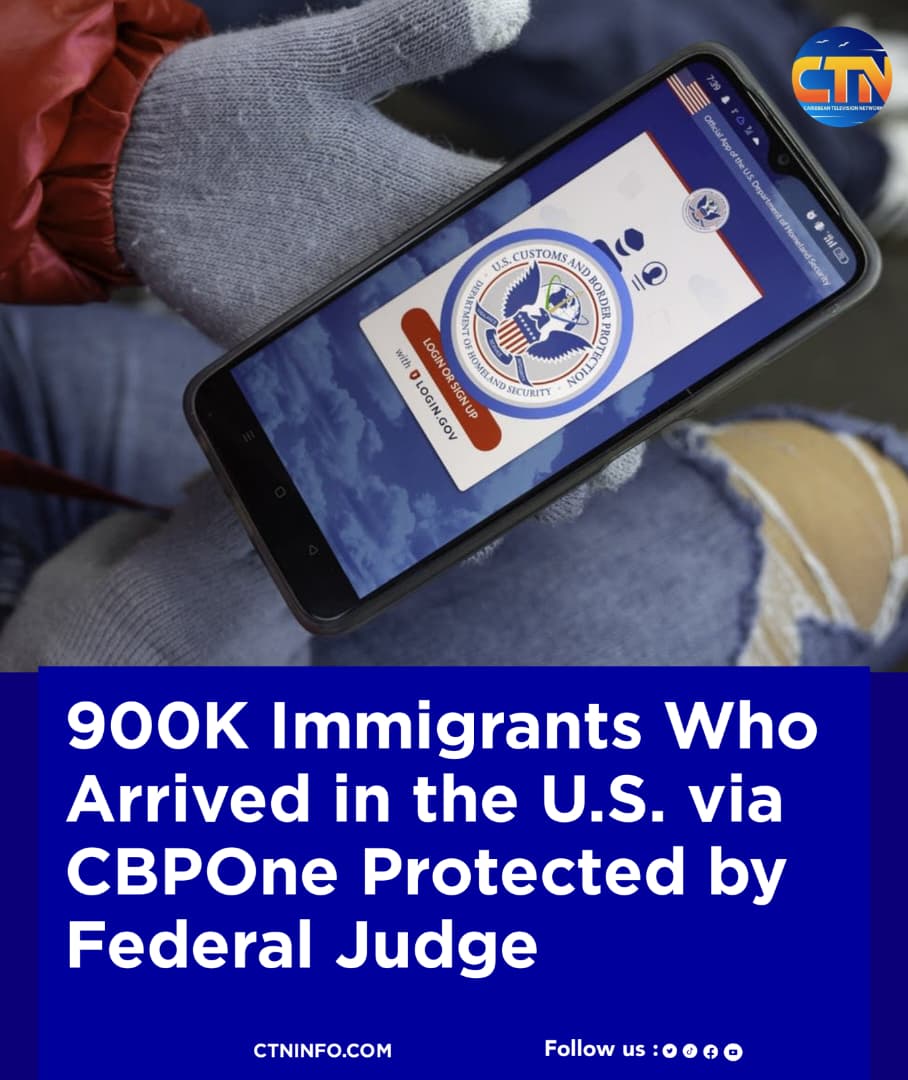
A federal judge in Massachusetts ruled on Tuesday that the Trump administration acted unlawfully when it terminated the legal status of roughly 900,000 migrants who had entered the United States through the Biden-era CBP One mobile application, ordering the government to restore their parole protections nationwide.
U.S. District Judge Allison D. Burroughs found in a 25-page memorandum and order that the Department of Homeland Security exceeded its statutory authority and violated its own regulations when it sent mass emails to CBP One users in April 2025 informing them that their parole had been revoked and that it was “time for you to leave the United States.”
“The regulations do not give the agency unfettered discretion to terminate parole,” Judge Burroughs wrote in her decision, as reported by the Boston Globe. “When Defendants terminated the impacted noncitizens’ parole without observing the process mandated by statute and by their own regulations, they took action that was ‘not in accordance with law.'”
The ruling restores parole status to all individuals nationwide who received a DHS termination notice canceling their parole. The decision also reinstates the work authorizations that were revoked alongside the parole terminations.
The CBP One app was a cornerstone of the Biden administration’s border management strategy. Beginning in January 2023, the Department of Homeland Security required many asylum seekers at the southern border to use the mobile application to schedule appointments at ports of entry. After being inspected and processed by Customs and Border Protection officers, migrants were granted humanitarian parole — a form of temporary legal status that allowed them to remain in the United States for up to two years and to obtain work authorization while they pursued asylum claims or other forms of immigration relief.
By the end of 2024, approximately 936,500 people had entered the country through CBP One appointments at border crossings with Mexico, according to the Boston Globe. The program processed nationals from multiple countries, but the largest groups included migrants from Venezuela, Cuba, Haiti, and Nicaragua.
The April 2025 Terminations
Shortly after taking office in January 2025, President Trump shut down the CBP One app and canceled all pending appointments. In early March 2025, the administration launched the CBP Home app, a replacement tool designed to encourage migrants to arrange their own departures from the country and receive, as DHS described, “cost-free travel” back to their home countries, NBC News reported.
Then, beginning on April 18, 2025, DHS sent mass emails to individuals who had entered through CBP One, notifying them that their parole was being terminated. According to the lawsuit, the emails were not addressed to any specific recipient, were not signed by any government official, and provided no individualized explanation for the termination, NBC News reported.
The emails told recipients that if they did not leave the United States within seven days, they would be “subject to potential law enforcement actions that will result in your removal from the United States — unless you have otherwise obtained a lawful basis to remain here.” Work authorizations were simultaneously revoked.
The effect was immediate and sweeping. Hundreds of thousands of people who had been living and working in the country legally were reclassified overnight as being present without authorization.
DHS defended the action at the time, telling the BBC that the Biden administration had “abused the parole authority to allow millions of illegal aliens into the US, which further fuelled the worst border crisis in US history.”

The Lawsuit
The class-action lawsuit challenging the terminations was filed in August 2025 in the U.S. District Court for the District of Massachusetts by Democracy Forward, a nonprofit legal organization, and the Massachusetts Law Reform Institute. The plaintiffs included the Venezuelan Association of Massachusetts, a Haitian woman living in Massachusetts, a Cuban woman living in Texas, and a woman from Venezuela, according to the Boston Globe and NBC News.
The plaintiffs alleged that the blanket termination of parole violated the Administrative Procedure Act because DHS had not followed the legally required process for ending each individual’s parole. Under federal regulations, the government must determine that the purposes of the parole have been served or that the reasons for granting it no longer exist before it can be terminated. Judge Burroughs found that DHS made no such determination — it simply sent a mass email revoking the status of the entire population at once.
Bloomberg Law reported that the judge specifically found that the agency failed to determine whether the purposes of parole had been accomplished prior to ending it, as required by law.
Reactions
Skye Perryman, president of Democracy Forward, said the ruling rejected an administration that had tried to erase the legal status of hundreds of thousands of people “with the click of a button.”
“Our clients followed the law: they waited, registered, were inspected, and were granted parole under the law,” Perryman said in a statement reported by multiple outlets. “The Trump administration’s effort to tear that status away overnight was unlawful and cruel — and today, the court rejected that harmful and destabilizing policy.”
Carlina Velásquez, president of the Venezuelan Association of Massachusetts, said the ruling brought relief after months of fear. “These are individuals who followed every step required of them, trusted the system, and built their lives here only to be told they had to leave everything behind,” she said, as quoted by NBC News.
Georgia Katsoulomitis, executive director of the Massachusetts Law Reform Institute, said in a statement reported by the Boston Globe that DHS had stripped families of their status “with just an email,” causing immense fear, instability, and disruption. “Their parole status and their ability to live in the United States have finally been restored,” she said.
DHS reiterated in a statement that it has the authority to revoke parole status granted under the Biden administration, according to News Directory 3. The Trump administration is expected to appeal the ruling, consistent with its pattern of challenging judicial decisions that have blocked elements of its immigration agenda.
What the Ruling Means — and What It Does Not
The ruling is significant but comes with important limitations. It restores parole status for individuals who received termination notices and remain in the United States, and it reinstates their work authorizations. However, it does not guarantee permanent residency for any of the affected individuals.
The CBP One program granted parole for up to 2 years. Some individuals who entered in 2023 may have already seen their parole expire under its original terms, regardless of the termination notices. Others who entered later in 2024 will see their two-year parole windows close in the coming months. The ruling preserves whatever time remained on their parole but does not extend the underlying two-year limit.
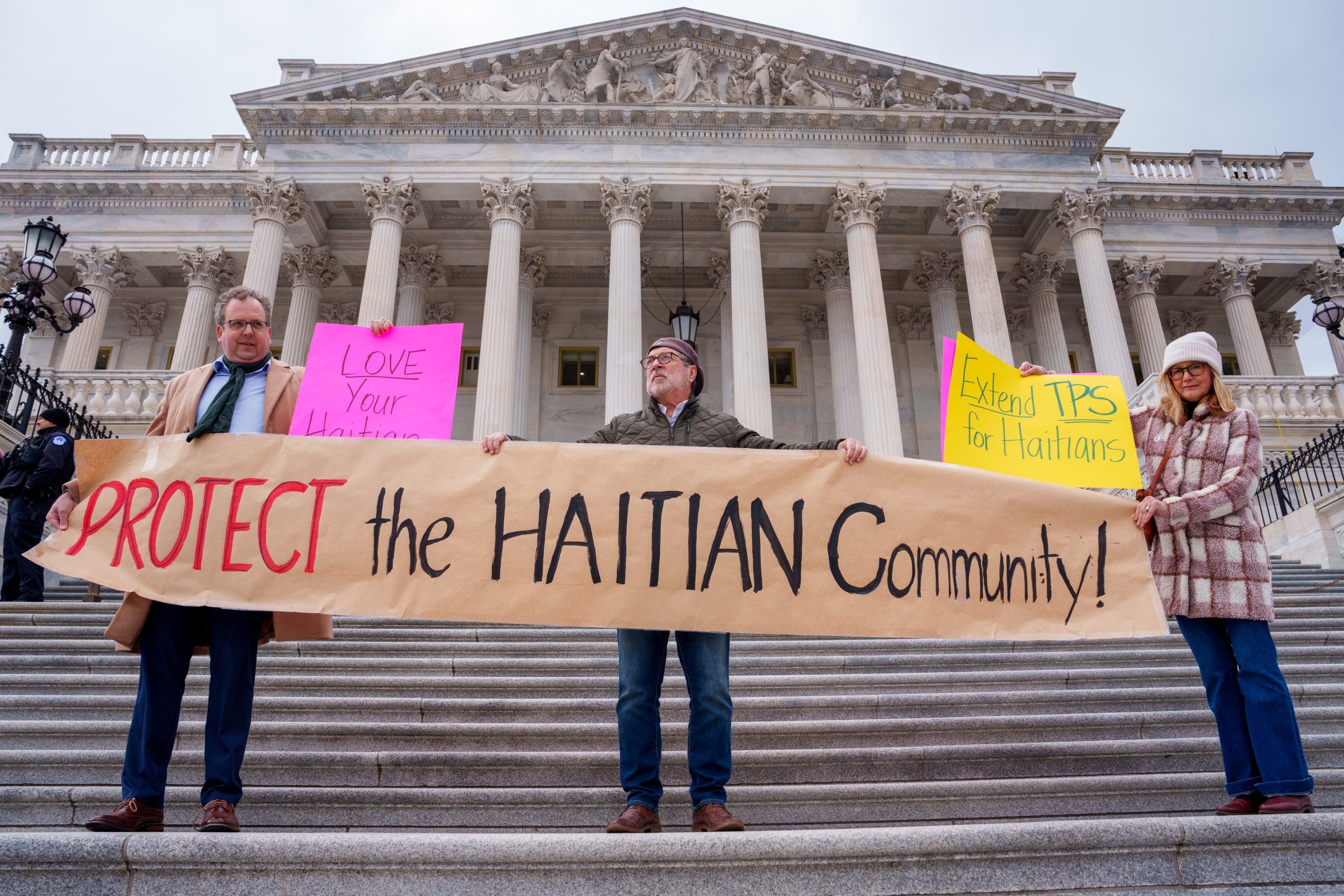
For Haitian nationals who entered through CBP One, the ruling intersects with the broader legal and legislative fight over Temporary Protected Status. Some CBP One parolees may also hold or be eligible for TPS, which is the subject of separate legal proceedings before the Supreme Court and a discharge petition in the House of Representatives. The two forms of protection are legally distinct, but for many Haitian families, they represent overlapping layers of uncertainty about their future in the United States.
The case now moves into a phase in which the Trump administration must decide whether to appeal, and, if so, on what grounds. In the meantime, the parole status of the affected population remains in effect under Judge Burroughs’ order.
https://ctninfo.com/?p=41609&preview=true
https://www.facebook.com/CaribbeanNewsMedia
Source: BBC