

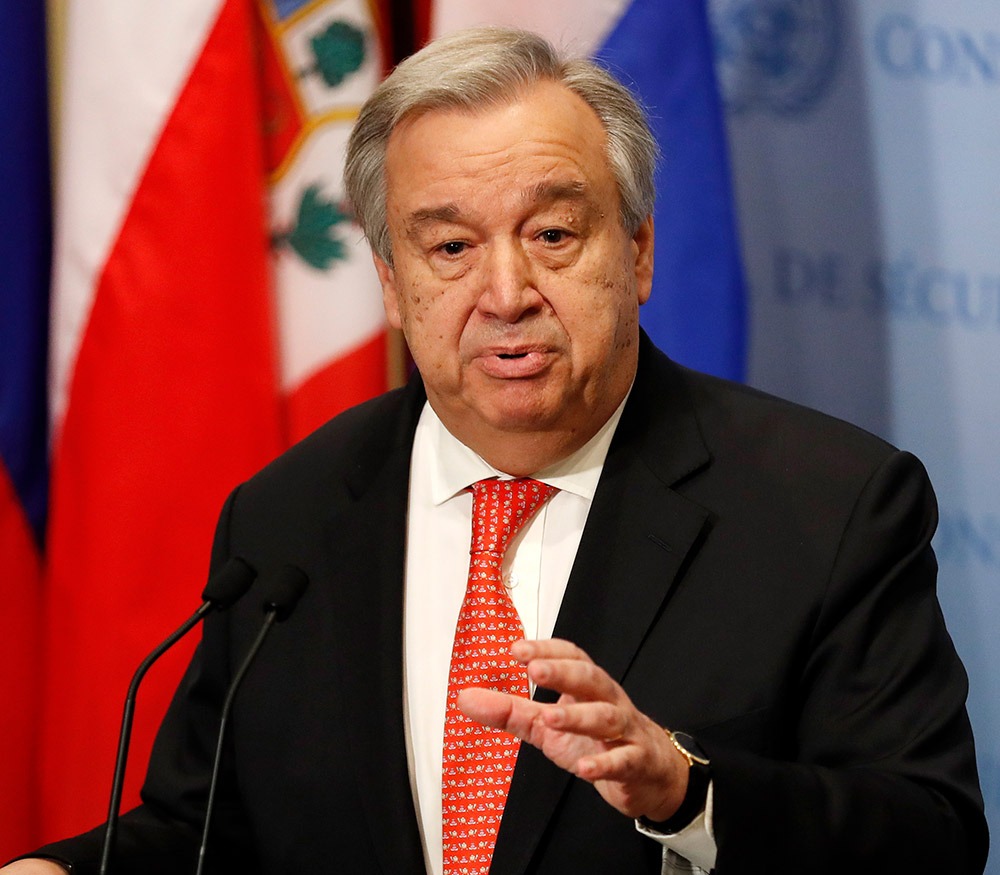
United Nations Secretary-General António Guterres will once again set foot on Haitian soil on June 16. This one-day visit, his second since July 2023, comes at a time when the country sinks a little deeper each day into a spiral of armed violence, massive population displacement, and political paralysis. Between assessing humanitarian needs, supporting the multinational gang suppression force, and examining fragile institutional advances, Mr. Guterres’s trip is shaping up as a test of the international community’s ability to prevent the total collapse of the Haitian state.
A country under security pressure
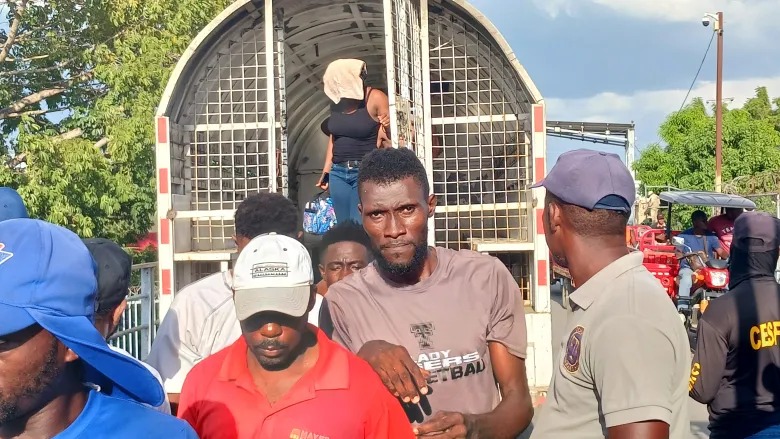
For several months, the metropolitan region of Port-au-Prince and the department of Artibonite, the country’s breadbasket, have been the scene of coordinated offensives by coalitions of armed gangs. Neighborhoods considered “strategic” are regularly targeted by attacks that cause the sudden displacement of thousands of families. According to the latest estimates from the International Organization for Migration (IOM) and the Office for the Coordination of Humanitarian Affairs (OCHA), the number of internally displaced persons in Haiti has exceeded 1.45 million, more than half of whom are women and girls.
The UN Secretary-General, who is scheduled to meet with displaced persons during his stay, intends to see for himself the human impact of this systemic violence, according to the American newspaper Miami Herald. Particular emphasis will be placed on the situation of women and girls, victims of sexual violence used as a weapon of terror by gangs.

The multinational force: a tense deployment
One of the major objectives of Mr. Guterres’s visit is to assess the deployment status of the UN-mandated gang suppression force, whose logistics and operations are overseen by a new United Nations Support Office in Haiti (BANUH) in close coordination with a standing group of partner countries. However, criticism is mounting over the lack of resources and responsiveness. As violence reached record levels in the spring of 2026, several observers believe the international response is still too timid.
Mr. Guterres is therefore expected to urge member states to accelerate the payment of promised financial and material contributions in order to overcome the armed groups that control nearly 80% of the capital.
Political crisis: postponed elections and open power struggle
On the political front, the UN chief’s visit comes in the midst of a new power struggle that illustrates the fragility of Haitian institutions. The holding of general elections, long postponed and considered an essential condition for a return to constitutional order, seems more compromised than ever.

Last week, a disagreement over the electoral decree escalated into a standoff between Prime Minister Alix Didier Fils-Aimé and the Provisional Electoral Council (CEP). CEP members accused the government of overstepping its prerogatives and adopting an electoral decree without any prior consultation. Also at issue was the Prime Minister’s decision to appoint Uder Antoine, the Council’s executive director, to the position of director general, which would place him under the authority of the executive branch rather than that of the nine electoral advisers.
In protest, the majority of the CEP signed a document barring Antoine from accessing the institution’s offices in Pétion-Ville, then passed a resolution dismissing him. Subsequently, Antoine took an oath last Friday during a brief ceremony, attended only by the President of the CEP, Jacques Desrosiers.
Role of international mediators
In this climate of heightened tensions, the UN political office in Haiti (BINUH) and the United States Embassy have attempted to play a mediating role. Both institutions welcomed the adoption of the electoral decree, which was finally published in the official journal Le Moniteur and made public over the weekend. However, no lasting solution has yet emerged to resolve the impasse.
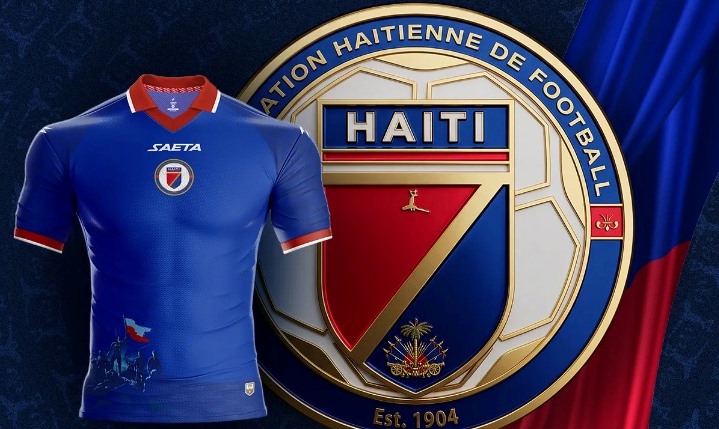
Mr. Guterres is expected to meet with Prime Minister Fils-Aimé during his stop in Port-au-Prince. The latter, whose legitimacy is contested by part of the political class, is also scheduled to travel to Boston on July 13 to attend the first FIFA World Cup match between the Haitian national team and Scotland – a trip that has drawn criticism in the midst of a national crisis.
A visit by land: Santo Domingo as an antechamber
António Guterres will arrive in Haiti by land from the Dominican Republic, with which Haiti shares the island of Hispaniola. Before crossing the border, he will meet with Dominican authorities in Santo Domingo, in a context marked by massive expulsions of Haitian nationals – more than 21,000 in April 2026 according to GARR – and recurring diplomatic tensions over the management of migration flows
Mr. Guterres’s visit is part of a series of high-level diplomatic trips in the region. At the end of May, US Deputy Secretary of State Christopher Landau visited Port-au-Prince before continuing on to Santo Domingo. A delegation from the Caribbean Community (CARICOM) had also planned a similar mission, but Haitian authorities deemed the timing “not opportune.”
Ultimately, António Guterres’s trip to Haiti comes at a critical moment. As gang violence continues to spread, the international response struggles to materialize on the ground, and political divisions paralyze any credible electoral perspective, the UN faces an unprecedented challenge.
Can the Secretary-General convince member states to unlock additional resources for the multinational force? Will he be able to impose effective mediation between the government and the Provisional Electoral Council to salvage what remains of the electoral calendar? Can he finally draw the world’s attention to a humanitarian crisis that, while alarming, remains largely underfunded? Is a single day enough to answer these questions? Nothing is less certain.