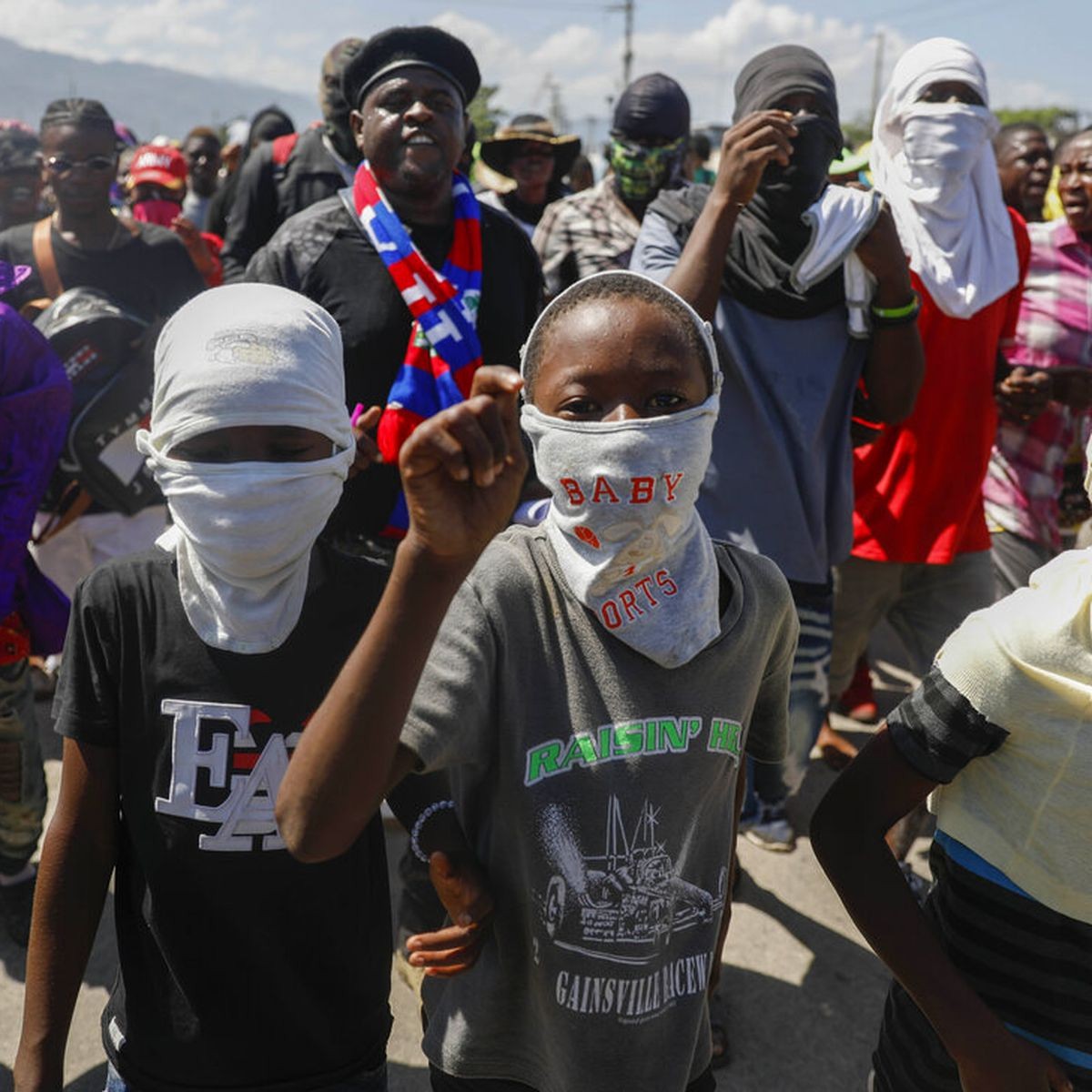



Applying for asylum just became a little clearer for people who have lived in the United States for more than a year.
USCIS has spelled out the reasons that can excuse a late application, chiefly, that conditions in the applicant’s home country have grown more dangerous since they left, or that illness or another serious hardship kept them from filing on time.
These grounds are not new. They have long been accepted as reasons for applying after the one-year mark. What USCIS has done is state them plainly in the instructions to Form I-589, the asylum application, putting in writing what the exceptions cover.
The federal government has laid out, in the current instructions to its asylum application, the specific kinds of explanations it will accept from applicants who file more than one year after arriving in the United States; guidance that has taken on new weight for Haitians who lost Temporary Protected Status in July and are now weighing whether asylum remains an option.

Asylum law requires that an application, Form I-589, be filed within one year of a person’s last arrival in the United States. The requirement is set by statute, at INA Section 208(a)(2)(B), and applies whether a person applies affirmatively at a USCIS asylum office or defensively as a defense against removal in immigration court. Missing it is ordinarily fatal to an asylum claim. But the law has always contained exceptions, and the USCIS instructions now describe how an applicant is expected to explain a late filing and what the government may accept.

The instructions state that the government will accept, as an explanation for a late filing, certain changes in conditions in the applicant’s country, certain changes in the applicant’s own circumstances, and certain other events that prevented an earlier application. The document provides examples, noting that the list is not exhaustive.
Among the examples the government offers: that the applicant has learned that human rights conditions in their country have worsened since they left; that the applicant’s health prevented a filing within the first year; and that the applicant previously submitted an application which was returned as incomplete, and then refiled a complete version within a reasonable time.
The instructions ground these exceptions in federal regulations at 8 CFR Sections 208.4 and 1208.4, which define the two recognized categories: “changed circumstances” and “extraordinary circumstances”, and set out the applicant’s burden of proof.
Changed circumstances refer to developments that materially affect a person’s eligibility, such as a worsening situation in the home country. Extraordinary circumstances refer to events that directly prevented a timely filing. In both cases, the regulations require that the application be filed within a reasonable period after the qualifying circumstance.
The government emphasizes that the written explanation on the application may be the applicant’s only chance to have an asylum officer weigh the reason for the delay, and that a person scheduled for an interview or a hearing must be prepared to explain the late filing in person.

A specific accommodation for one group of families
The instructions single out one population for distinct treatment. Applicants who are members of the class in the Ms. L. settlement — the 2023 agreement in Ms. L. v. ICE, the case arising from family separations at the southern border — are directed to include proof of class membership, because the settlement provides specific accommodations related to the one-year deadline for members who meet certain settlement deadlines.
For Haitians whose TPS ended, the central caution is one that the government’s instructions imply and immigration practitioners state directly: holding a temporary status does not, by itself, stop the one-year clock.
The deadline runs from the date of last arrival, not from the date a status expires.
A person who has lived in the United States for years under TPS, or who has been renewing it, has, in most cases, long ago passed the one-year mark. Waiting because a TPS application was pending or approved can create a serious deadline problem rather than solve one. What the exceptions can offer such a person is a route back in, most plausibly through the “changed circumstances” category, by showing that conditions in Haiti have deteriorated since departure, or through “extraordinary circumstances” tied to how a lawful status was maintained and then lost. Whether either applies is decided case by case, on the specific facts and evidence, and the regulations place the burden on the applicant.
The instructions close with a point of consequence. An applicant who cannot explain a late filing, or whose explanation the government rejects, may be ineligible for asylum — but may still be eligible for two other forms of protection that carry no one-year deadline: withholding of removal under INA Section 241(b)(3), and protection under the Convention Against Torture.
The distinction is significant. Form I-589 requests all three forms of protection at once, so an application filed after the one-year mark is not necessarily lost even if the asylum portion is time-barred. Withholding and CAT protection are harder to win — they carry a higher standard of proof and offer a narrower status than asylum, without a direct path to a green card — but they remain available when asylum is foreclosed on timing alone.
The changing landscape around the filing itself
The guidance arrives as the mechanics of filing for asylum are shifting. Under the 2025 reconciliation law, Form I-589 now carries a filing fee, and an Annual Asylum Fee is charged for each year a case remains pending; neither is waivable on the basis of inability to pay. Effective May 29, 2026, USCIS announced it will reject a pending application if the annual fee is not timely paid, a change that is the subject of ongoing litigation. USCIS has also issued a new edition of Form I-589, dated July 28, 2026, and said that, beginning August 28, 2026, it will accept only that edition.
Against that backdrop, the one-year rule and its exceptions remain, for many former TPS holders, the threshold question, the first hurdle an asylum claim must clear before any of the rest is reached.
https://ctninfo.com/?p=43970&preview=true
https://www.facebook.com/CaribbeanNewsMedia
This article was originally written in English. Other language versions are produced using AI translation software, and errors are possible — the English version is authoritative. CTN also uses AI to convert text into audio.