

The Haitian Legal Defense and Education Fund has asked the federal judge overseeing the Temporary Protected Status case to halt the deportation of Haitian immigrants, submitting a 29-page letter and an evidentiary appendix that catalogs massacres, mass displacement, and the destruction of hospitals, schools, and cultural landmarks, conduct that the group argues is consistent with genocide and crimes against humanity against Haitians.
The submission, entered on the docket July 28 in Miot v. Trump before U.S. District Judge Ana C. Reyes, is a supplemental letter from HLDEF, which is participating in the case as a friend of the court—not a party. The court accepted an earlier amicus brief from the group. This filing, signed by HLDEF communications director James Reardon of West Roxbury, Massachusetts, returns to the court, in its words, out of deep concern that conditions in Haiti have continued to deteriorate.
It is an advocacy submission from an outside group urging a particular outcome. The characterizations it advances — including genocide, a legal term with a demanding threshold under international law — are HLDEF’s own assessments drawn from a compiled record. No court has adopted them. Judge Reyes has not ruled on the letter.
The timing also matters. The filing landed the day after the Haiti TPS termination took effect on July 27, and roughly a month after the Supreme Court’s June 25 decision in Mullin v. Doe cleared the way for the administration to end the designation. That posture leaves the practical weight of the request uncertain — but it places on the public record one of the most detailed atrocity compilations yet assembled in the litigation.

What HLDEF is asking for
The group asks the court to maintain the injunction blocking the termination, or, at a minimum, to order a strict 90-day pause on all deportations to Haiti.
Crucially, HLDEF argues that any pause should be measured against verifiable security benchmarks rather than government assurances. It lists six: restored civilian and commercial access along the national highways (Routes Nationale 1, 2, and 3); the recapture and continuous operation of hospitals, schools, ports, and airports; measurable action against publicly identified gang leaders; independently verified declines in killings, kidnappings, and sexual violence; the permanent clearing of gang-held areas; and secure zones allowing displaced people to return home.
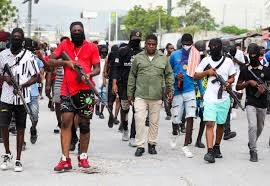
The letter frames the crisis in blunt terms, not a civil war or a political dispute to be resolved through dialogue, but years of organized violence by heavily armed groups against a largely unarmed civilian population. It is sharply critical of what it calls superficial “peace initiatives” and optimistic official messaging that, in its telling, coexist with gangs coercing communities into staged “peace rallies.”
Drawing on figures it attributes to UN agencies and other monitors, the letter states that more than 16,000 people have been killed and thousands more injured since 2022, bringing total direct casualties over recent years past 20,000; that roughly 1.5 million Haitians — over a tenth of the population — have been driven from their homes; that armed alliances control an estimated 85 to 90 percent of the Port-au-Prince metropolitan area; and that nearly half the population needs food assistance, with about 1.9 million people in emergency-level hunger.
The bulk of the filing is an appendix organized into representative incidents, each tagged with a date, location, and cited source. HLDEF presents them not as isolated events but as a pattern. Among them:

Targeted killings
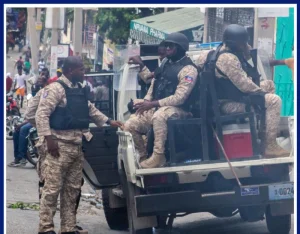
The appendix opens with the deaths of individuals tied to state service or community defense, including Woodley “Zazou” Décine, killed in Arcahaie in June 2026 while part of a military recruitment process, and Mario Arthur, an armored-vehicle operator assisting police, described as lured, tortured, and killed near Gonaïves in July 2026.
Massacres
It documents the Labodrie coastal massacre of September 12, 2025, in which at least 42 civilians were killed — including a four-year-old child and his family — in what local officials described as a reprisal by the Viv Ansanm coalition. It recounts the Pont-Sondé massacre of October 2024, in which more than 115 people were killed by the Gran Grif gang, among the deadliest single atrocities in recent Haitian history.
Mass displacement
The appendix details the Kenscoff and Grand Fond incursion of July 4–8, 2026, which it says displaced 5,840 people — more than 1,836 households — in a four-day window, forcing the closure of existing displacement sites and pushing families into repeat flight.
Attacks on hospitals and schools
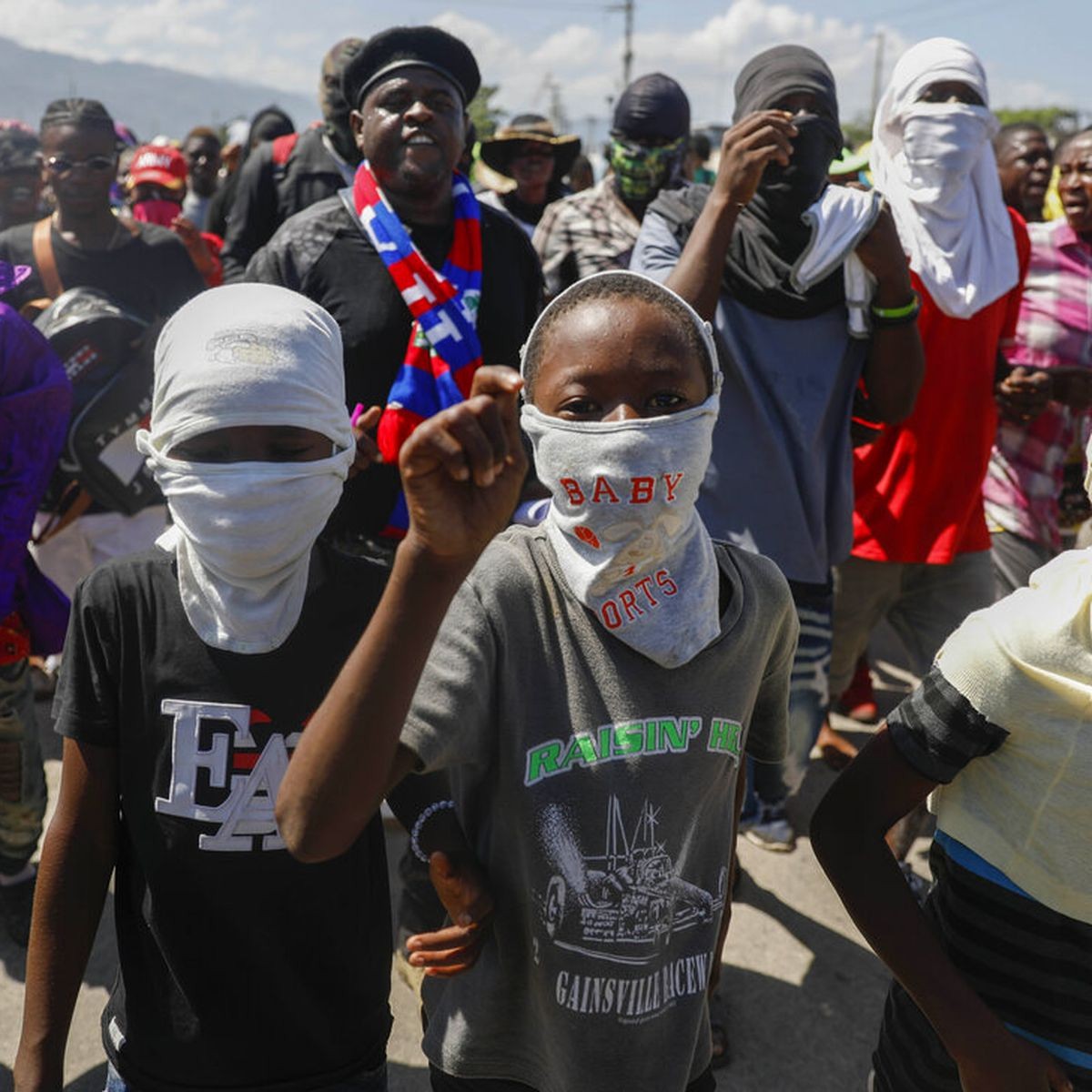
It describes the forced closure of the Mirebalais University Hospital, the Partners In Health flagship facility, after an April 2025 assault that included the release of more than 500 prisoners from a nearby jail; students shot with live ammunition while demonstrating for the reopening of safety-net hospitals; and the burning of educational institutions from the National School of Arts to facilities of the State University of Haiti. The appendix ties school closures to a documented surge in child recruitment, citing UN reporting that minors now make up a significant share of gang ranks.
Economic siege
It describes gang-controlled checkpoints along the national highways levying illegal tolls, the targeting of the Madam Sara market traders who move food from farms to cities, and crop-burning in the Artibonite rice belt — what the letter calls weaponized starvation.
Destruction of heritage
The appendix records the July 2025 burning of the Grand Hôtel Oloffson, the century-old Port-au-Prince gingerbread landmark and home of the roots-music band RAM, along with the loss of other historic gingerbread structures — losses independently reported at the time and attributed to the Viv Ansanm coalition.
Impunity and accountability
In a section on accountability, the appendix names figures it says illustrate uneven justice, including former officials charged in early 2025 with criminal association and complicity with armed groups, and the return of former President Michel Martelly, who has been sanctioned by international jurisdictions. These are allegations and charges documented in the filing, not convictions, and CTN notes them as such.
What comes next
The letter closes on a question it says the government has not answered: why civilians in places like Mirebalais are being pressed to give up the self-defense brigades they formed, while the armed groups responsible for years of killings and extortion face no comparable obligation to disarm.
HLDEF’s core legal argument is that Congress intended TPS to remain available while extraordinary conditions prevent safe return, and that those conditions plainly persist. Whether that argument reaches a receptive court — after the Supreme Court has already ruled and the termination has already taken effect — is now Judge Reyes’s to weigh.
The atrocity record the filing compiles draws on UN OCHA, the International Organization for Migration, OHCHR, the UN mission in Haiti, PAHO/WHO, FAO, and the World Food Program, the National Human Rights Defense Network, ACLED, the International Crisis Group, Partners In Health, and UN Security Council sanctions materials, among others.
https://ctninfo.com/haitian-legal-gr…nt-with-genocide/
https://www.facebook.com/CaribbeanNewsMedia
Editorial Disclaimer
This article was originally written in English. Other language versions are produced using AI translation software, and errors are possible; the English version is authoritative. CTN also uses AI to convert text into audio.