


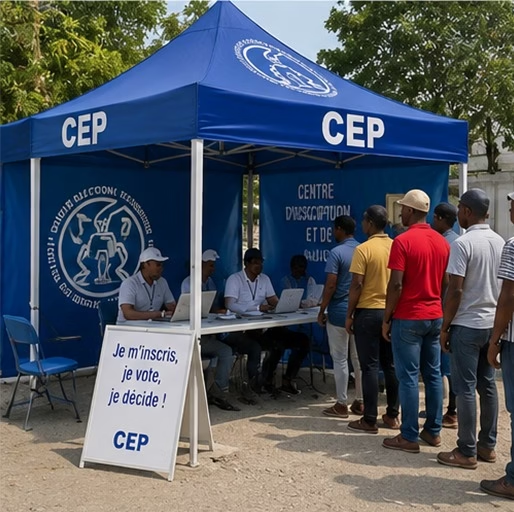
The Provisional Electoral Council (CEP) announced, on Monday, October 5, 2026, a series of major adjustments to the calendar of the ongoing electoral process. Faced with multiple logistical, political, and security challenges, the institution decided to extend the online registration period for candidates and to postpone indefinitely the start of the official electoral campaign.
This decision, presented as the result of “consultations held with political actors” and ratified during a Council of Ministers meeting on October 5, follows the modifications made to the Electoral Decree of June 2, 2026. According to a CEP note, it reflects the body’s desire to guarantee an inclusive legal and regulatory framework, although the process appears to be navigating by sight.
The first salient point of this communication concerns the registration of contenders for the various elective positions. Initially scheduled to close earlier, the online registration period as well as the submission of physical documents have been extended until October 31, 2026. The CEP justifies this measure by the need to “allow candidates and the political structures concerned to have the necessary time to complete the formalities provided for by the legal framework.”
As of Monday, October 6, the figures provided by the CEP platform reveal the extent of participation, but also the disparities depending on the level of power. Thus, at the executive level, 12 candidates have officially filed their documents for the presidency. The legislative race, for its part, attracts more interest: 265 candidates are registered for the Senate and 843 for the Chamber of Deputies. At the local level, enthusiasm is also marked, with 607 candidates registered for town halls, 650 for the Communal Section Administrative Councils (CASEC), and 360 for the Communal Section Assemblies (ASEC). These figures, although encouraging for democratic participation, underscore the urgency of finalizing the lists to allow for adequate logistical organization.

Consequently, the electoral campaign calendar has once again been turned upside down. “The period initially set for the conduct of the electoral campaign is postponed,” the note states. The CEP specifies that the new start and end dates will be communicated later, once the electoral calendar has been updated and “finalized in concert with duly authorized political structures.”
This artistic vagueness around the dates poorly conceals the intense political negotiations currently underway. While the CEP claims to be working “actively” to finalize a calendar that takes “technical requirements” into account, persistent rumors report fierce negotiations to once again modify the Electoral Decree.
While the CEP calls on citizens to continue their registration procedures in order to exercise their right to vote, the shadow of an uncredible vote hangs over the process. The remaining key steps—publication of the final lists, printing of ballots, distribution of voter cards, securing of voting centers—remain colossal challenges in a context of security crisis and institutional distrust.
Persistent concerns are palpable. Actors in the political class and civil society fear that these successive postponements serve only to mask chronic unpreparedness or, worse, to facilitate manipulation of the results. The question of transparency remains at the heart of concerns. The CEP, which says it is open to “constructive dialogue,” will have to redouble its efforts to convince a skeptical population that these technical adjustments will compromise neither the integrity of the vote nor the sincerity of the results.
