


A USCIS policy, effective immediately, allows officers to deny an immigration application without first requesting missing documents. For asylum seekers, who often cannot gather evidence in time, the change could be a serious blow.
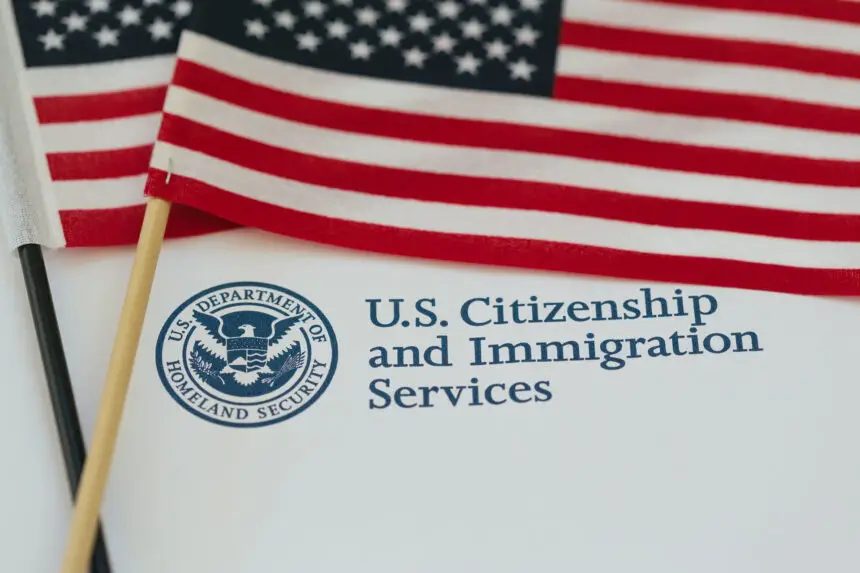
U.S. Citizenship and Immigration Services has adopted a policy that allows its officers to deny an immigration application outright, without first asking the applicant for missing documents, if the application does not, on its face, establish eligibility or include all the evidence the form requires. The change took effect on August 5.
The shift may sound technical, but its consequences are not.
Until now, if an application arrived incomplete, an officer would typically send a Request for Evidence, or RFE, or a Notice of Intent to Deny, giving the applicant a chance to supply what was missing before a decision was made. Under the new policy, that second chance is no longer guaranteed. An officer may simply deny the request.
For asylum seekers, this is the part that matters most. Many people fleeing persecution arrive with little more than what they could carry. Police reports, medical records, proof of threats, documentation of a political affiliation, the very evidence that supports an asylum claim, is often exactly what a person could not safely gather before running for their life, and what can take months or years to obtain from a country in crisis. Under the previous approach, an incomplete filing could be corrected. Under this one, it can end the case.

In its notice, USCIS frames the change as a return to existing authority.
The agency says applicants should establish their eligibility at the time they file, and that its form instructions already spell out all the required initial evidence, giving applicants, in its words, all the information needed to comply. Officers, it says, now have restored full discretion to deny a request without first issuing an RFE or Notice of Intent to Deny.
USCIS describes the move as aligning its procedures with longstanding Department of Homeland Security regulations, and says it will let the agency allocate resources more efficiently and prevent what it calls meritless requests. The agency’s notice uses pointed language, saying the policy helps “restore integrity” to the system and makes it harder to file what it terms frivolous requests.
The policy amends what USCIS calls a Biden-era approach that encouraged officers to request evidence before denying a case, even when an application was incomplete. USCIS argues that prior practice let substantially incomplete filings slow processing for others, and that some applicants filed “placeholder” applications to obtain associated benefits — such as work authorization — while waiting for a decision.
The policy is effective immediately and applies to requests already pending or filed on or after August 5, unless a regulation or other USCIS policy specifies otherwise.
Immigration advocates have long warned that RFEs function as a safety valve; a way to fix honest gaps rather than punish them.
Removing the guarantee of that step not only affects people trying to game the system. It affects the person who did not know a particular document was required, the applicant whose supporting records are still in transit from abroad, and the asylum seeker who has not yet been able to obtain proof of the danger they fled.

The stakes are highest precisely where the evidence is hardest to get. A person applying from inside a country whose institutions have collapsed, where a police station may no longer exist, where courts have been ransacked, where obtaining a record can mean risking one’s life, cannot always assemble a complete evidentiary file on the government’s timetable. For that applicant, a denial without a chance to respond is not a paperwork consequence. It can be the difference between protection and return.
Because the policy applies to cases already pending, it also reaches people who filed under the prior rules, when the expectation was that an officer would ask before denying.
CTN is not a law firm, and this is not legal advice. But the practical takeaway from this change is direct: the margin for error has narrowed, and the old assumption that USCIS will ask for anything missing can no longer be relied upon.
Anyone with a pending application, or preparing to file one, should review the form instructions closely for each item of required initial evidence and strongly consider having the application reviewed by a licensed immigration attorney or a representative accredited by the U.S. Department of Justice before filing. For asylum seekers in particular, assembling as much supporting evidence as possible, and documenting any evidence that cannot yet be obtained and why, is more important under this policy than before.
The change does not alter who is eligible for protection. It changes how little room there is to prove it.
This article is for informational purposes and is not legal advice. Anyone with questions about their asylum application, TPS, work authorization, or immigration status should consult a licensed immigration attorney or a representative accredited by the U.S. Department of Justice.

https://ctninfo.com/uscis-can-now-de…g-evidence-first/
https://www.facebook.com/CaribbeanNewsMedia
Editorial Disclaimer:
This article was originally written in English. Other language versions are produced using AI translation software, and errors are possible — the English version is authoritative. CTN also uses AI to convert text into audio.