


Haiti’s return to the FIFA World Cup after more than five decades has ended earlier than supporters had hoped.
After defeats to Scotland and Brazil, Les Grenadiers can no longer finish third in Group C, a position that would have kept alive a possible route to the Round of 32.
The decisive factor is not simply Haiti’s goal difference. It is FIFA’s head-to-head tiebreaking system, which now plays a central role when teams finish level on points within their group.
Mirror US first highlighted the effect of the rule in reporting by Ben Crawford, noting that Haiti, Türkiye, and Tunisia became the first three teams eliminated after two matches. FIFA’s competition regulations confirm that, when teams are tied on points, their direct results against one another are considered before overall goal difference and goals scored.
For Haiti, the numbers leave little room for a final-match rescue.
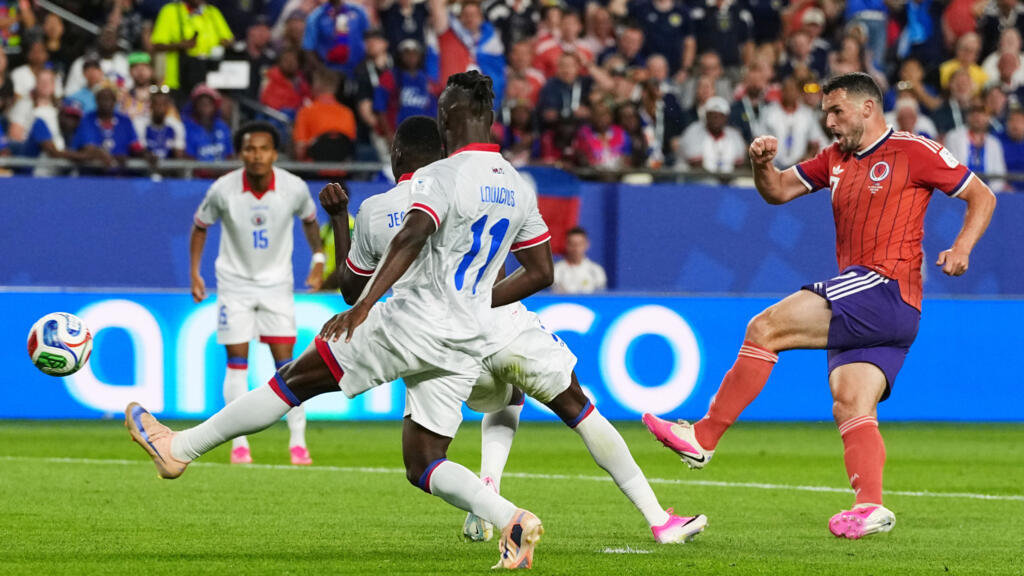
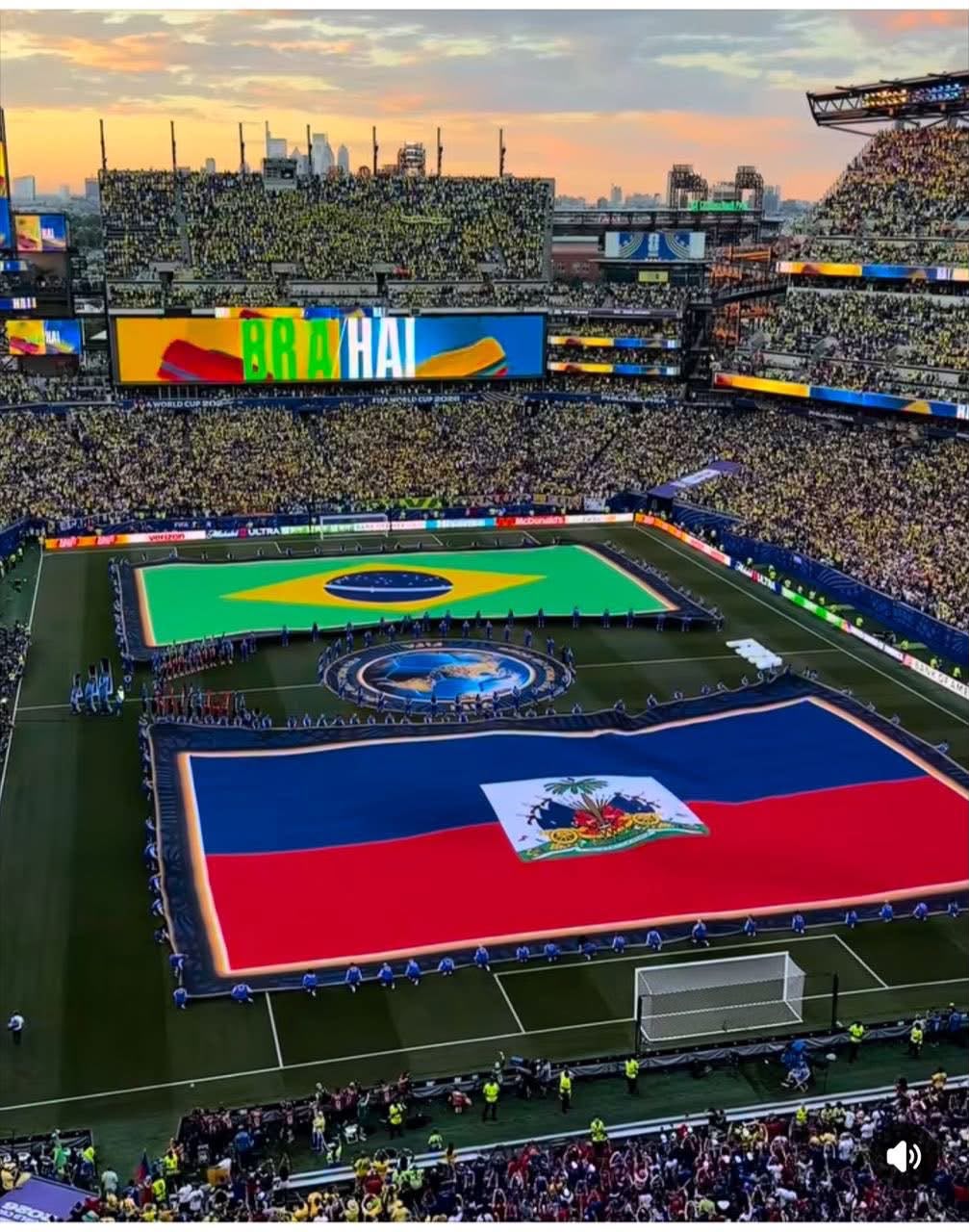
The Haitian national team opened its campaign with a 1-0 defeat against Scotland in Boston before falling 3-0 to Brazil in Philadelphia. Haiti enters its final Group C match against Morocco with no points, while Scotland has three points after defeating Haiti.

Even if Haiti defeats Morocco and reaches three points, Scotland could also remain on three points if it loses to Brazil. In that scenario, Haiti and Scotland would be level on points, but Scotland would finish above Haiti because of its victory in their direct meeting.
That result would place Haiti fourth in the group. Under the expanded 48-team World Cup format, the top two teams in each group advance automatically, along with the eight best third-place teams. Fourth-place teams are eliminated, regardless of their overall goal difference.
The result is that Haiti’s final match against Morocco will still carry significance for pride, performance, and the team’s World Cup legacy, but it can no longer alter the qualification outcome.
A rule with immediate consequences
The 2026 World Cup features 12 groups of four teams. The format allows eight third-place finishers to advance to the Round of 32, creating more opportunities for teams that do not finish in the top two. However, the system also makes group placement critical.
FIFA’s regulations state that when two or more teams are level on points, the first criterion is the points obtained in matches between the tied teams, followed by goal difference and goals scored in those head-to-head games. Only after those steps are exhausted do the overall goal difference, goals scored, disciplinary records, and FIFA rankings come into play.

A large victory in the final group match would not be enough to move Haiti ahead of Scotland if both teams finish on three points. Scotland’s direct win over Haiti gives the European side the advantage.
Türkiye’s World Cup campaign has also ended due to the same mathematical reality.
Türkiye lost 2-0 to Australia in its opening match and then fell 1-0 to Paraguay. With the United States already on six points and Australia and Paraguay both holding three points, Türkiye cannot reach the top two places in Group D.
A final-match victory over the United States would give Türkiye three points. But the Australia-Paraguay match guarantees that one of those two teams will finish with at least three points.
If Australia wins, Paraguay would remain on three points and finish ahead of Türkiye, having defeated Türkiye. If Paraguay wins, Australia would remain on three points and would hold the same advantage over Türkiye after its opening victory. A draw would send both Australia and Paraguay to four points. In each scenario, Türkiye is unable to move above fourth place.
Tunisia’s route is closed as well
Tunisia faces a similar situation in Group F after losing 5-1 to Sweden and 4-0 to Japan.
The North African side can still finish on three points by defeating the Netherlands in its final group match. But Sweden already holds three points and defeated Tunisia directly.
If Sweden remains on three points, it would stay above Tunisia because of that head-to-head victory. If Sweden earns a draw or a win against Japan, it would move beyond three points and remain ahead of Tunisia in the standings.
Tunisia, like Haiti and Türkiye, cannot reach third place in its group.
Haiti’s final match still matters
For Haiti, the elimination does not erase the importance of the final World Cup fixture. The match against Morocco gives the players an opportunity to secure the country’s first World Cup points since Haiti’s historic appearance in 1974.
It also provides Haiti with a chance to close the tournament with a performance that reflects the resilience of a team representing a nation that has continued to face profound political, humanitarian, and security challenges.
But the qualification equation has changed. Under FIFA’s head-to-head rules, Haiti’s loss to Scotland became more than an opening defeat. It became the result that ultimately sealed third place and ended the possibility of advancing from Group C.
This original CTN article was prepared in accordance with FIFA competition regulations and official match results. Mirror U.S., in a report by Ben Crawford, first drew attention to the early eliminations of Haiti, Türkiye, and Tunisia.