


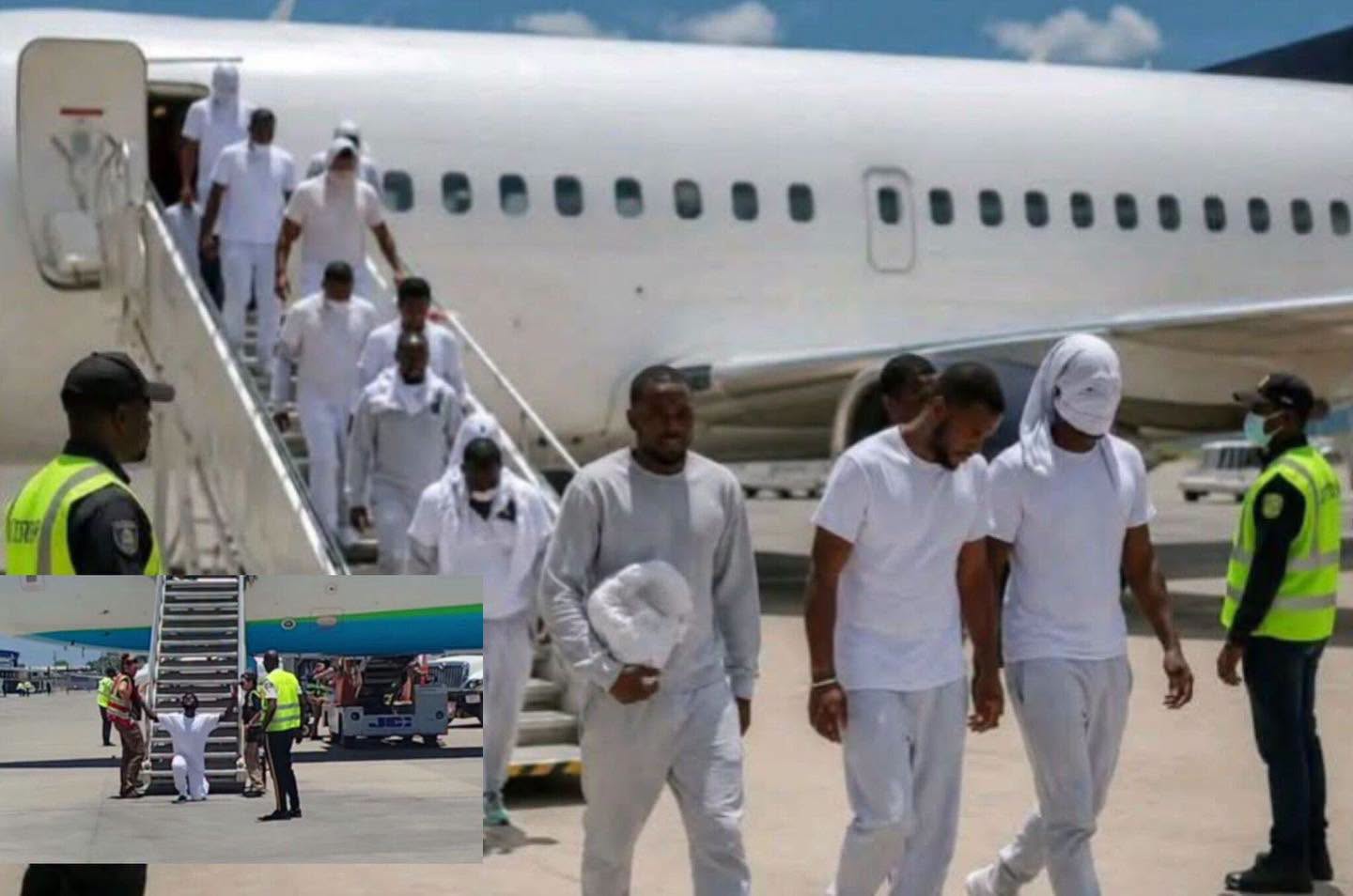
A chartered flight, operating as part of U.S. Immigration and Customs Enforcement (ICE) deportation operations, landed late Thursday evening in 2026 at Cap-Haïtien International Airport, carrying more than 160 Haitian nationals on board. According to local authorities, the aircraft transported exactly 161 passengers, all forced to leave U.S. soil to return to a country they had fled for reasons of safety and survival.
This event carries particular significance, as it marks the first deportation flight of Haitian migrants conducted by ICE since the official expiration, last July, of the Temporary Protected Status (TPS) designation for Haiti. This measure, which had shielded hundreds of thousands of Haitian nationals from deportation, came to an end after months of political debate and judicial uncertainty. While human rights organizations feared a wave of mass removals, this flight now materializes the new reality: the United States is proceeding with forced removals to a country plagued by chronic insecurity, acute humanitarian crisis, and deep political instability. It is a major turning point, the consequences of which will be felt far beyond the 161 individuals disembarked that day.
On the tarmac in Cap-Haïtien, agents from Haiti’s Directorate of Emigration and Immigration, along with representatives of the National Office of Migration, awaited the aircraft’s arrival. Some migrants descended the airplane stairs carrying plastic bags containing their meager belongings; others struggled to contain their emotions as they set foot in a country they had not seen in years. But this return is in no way a voluntary repatriation: it is a deportation, brutal and without a safety net.
According to flight data, the plane had departed from Alexandria, Louisiana, a city that houses an ICE detention center. After a technical stopover in Miami, Florida—a usual hub for flights to the Caribbean—it headed for northern Haiti. This route, well known to observers, is regularly used for removal operations to Port-au-Prince or Cap-Haïtien. But since the end of TPS, these flights take on a more alarming dimension, as they no longer involve only criminal cases or individuals intercepted at sea, but also entire families, including parents of U.S.-born children.

Concurrently with this first post-TPS flight, a new troubling development is heightening the climate of fear: arrests of Haitian nationals have intensified in recent days in several U.S. cities, according to alerts from local migrant rights organizations. In Miami, Orlando, New York, and even in less densely populated areas such as Springfield, Ohio, ICE field operations have targeted neighborhoods with large Haitian communities. Testimonies report aggressive identity checks, workplace raids, and sudden summons to immigration offices. Haitian social media networks in North America are buzzing: warnings are circulating, lawyers are being urgently consulted, and entire families are living in dread of an imminent separation.
This dual offensive—mass deportations and targeted arrests—sends a clear signal: the U.S. administration intends to enforce its immigration policy with heightened rigor, despite appeals from the international community and humanitarian organizations. The Haitian government, overwhelmed and weakened, has so far issued no official statement on the management of these forced returns. Yet local authorities in Cap-Haïtien had to hastily organize a reception framework. But in a country where schools are closed due to gangs and hospitals lack medicine, where are these 161 souls headed? Many no longer have family on the ground, or have sold their belongings to fund their exile.
Migrant rights advocates denounce a violation of the principle of non-refoulement, as Haiti does not meet the minimum safety conditions for a decent return. Since the assassination of President Jovenel Moïse in 2021, gangs control nearly 80% of the capital and are expanding their grip into the northern regions. Kidnappings, gang rapes, and killings are commonplace. In this context, deporting hundreds of people amounts to sending them back to certain danger. This first post-TPS flight is therefore not merely a logistical event: it is a wake-up call for the entire Haitian diaspora, a warning that the protection granted yesterday is no longer guaranteed today.
As the plane left the Cap-Haïtien tarmac to resume its return flight to the United States, the 161 deported individuals found themselves alone, facing an uncertain future. Their gazes, marked by fatigue and resignation, told the brutality of this policy more eloquently than any speech. The coming days will reveal whether other flights will follow, and whether arrests in American cities will continue to multiply.