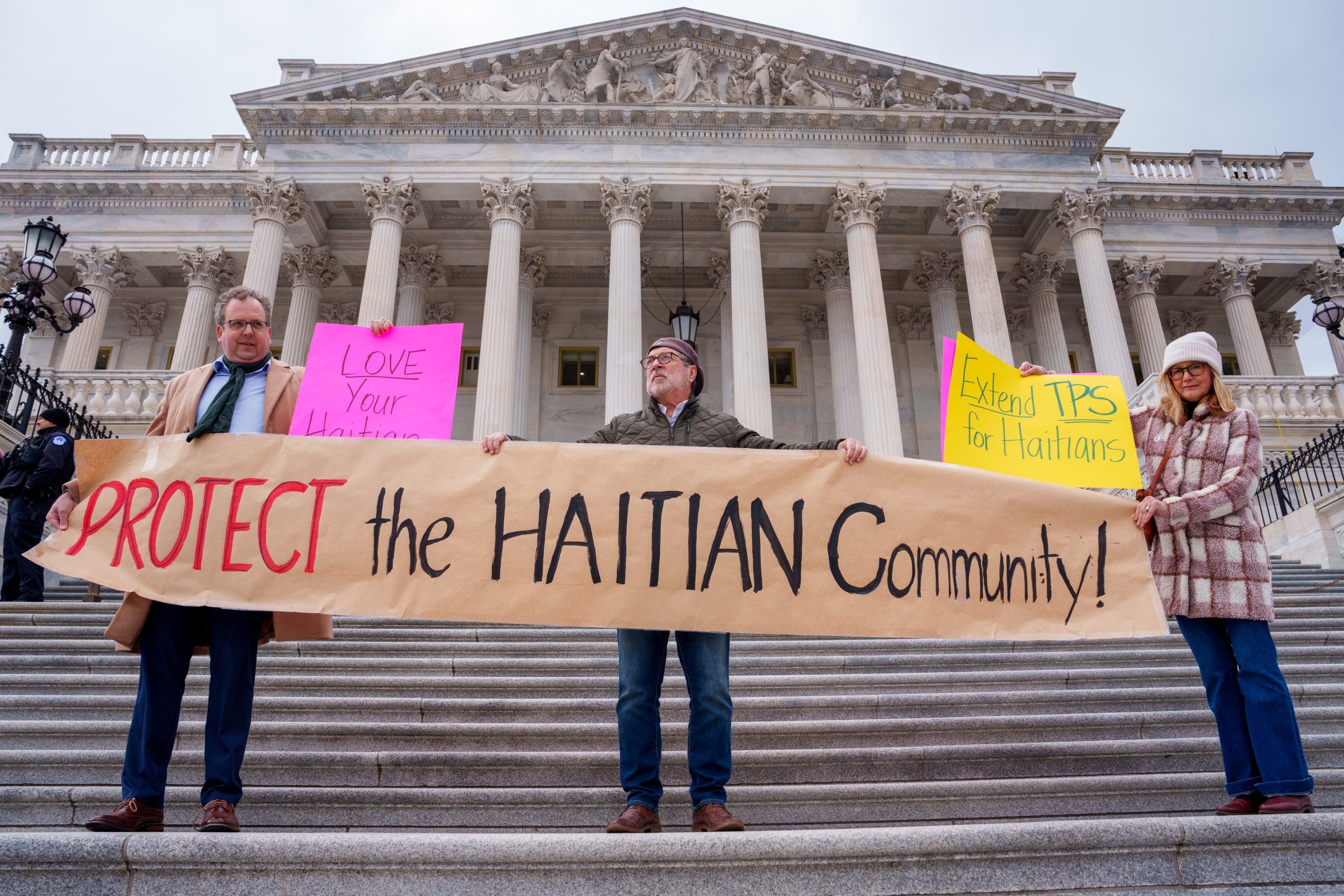



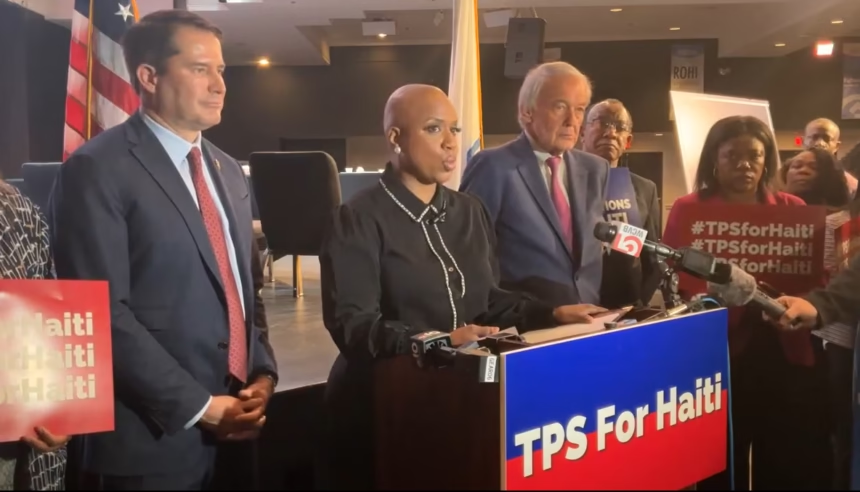
Congresswoman Ayanna Pressley celebrated the success of her discharge petition that will force a House vote on extending Temporary Protected Status for Haiti, calling it “a testament to our collective organizing and the strength of our broad, diverse movement to affirm the humanity, dignity, and safety of our Haitian siblings.”
The petition reached the required 218-signature threshold to bypass the committee and bring H.R. 1689 directly to the House floor. The bill mandates that the Secretary of Homeland Security redesignate Haiti for TPS for 3 years. All 214 House Democrats and four Republicans signed the petition. Pressley introduced it on December 18, 2025, during the first session of the 119th Congress, and the successful threshold was reached on March 27, 2026.
“Throughout the nation, Haitians are parents, workers, caregivers, faith leaders, business owners, and children who are deeply rooted in our communities, essential to our economy, and are shamefully at risk of being deported to an island grappling with a devastating humanitarian crisis,” Pressley said. “Today, we are a critical step closer to saving lives and delivering the protections they deserve. The House must vote on this and I urge all of my colleagues to strongly support.”
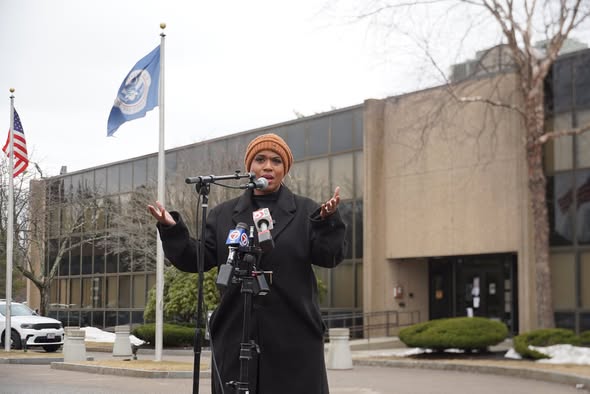
Pressley, a Democrat representing Massachusetts’ 7th Congressional District, serves as co-chair of the House Haiti Caucus and represents one of the largest Haitian diaspora communities in the country. She has been among the most vocal members of Congress pushing back against the Trump administration’s efforts to terminate TPS for Haitians.
Rep. Marie Gluesenkamp Perez of Washington’s Third Congressional District became the final lawmaker to sign the petition, adding her name just minutes before midnight on Friday, March 27, 2026. Rep. Don Bacon of Nebraska was the fourth Republican to sign, doing so the previous day, Thursday, March 26, 2026.
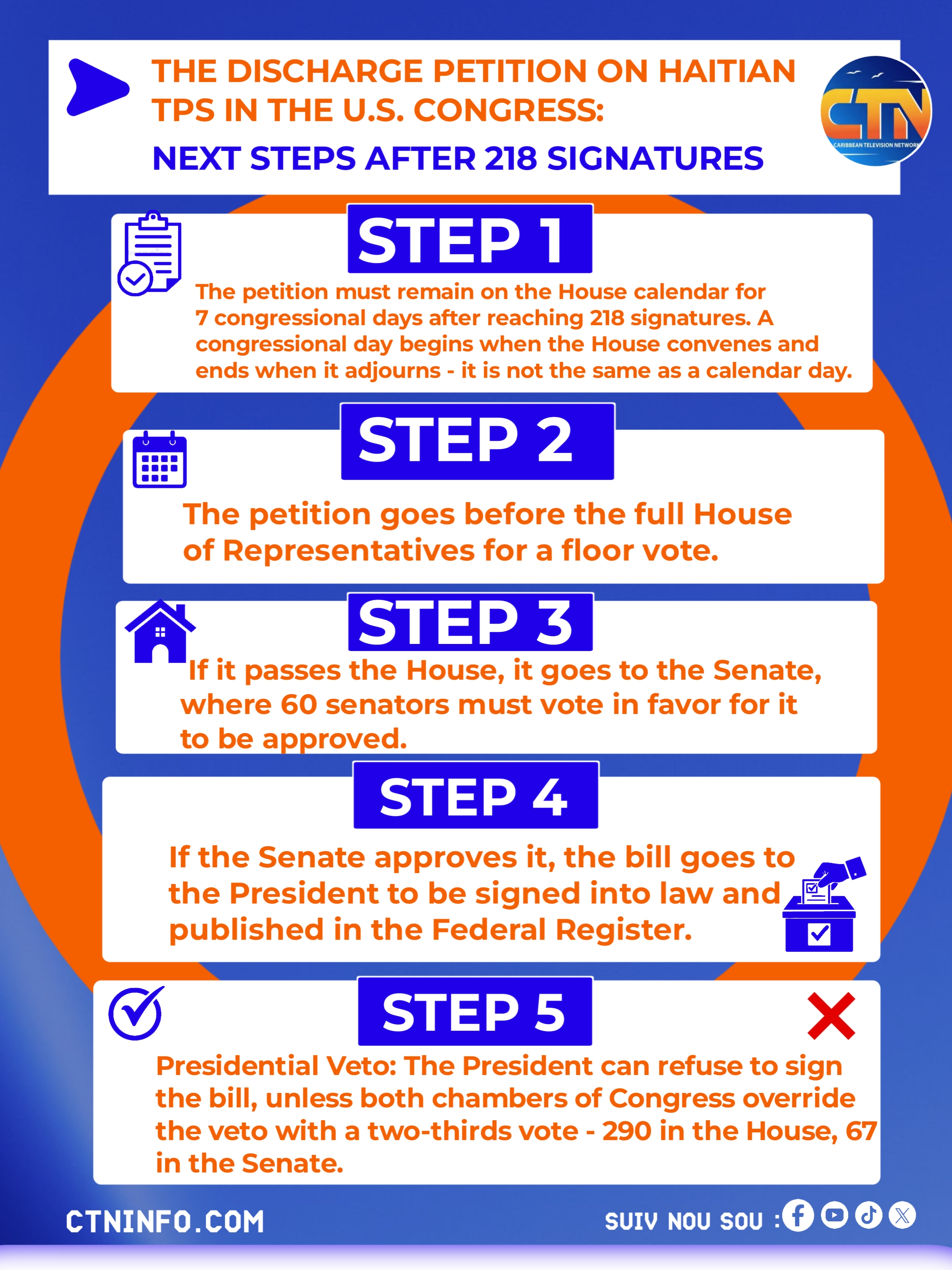
Congress rarely uses discharge petitions. They require an absolute majority—218 out of 435 members—to force legislation out of committee and onto the floor. The mechanism became necessary because the Committee on Rules would not advance H.R. 1689 under the current Republican majority. With fewer than 218 Democrats in the House, Pressley needed Republican co-signers to reach the threshold, prompting weeks of sustained pressure from advocacy organizations, faith communities, business groups, and constituents in districts with significant Haitian and immigrant populations.
The petition’s key operative provision locks in TPS protections for Haitian beneficiaries until three months after January 20, 2029, extending well beyond the current administration’s term. The resolution provides for one hour of floor debate, divides time equally between the majority and minority leaders, and requires the Clerk of the House to transmit the bill to the Senate within one week of passage.
What Is at Stake
Ending TPS for Haitians would put more than 350,000 Haitian nationals at risk of deportation, according to federal court filings. However, U.S. District Judge Ana C. Reyes cited data in January showing that over 560,000 Haitians currently hold or are eligible for the designation. Many TPS holders have lived and worked legally in the United States for years, sometimes decades. They have built families, deep community ties, and many raise U.S.-born children.
Of the current TPS beneficiaries from Haiti, more than 100,000 work in healthcare—an industry facing chronic national staffing shortages. Many also work in construction, hospitality, food processing, and transportation sectors, where suddenly removing a large portion of the workforce would immediately disrupt operations. Several Republican members of Congress and at least three Republican governors have voiced concern about the economic consequences of ending the designation, and advocates have found the economic argument highly effective in building bipartisan support that ultimately carried the discharge petition across the finish line.
The Path Forward
The petition’s success now shifts the battle to the Senate, where the path is considerably steeper. Under Senate rules, the legislation needs at least 60 votes to overcome a filibuster. This means Democrats must hold their entire caucus and recruit at least 13 Republican senators. That level of bipartisan cooperation has been difficult to achieve on immigration in recent years. Pressley is already coordinating with Massachusetts Senators Elizabeth Warren and Ed Markey, as well as other members of the upper chamber, to build support for a companion effort.
The legislative push advances alongside court proceedings. In April 2026, the Supreme Court will hear oral arguments in a consolidated case that could determine whether the Trump administration holds the authority to cancel TPS designations for Haitians and Syrians. In March 2026, Pressley joined Haitian faith leaders and advocates to urge the court to affirm lower court rulings that found the administration’s attempt to terminate Haiti’s TPS unlawful. In February 2026, she applauded a federal judge’s ruling that temporarily blocked the termination.
If the Supreme Court sides with the administration, every TPS beneficiary without an independent legal immigration status would face the prospect of deportation — unless Congress enacts Pressley’s legislation into law first. Advocates have pressed forward on both fronts simultaneously, treating neither as a guaranteed outcome.
Haiti has been designated for TPS multiple times over the past two decades. Most significantly, this happened after the catastrophic earthquake of January 12, 2010, which killed an estimated 220,000 people and displaced more than 1.5 million. Subsequent redesignations have reflected ongoing instability, including Hurricane Matthew in 2016, the assassination of President Jovenel Moïse in July 2021, and a second major earthquake in August 2021. The continued deterioration of security conditions driven by armed gangs has paralyzed large parts of Port-au-Prince and the surrounding areas effectively.
Pressley’s statement made clear she views the discharge petition not as the end of the fight but as a decisive turn in a campaign she intends to see through to the finish.
“The House must vote on this,” she said. “I urge all of my colleagues to strongly support.” Ayanna Pressley is one of the fiercest advocates for Haitian immigrants in Massachusetts and throughout the United States. She confounded the Haiti Caucus along with former representatives Andy Levin of Michigan, Val Demings of Florida, and Representative Yvette D. Clarke of New York.
Disclaimer:
This article was originally written and published in English by the Caribbean Television Network (CTN). Versions in other languages have been produced through automated translation using artificial intelligence software.
While every effort is made to ensure quality, automated translations may contain inaccuracies, awkward phrasing, or errors that do not reflect the original text’s intent.
Readers are encouraged to consult the original English version for the most accurate and authoritative account.
CTN assumes no responsibility for misinterpretations arising from automated translations.
While every effort is made to ensure quality, automated translations may contain inaccuracies, awkward phrasing, or errors that do not reflect the original text’s intent.
Readers are encouraged to consult the original English version for the most accurate and authoritative account.
CTN assumes no responsibility for misinterpretations arising from automated translations.
All articles are written by CTN staff, with artificial intelligence used to assist with grammar, translation, and minor corrections.