



Nebraska Gov. Jim Pillen has made himself one of the Midwest’s loudest allies of President Donald Trump’s immigration crackdown, pairing the state with ICE, opening a state-run detention center and calling for mass removals. For more than a decade, though, the multimillion-dollar hog business his family built relied on the very workers that agenda targets, according to a joint investigation by The New York Times and the Flatwater Free Press published Wednesday.
The reporting, drawn from state and federal court records and interviews with more than 40 current and former employees, prosecutors, immigration lawyers and community organizers, found that Pillen Family Farms has employed both documented and undocumented laborers as it grew into one of the nation’s largest pork producers. Workers without legal status turned up at no fewer than 20 of the company’s roughly 100 Nebraska hog farms, the outlets reported. Six former employees said they had no legal status while they worked there, and court records show at least a dozen Pillen workers were charged between 2015 and 2024 with using fake or stolen identities to get hired. The company employs about 1,200 people across four states and Canada; how many lacked authorization is unclear, but reporters described undocumented hiring as an open secret at some Nebraska sites.
Pillen’s camp rejected any suggestion he knew.
Campaign spokeswoman Laura Strimple said the governor “never knowingly hired an illegal immigrant” and that the business went beyond what the law requires to verify workers’ status. Pillen has not been accused of a crime, and the investigation did not establish that he knew who was on the payroll.
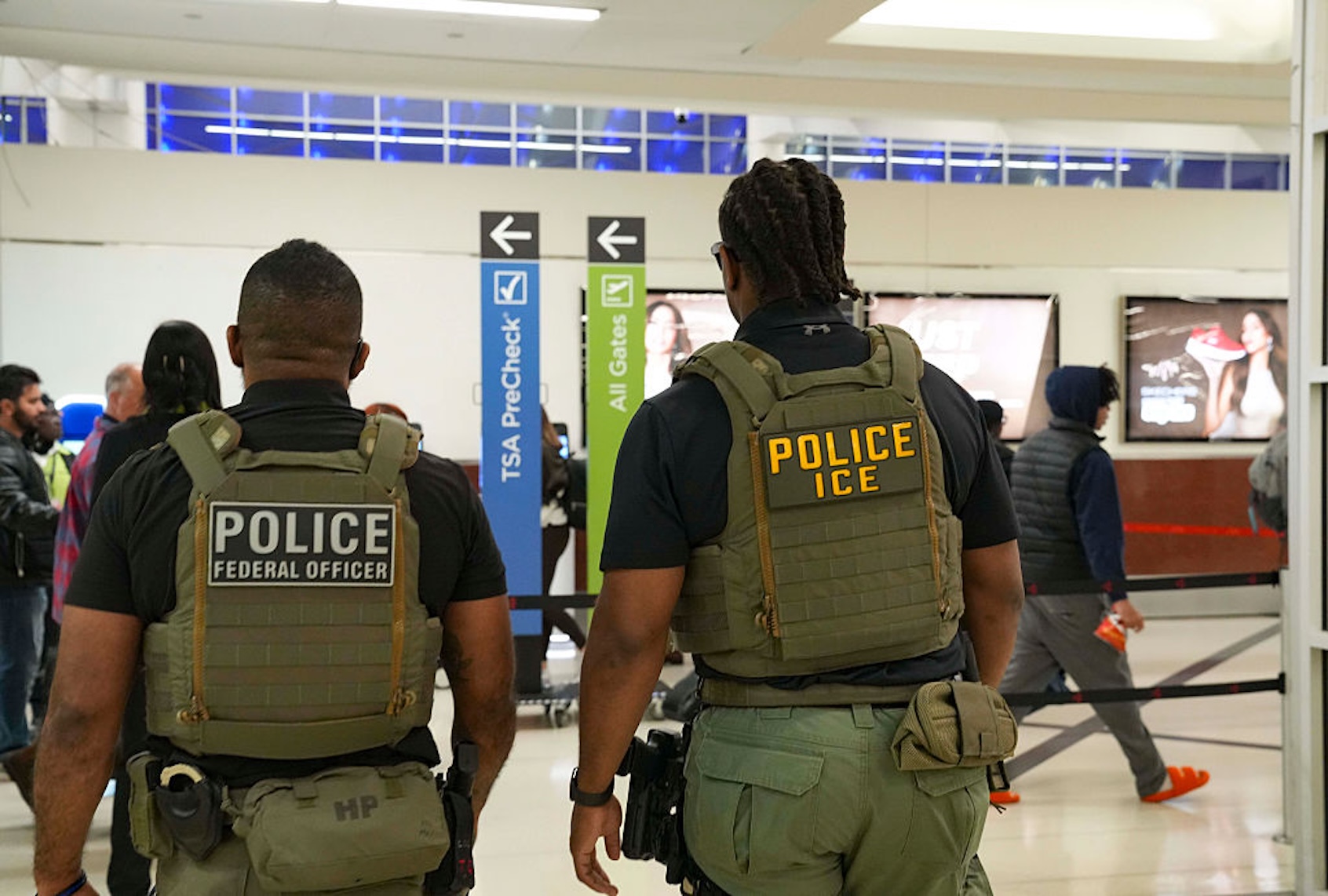
The findings land against an unusually hard line. Days after Trump returned to the White House, Pillen directed the Nebraska State Patrol to work alongside ICE on enforcement. Last August he agreed to convert a shuttered minimum-security prison in McCook — the former Work Ethic Camp, which once ran rehabilitation programs for inmates — into a state-operated immigration jail that he and federal officials nicknamed the “Cornhusker Clink.” Under a contract worth roughly $2.4 million a month, the facility opened in November 2025 to hold up to 300 detainees. The deal drew its own fights: McCook residents and the advocacy group Nebraska Appleseed sued to block it, arguing Pillen sidestepped the Legislature, though a county judge sided with the governor and dismissed the case.

His language has matched the posture.
“The criminal illegal aliens who have invaded our country must be removed,” Pillen wrote on social media in December, pledging to stand with Trump to get the job done. On a radio program last summer, he described migrants swimming across the southern border. At other moments, he has softened the tone, saying the McCook site was meant for criminals rather than hardworking families and acknowledging that Nebraska industries from agriculture to construction to hotels are short of labor.
Former workers describe an operation that quietly depended on that labor. David Armendariz, who said he overstayed a tourist visa and worked at two Pillen farms until 2023, told the outlets a manager accepted a fake driver’s license when he was hired, and that employees routinely used names everyone understood were not their own. “They don’t ask you what your name is,” he said.
That gap between message and payroll has become a live issue in the governor’s race.
Pillen is seeking a second term this fall with Trump’s endorsement — a turn for a candidate who beat a Trump-backed rival in his first Republican primary and had rarely spoken about immigration until last year.
As the investigation circulated, his campaign rolled out a revamped platform it branded “Pillen Playbook 2.0,” and his challengers pressed him on the contradiction. His Democratic opponent, Lynne Walz, said the governor holds others to rules he ignores himself. “When the cameras are off, the rules don’t seem to apply to him,” she said.
The episode reflects a tension that reaches well beyond one politician. American agriculture, and Nebraska’s especially, leans heavily on immigrant workers to fill jobs few others will take, even as elected officials promise to drive those workers out. Pillen spent three decades turning a few dozen sows on a dirt lot into a national producer; the investigation indicates the laborers who filled his barns helped it grow. His company says it followed the law. The reporting says that on some of its farms, the practice was hardly a secret.
This article was originally written in English. Other language Creole versions were produced using AI translation software, and errors are possible—the English version is authoritative. CTN also uses AI to convert text into audio.
https://ctninfo.com/?p=44568&preview=true
https://www.facebook.com/CaribbeanNewsMedia