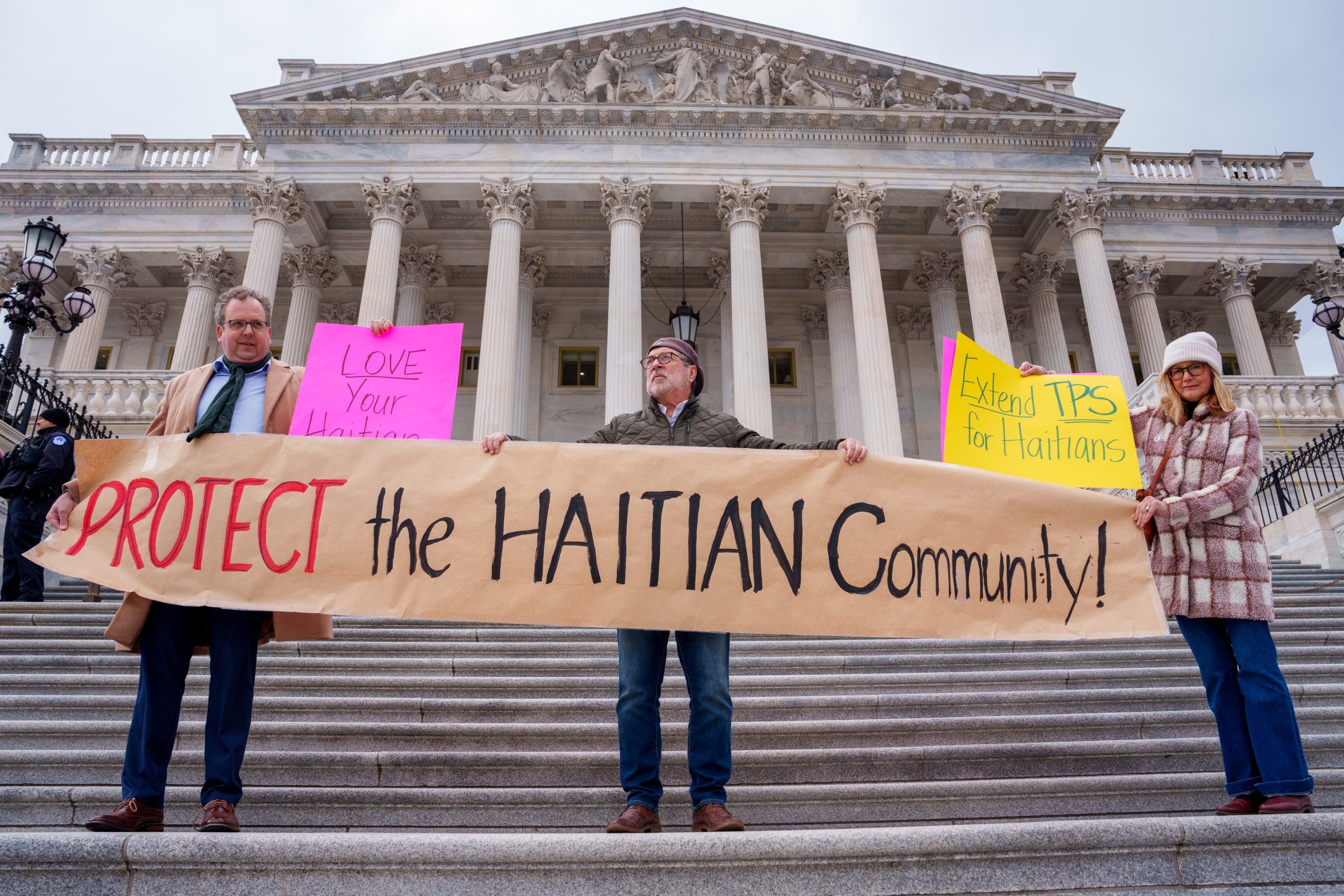


New York City Mayor Zohran Mamdani declared that his administration would never accept the U.S. Supreme Court’s decision clearing the way to strip deportation protections from Haitian and Syrian immigrants, casting the ruling as an act of cruelty aimed at a community he said has helped build the city.
“To have people who frankly taught the world about freedom have their own freedom put into jeopardy by the actions of a Supreme Court and federal administration — it is not only cruel, it’s not something we will ever accept,” Mamdani said in a video statement released after the June 25 ruling, as first reported by the New York Post’s Matthew Fischetti.
The remark was widely understood as a nod to the Haitian Revolution, which led to Haiti becoming the first independent Black republic in 1804.
The 6-3 decision in Mullin v. Doe, written by Justice Samuel Alito, held that the Temporary Protected Status statute bars federal courts from reviewing most challenges to a decision to end a country’s designation, lifting the lower-court orders that had kept protections in place. The ruling reaches an estimated 350,000 Haitians and more than 6,000 Syrians nationwide. In New York City alone, according to amNewYork, roughly 40,000 residents stand to lose their legal status, and immigration attorneys say the decision is set to take effect about 32 days after the Court formally issues its judgment, with further action from the lower courts still required before protections dissolve.

“It falls hardest on our Haitian community”
In a statement issued by City Hall, Mamdani framed the ruling in stark terms and put the Haitian diaspora at the center of his response.
“The Supreme Court just sparked one of the largest attacks on immigrants in modern American history,” the mayor said. “In one fell swoop, thousands of Haitians and Syrians now risk losing the right to live and work in the country they call home.”
He continued: “This decision will cause enormous pain across the five boroughs. Here in New York, it falls hardest on our Haitian community, one of the largest in the country, alongside Syrian families.”
Mamdani then addressed affected residents directly. “To the tens of thousands of New Yorkers with TPS who are watching the news, frightened about what comes next, hear me clearly: New York City is your home. You belong here. We will not turn our backs on you,” he said, adding, “You will not face this cruelty alone. This administration will stand alongside immigrant New Yorkers today, tomorrow, and every day that follows.”
The mayor described TPS holders as people who fled earthquakes, famine, war, and political violence, then built lives in the city — raising families, opening small businesses, and attending church and mosque.

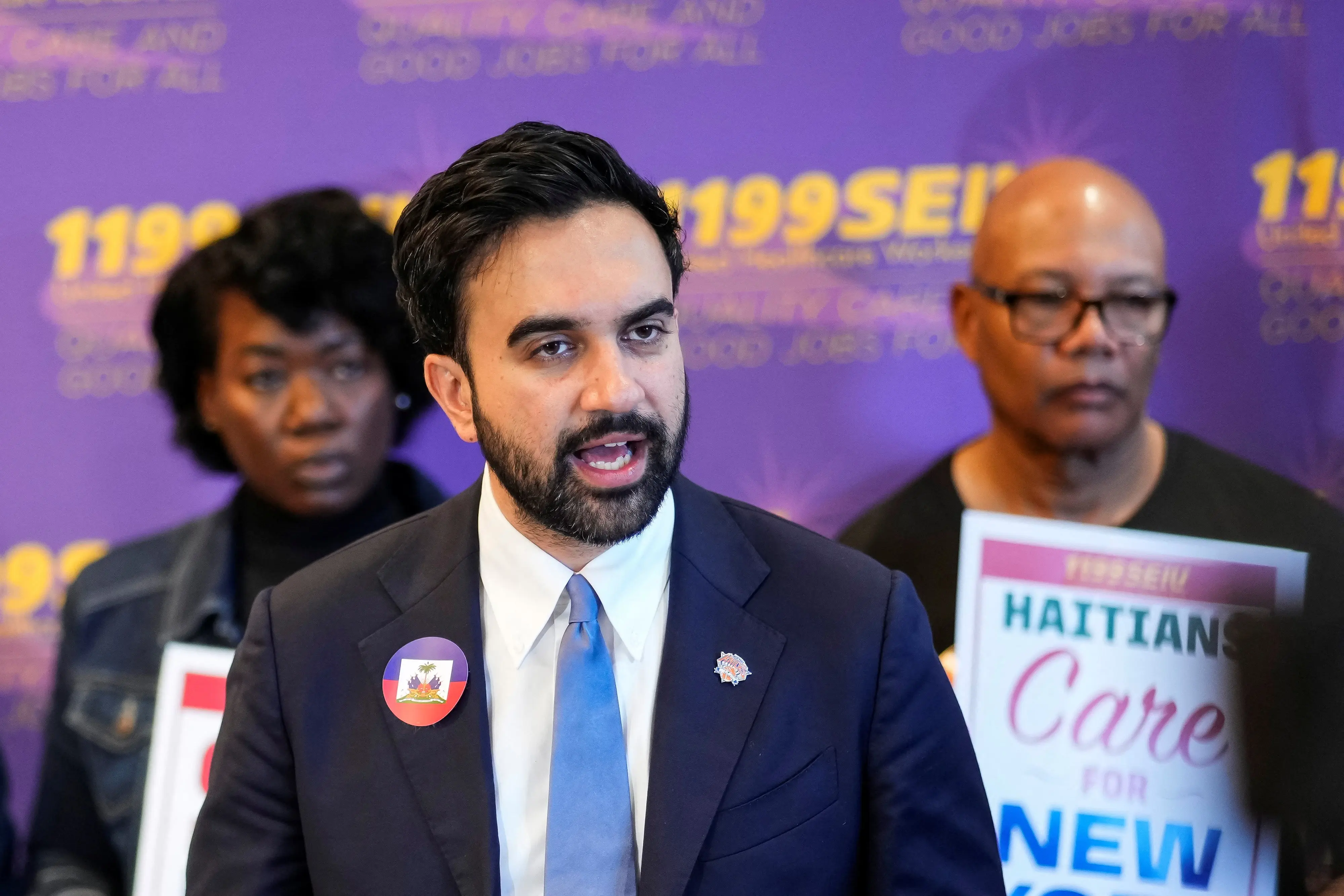
Within hours of the ruling, Mamdani joined Governor Kathy Hochul, state Attorney General Letitia James, and immigrant advocates at an emergency press conference at 1199SEIU headquarters in Manhattan, amNewYork reported. The officials framed the decision as both a humanitarian crisis and a threat to New York’s workforce, noting that Haitian and Syrian TPS holders fill critical jobs, including in health care.
“I want to be clear, you are a New Yorker today, tomorrow, and every day, you are a New Yorker,” Mamdani told the crowd. “As health care workers, as teachers, as organizers, you have not just made your home in New York City, you have dedicated your lives to New York City.”
The mayor’s office said the Mayor’s Office of Immigrant Affairs would share additional information and resources soon and urged residents worried about their status to seek help, according to Just The News.
What the city can — and cannot — do
Mamdani’s vow rests on New York’s sanctuary framework, which largely bars local law enforcement from enforcing federal immigration law or cooperating with U.S. Immigration and Customs Enforcement. Since taking office in January, the mayor has strengthened those rules. In February, the New York Post reported that he signed an executive order prohibiting ICE from entering city property — including public schools, homeless shelters, and hospitals — without a judicial warrant, and ordered an audit of city agencies’ compliance and training for municipal workers.
“We will make it clear once again ICE will not be able to enter New York City property without a judicial warrant,” Mamdani said at the time. “That means our schools, our shelters, and our hospitals.”
Those protections carry real limits, a point underscored across the legal commentary on the ruling. The termination of TPS is a federal action, and a mayor cannot reverse a Supreme Court decision or bar federal agents from operating under federal authority within city limits. Sanctuary policies can make enforcement operations harder by denying ICE local cooperation and access to city facilities, but they do not restore the legal status that the Court has allowed Washington to revoke. In practice, the city’s most concrete tools are the ones Mamdani pointed to: legal resources, a municipal hotline, and a pledge of support.
The other side of the ruling
The Trump administration argued that the Department of Homeland Security — not the courts — has sole authority to decide whether conditions justify continued TPS, and the Court’s majority agreed. Haitians had held the designation since a devastating 2010 earthquake, and Syrians since the outbreak of civil war in 2012; both designations were renewed repeatedly before the administration moved to end them. The decision followed an earlier ruling that allowed the administration to terminate TPS for Venezuelan migrants, and it could affect a far larger population — as much as 1.3 million people from 17 countries, with the administration already moving against roughly one million immigrants from 13 countries.
Immigration lawyers warned that the consequences are severe. “The decision is definitely bad news,” said Ahilan Arulanantham, co-director of UCLA’s Center for Immigration Law and Policy, who represented Syrian TPS holders, telling reporters that most of the legal claims used to challenge the terminations are now foreclosed. Attorneys for TPS recipients maintain that both Haiti and Syria remain unsafe and that the administration failed to properly assess conditions before ending the protections.
City data cited by the New York Post show roughly 115,000 Haitians and nearly 12,000 Syrians live across the five boroughs — a community now facing weeks of uncertainty. Because the ruling is expected to take effect about 32 days after the Court’s judgment, with the case first returning to the lower courts, Haitian and Syrian TPS holders are expected to retain their work authorization until at least late July.
Advocates and city officials are urging affected residents not to panic, to confirm the exact dates on their work permits, and to seek help only from qualified immigration attorneys and accredited representatives, since many may hold other pathways — including pending asylum claims — that remain valid. For now, Mamdani’s message to the city’s Haitian families was more a promise than a legal strategy.
“We will not turn our backs on you,” he said.
Editorial Disclaimer: This article was originally written in English. The French and other versions are produced using AI translation, and errors are possible — the English version is authoritative. CTN also uses AI to convert text into audio. Readers and listeners should rely on the English text where any discrepancy arises.
https://ctninfo.com/mamdani-vows-new…ding-haitian-tps/