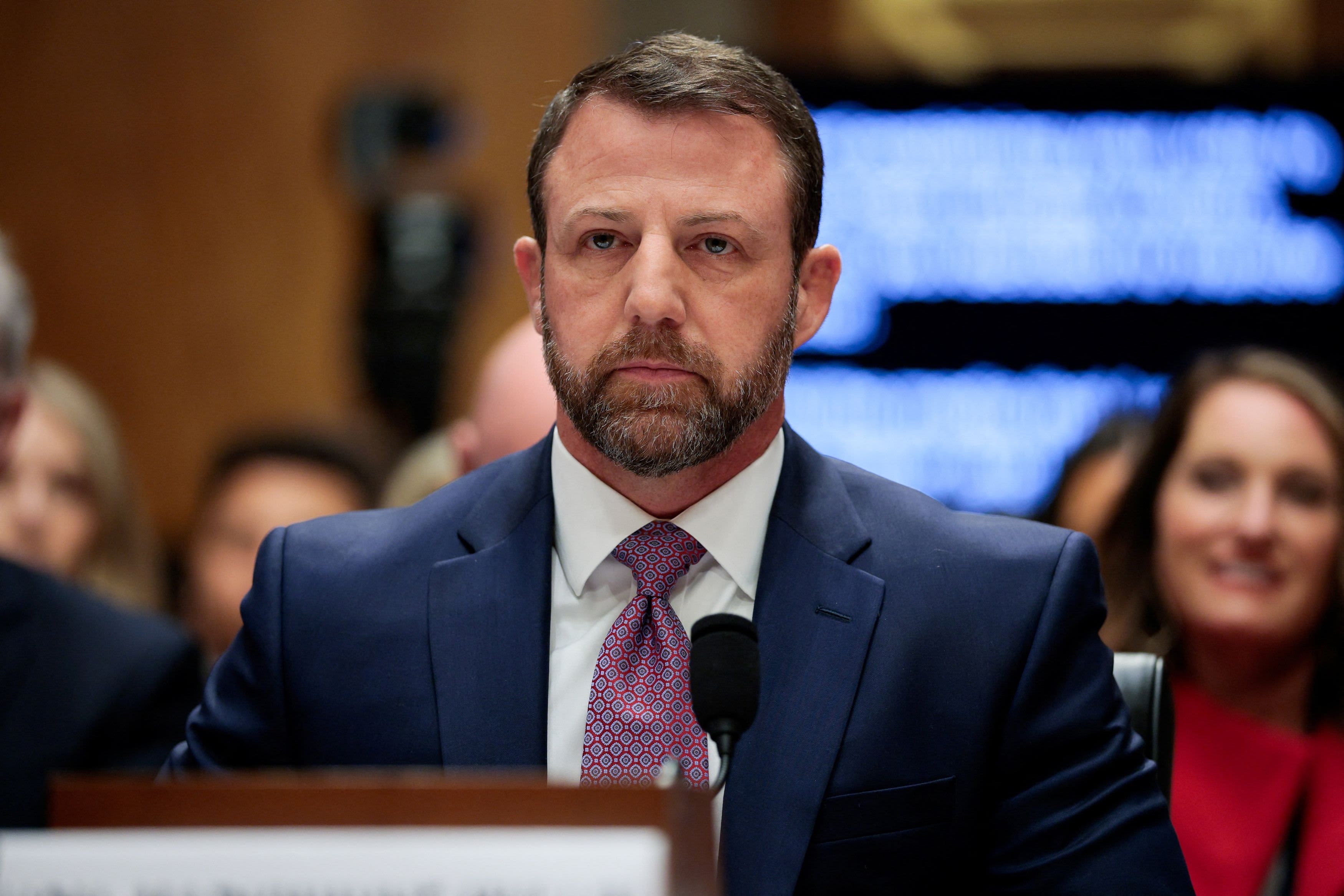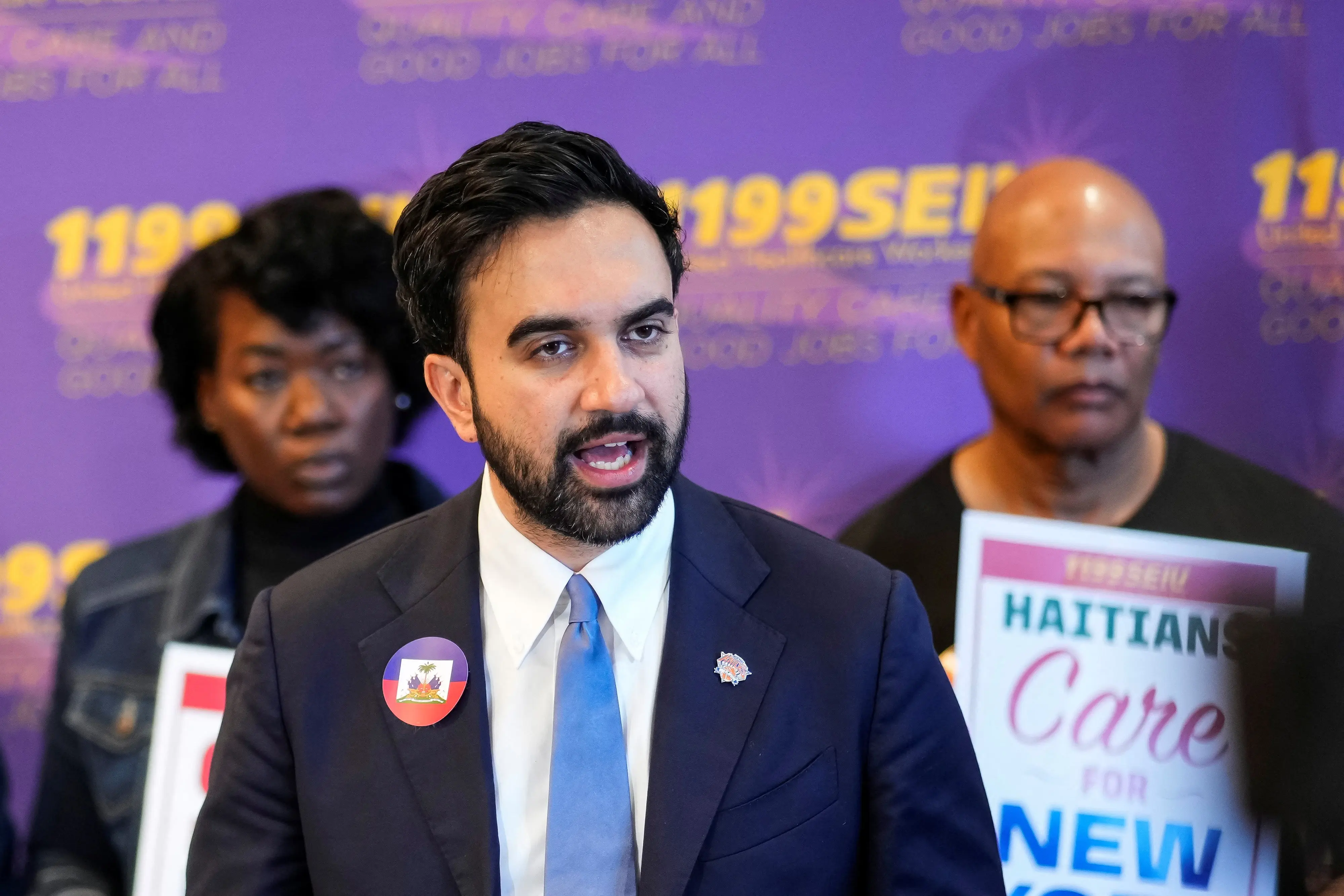


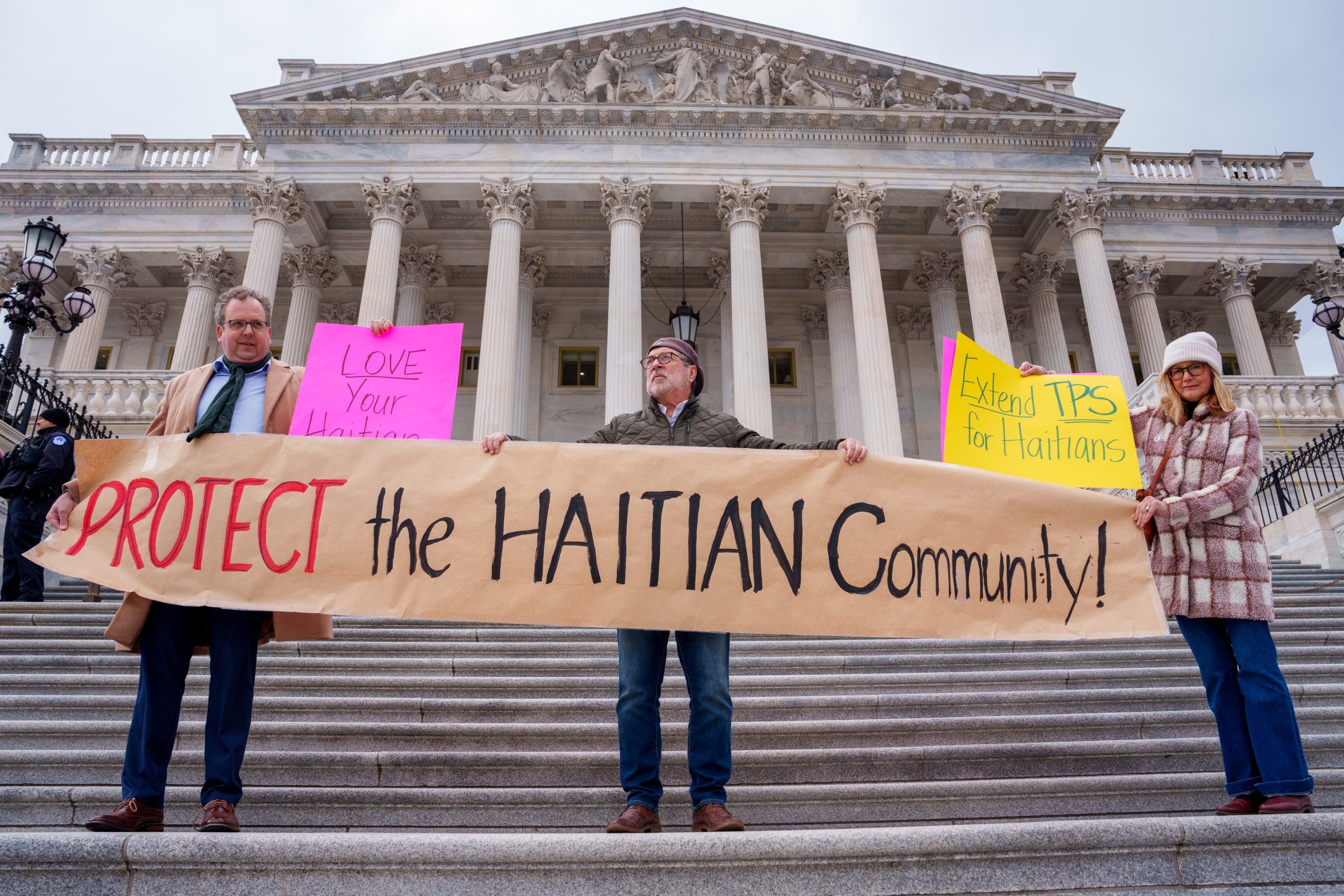
On CNN, Homeland Security Secretary Markwayne Mullin told Temporary Protected Status holders to “fill out the paperwork” for permanent residence or accept help to leave — acknowledging a green-card path that immigration experts confirm exists, though it is conditional and far from automatic.
Caribbean Television Network (CTN)
Even as he defended the move to end Temporary Protected Status for hundreds of thousands of Haitians, Homeland Security Secretary Markwayne Mullin acknowledged on Sunday that those affected can still pursue a permanent, legal future in the United States — telling them to “fill out the paperwork” for a lasting status rather than assume every door has closed.
It is the part of his message most worth the attention of Haitian families. Speaking on CNN’s “State of the Union” three days after the Supreme Court cleared the way to terminate TPS for Haiti and Syria, the Secretary repeatedly pointed to permanent-residence options that, by his own account, remain open.

“Either try to fill out the paperwork and be here under a permanent status, or we’ll help you get back to your country,” Mullin said, as reported by Reuters.
Pressed by host Jake Tapper, Mullin laid out the choices directly. “These individuals have a couple of choices: they can try to apply for permanent residence here, they can apply for a temporary visa if they choose to, or they can choose to go back,” he said on CNN’s State of the Union.
The Secretary argued that the pathway has existed all along. “There are a lot of people who came over here 15, 20 years ago underneath TPS that[‘ve] already changed their status,” Mullin said. “The whole time these individuals have been here underneath the Temporary Protected Status, they could have applied for a visa. They could have applied for LPR [lawful permanent resident status]. They could have applied for different directions.” He conceded he could not promise everyone would be approved, but said nothing prevented people from applying, NTD reported, while noting that applicants generally cannot have felony convictions or be receiving public assistance.
The alternative on offer
For those who do not pursue another status, Mullin restated the administration’s offer to fund a return. “We’ll actually give you a plane ticket, plus roughly $2,100 to help you re-establish when you get there, but temporary protective status, according to the courts and in its name itself, is not permanent status,” he said.
The remarks follow the Supreme Court’s 6-3 decision in Mullin v. Doe, which held that federal courts cannot review most challenges to a TPS termination and lifted the orders that had kept protections in place for an estimated 350,000 Haitians and more than 6,000 Syrians. The reach is potentially far wider: a Congressional Research Service report cited by NTD found that nearly 1.3 million people from 17 countries held TPS as of early 2025.

Mullin is right that TPS holders can seek permanent residence — but immigration experts are clear that the path is real, conditional, and highly individual, and that it does not flow from TPS itself.
TPS is a temporary protection, not a green card, and it does not automatically convert into one. What it does is preserve lawful presence and a work permit while a person pursues an independent basis for permanent residence — most commonly a family petition (such as the spouse, parent, or child of a U.S. citizen), an employer sponsorship, or a grant of asylum, which can lead to a green card a year later, the American Immigration Council explains.
The central obstacle is legal. To adjust to permanent residence from inside the United States, a person generally must have been “inspected and admitted” or paroled at a port of entry. In Sanchez v. Mayorkas (2021), the Supreme Court ruled that holding TPS does not, by itself, satisfy that requirement for someone who first entered the country without inspection, as the American Immigration Council and the National Immigration Forum both note.
Many Haitian TPS holders entered that way. For them, the realistic routes are narrower: an independent grant of asylum, a waiver paired with visa processing abroad — which can trigger multi-year bars on reentry — or, in some past cases, a lawful reentry on advance parole. Each turns on the facts of an individual’s case, which is why attorneys urge TPS holders to get a professional assessment rather than assume either the best or the worst.
In short, the Secretary’s invitation to “fill out the paperwork” is accurate, but it is not a guarantee. The door he described is open for those who qualify and meet the admissibility bar; for others, it is far heavier to push than his framing suggests.
The contradiction at the center
The advice to seek status or go home collides with the government’s own warnings. Even as Washington moves to end these protections, the State Department continues to caution against travel to both Haiti and Syria, citing widespread violence, crime, terrorism, and kidnapping, Reuters reported. The United States first granted TPS to Haitians after the catastrophic 2010 earthquake and to Syrians after civil war broke out in 2012, and the designations were renewed for years precisely because conditions never became safe.
The prospect of large-scale removals has drawn opposition even within the president’s own party. Speaking to CNN the same day, Ohio Governor Mike DeWine said it was not safe for Haitians to return and warned that pulling diligent workers out of the labor force would damage Ohio’s economy and leave its healthcare sector short-staffed.
“It’s Haitians who many times are taking care of your mom or your dad who has Alzheimer’s, taking care of family members who might be in a nursing home,” DeWine said. “And to say we’re going to pull all those out, it’s just not in our own self-interest.”
The Ohio example carries weight. During the 2024 campaign, Trump falsely claimed that Haitians in the state were eating residents’ pets, a charge local officials rejected; the Supreme Court’s majority nonetheless concluded that Haitians suing the administration were unlikely to prove the terminations were racially motivated. Reuters has reported that the arrival of Haitian workers helped revive some of Ohio’s post-industrial communities, lifting wages and spurring job creation.
What should Haitian families do now?
For CTN’s audience, the practical takeaway sits in the space between Mullin’s two options. The ruling is expected to take effect roughly a month after the Court issues its judgment, and the case must still return to the lower courts, so work authorization is not expected to vanish overnight. That window is time to act, not panic.
Immigration attorneys advise TPS holders to confirm the exact expiration date on their documents, avoid acting on rumors, and seek a careful, individual review from a qualified immigration attorney or accredited representative to determine whether a family, employment, asylum, or other pathway applies. The Secretary said the option to pursue permanent status is available. Whether it is available to any given family is a question only a proper case review can answer — and the time to ask it is now.
Editorial Disclaimer: This article was originally written in English. The French and Haitian Creole versions are produced using AI translation, and errors are possible — the English version is authoritative. CTN also uses AI to convert text into audio. Readers and listeners should rely on the English text where any discrepancy arises.