

Twenty-eight Haitian migrants are in custody in Portland after coming ashore by boat on Jamaica’s northeast coast early Monday, the latest in a wave of desperate sea crossings from a nation gripped by gang violence and humanitarian collapse.
The group landed overnight Sunday into Monday, June 22, in the vicinity of Passley Gardens and Norwich, near Port Antonio, after residents reported seeing people disembark from a weathered vessel on the rocky shoreline. Police first detained 17 — reported as 10 men, four women, and three children — and took them to the Port Antonio Police Station for medical checks and immigration processing. As officers and soldiers combed the area throughout the day, additional men were picked up, including six found on the campus of the College of Agriculture, Science, and Education (CASE), pushing the total to 28. The count climbed as the hours passed, and police said the search for anyone who may have slipped away before they arrived was still ongoing.
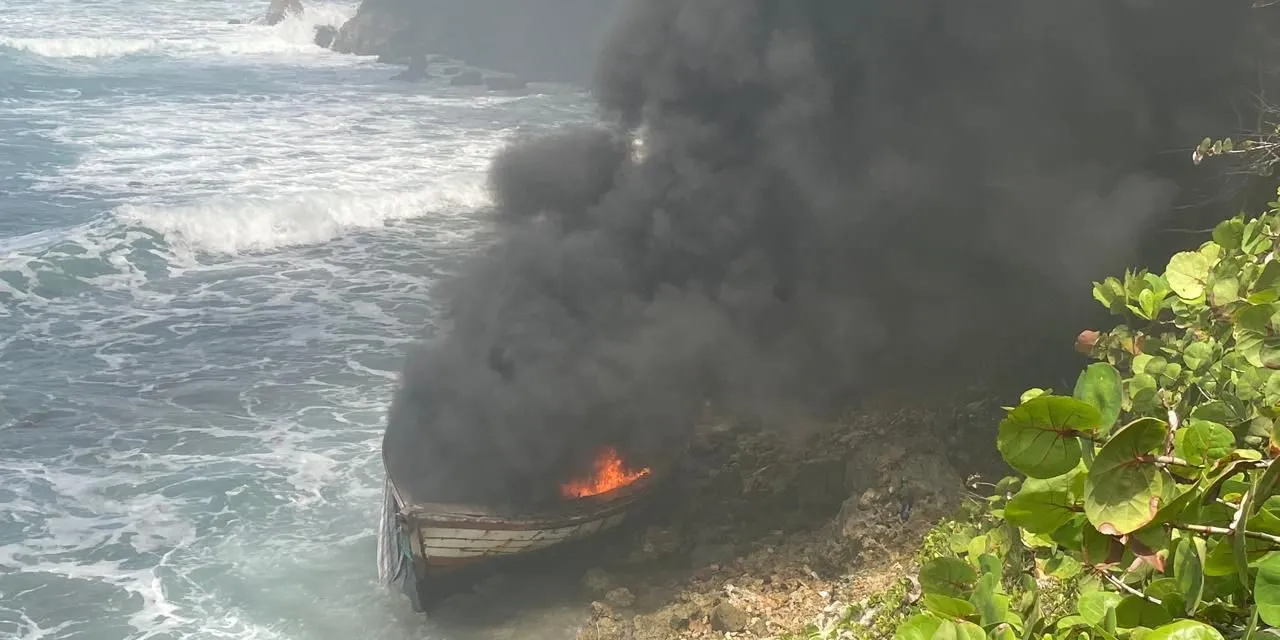
The migrants were held overnight while the Passport, Immigration and Citizenship Agency (PICA) and the parish health department carried out screening. The canoe that carried them, abandoned after running aground, was later destroyed by fire; Nationwide News Network reported it was burned by the Portland Health Department’s vector control team, a routine step taken with derelict vessels.
A familiar pattern on Portland’s shores
This week’s landing is not an isolated event but the latest in a series of similar incidents. Portland, on Jamaica’s northeastern tip and roughly 130 miles from Haiti, has become one of the most common entry points for small boats crossing, with arrivals increasing as Haiti’s security and political situation have worsened.
The script rarely changes. In May 2025, a 25-foot makeshift canoe with no engine carried 42 Haitians — among them a woman in advanced pregnancy — to Ross Craig beach in Long Bay. Within roughly two days of arrival, a group of 50 Haitians (including others who had been sheltering elsewhere on the island) was sent back to Haiti aboard a Jamaica Defense Force Coast Guard vessel, departing from Boundbrook Wharf in Port Antonio. In September 2025, another group of 30, who had landed at Kensington in eastern Portland, was repatriated after a three-day search, with several still believed to be hiding. Vessels are typically burned upon arrival, groups are processed at Port Antonio, and most are returned to Haiti within days.
According to the latest available reporting, authorities had not announced whether the 28 individuals repatriated this week had been repatriated. If prior procedures are followed, a return may occur within a short time frame; however, this approach is being examined.
Individuals arriving on these boats are leaving conditions described by international organizations as among the most challenging in the region. Gang groups control significant portions of Port-au-Prince and other areas, with human-rights monitors recording more than 5,600 people killed in gang-related violence in Haiti in 2025, and over a million people displaced. Women and children have experienced a considerable proportion of the harm, including instances of sexual violence.
Haitians who have arrived on Jamaica’s shores have consistently reported incidents of violence, theft, persecution, and food insecurity. Their statements reflect the decline of civil order in the country. For many, traveling by canoe is regarded as the option with the lowest perceived risk.
Security policy versus protection obligations
Jamaican officials have primarily addressed the arrivals from a national security standpoint. National Security Minister Dr. Horace Chang has described Haitian migration as a specific issue concentrated in Portland and has linked irregular migration to organized crime, including firearms and drug trafficking. Officials note that two suspects in the 2021 assassination of Haitian President Jovenel Moïse were apprehended in Jamaica after entering the country illegally, a case often referenced to support this approach.
Migrant-rights advocates see a different obligation. The Jamaica-based group Freedom Imaginaries and its founder, attorney Malene Alleyne, have repeatedly urged the government to halt summary expulsions and instead provide each arriving Haitian with a fair, individual assessment of their need for international protection, including possible refugee status. Advocates have warned that Jamaica’s rapid-repatriation approach risks amounting to refoulement — the forced return of people to a place where they face persecution or serious harm — which is prohibited under international refugee and human-rights law. The United Nations refugee agency, UNHCR, has urged countries to suspend forced returns to Haiti given the conditions on the ground.
By advocates’ counts, approximately 220 Haitians sought refuge in Jamaica between 2024 and mid-2025; most returned without the opportunity to make an asylum claim. Each arrival, including this week, raises the question of whether rapid return aligns with Jamaica’s obligations under international law.
The 28 individuals in Port Antonio represent a small proportion of Haiti’s wider displacement, but illustrate a larger regional situation. The same events that led to departures to Jamaica are linked to broader discussions about protection throughout the hemisphere, from marine migration in the Caribbean to dialogue on Temporary Protected Status in the United States. For those currently held in Port Antonio, the immediate issue is whether their cases will be individually reviewed or returned to Haiti shortly after arrival.
CTN will continue to follow this story as Jamaican authorities confirm the group’s status.
Sources: Reporting from the Jamaica Observer,
Editorial Disclaimer: This article was originally written in English. The French and Haitian Creole versions are produced using AI translation, and errors are possible — the English version is authoritative. CTN also uses AI to convert text into audio. Readers and listeners should rely on the English text where any discrepancy arises.