


With less than two months before the opening match, FIFA on April 9 announced the complete roster of match officials who will oversee the 2026 FIFA World Cup — a group of 170 referees, assistant referees, and video match officials drawn from 50 member associations across all six of football’s global confederations.
Those 52 referees come from 44 countries — a figure that underscores the geographic breadth of the selection. No single nation dominates the list, though the traditional football powerhouses of Europe and South America hold the largest shares.
Only two countries earned three referee appointments: Argentina (Yael Falcon Perez, Darío Herrera, and Facundo Tello) and Brazil (Raphael Claus, Ramon Abatti, and Wilton Sampaio). Four countries secured two spots each: England (Michael Oliver, Anthony Taylor), France (François Letexier, Clément Turpin), Mexico (Katia García, César Ramos), and the United States (Ismail Elfath, Tori Penso). The remaining 38 countries on the list each contributed a single referee.
Those 38 single-country appointments span every inhabited continent and represent a wide range of footballing traditions: Algeria (Mustapha Ghorbal), Australia (Alireza Faghani), Canada (Drew Fischer), Chile (Cristian Garay), China (Ma Ning), Colombia (Andrés Rojas), Costa Rica (Juan Calderón), Egypt (Amin Mohamed), El Salvador (Ivan Barton), Gabon (Pierre Atcho), Germany (Felix Zwayer), Honduras (Héctor Said Martínez), Italy (Maurizio Mariani), Jamaica (Oshane Nation), Japan (Yusuke Araki), Jordan (Adham Makhadmeh), Mauritania (Dahane Beida), Morocco (Jalal Jayed), Netherlands (Danny Makkelie), New Zealand (Campbell-Kirk Kawana-Waugh), Norway (Espen Eskas), Paraguay (Juan Gabriel Benítez), Peru (Kevin Ortega), Poland (Szymon Marciniak), Portugal (João Pinheiro), Qatar (Abdulrahman Al Jassim), Romania (Istvan Kovacs), Saudi Arabia (Khalid Al Turais), Slovenia (Slavko Vincic), Somalia (Omar Abdulkadir Artan), South Africa (Abongile Tom), Spain (Alejandro Hernández), Sweden (Glenn Nyberg), Switzerland (Sandro Schaerer), UAE (Omar Al Ali), Uruguay (Gustavo Tejera), Uzbekistan (Ilgiz Tantashev), and Venezuela (Jesús Valenzuela).

Among the 44 countries represented, Haiti is not one of them
Despite the Haitian national team’s historic qualification for the 2026 World Cup, marking the country’s return to the tournament for the first time in 52 years, no Haitian referee was selected among the 52 appointed referees or the 170 match officials.
Haiti is one of only a handful of participating nations with no officiating representation at its own tournament. The omission will not go unnoticed by a diaspora community that has followed every detail of Haiti’s World Cup journey with particular intensity. FIFA’s selection criteria are based strictly on performance assessments conducted over three years, but for a community already navigating significant political and legal pressures in the United States, the absence of a Haitian flag on the officiating roster is a quiet but pointed reminder of the ground the country’s football infrastructure still has to cover.
The announcement marks the formal completion of a selection process that began the day after the final whistle sounded in Qatar in December 2022.
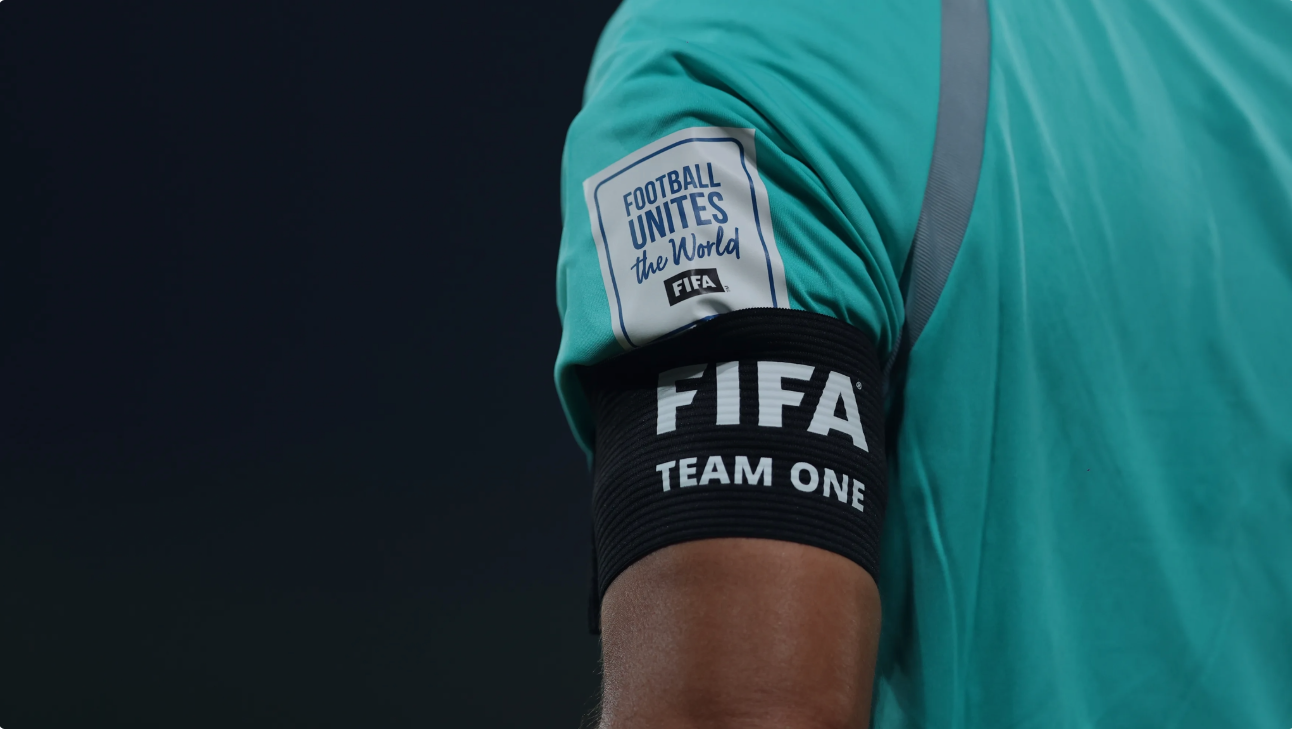
The cohort, formally designated FIFA Team One, consists of 52 referees, 88 assistant referees, and 30 video match officials. That figure represents a substantial expansion from previous editions — FIFA Chief Refereeing Officer Pierluigi Collina noted the group includes 41 more match officials than were appointed for Qatar 2022, reflecting the tournament’s expanded 48-team format and 104-match schedule across three host countries.
Three Years in the Making
Collina, speaking on behalf of the FIFA Referees Committee, described a selection framework built on sustained evaluation rather than a single audition. Candidates were monitored across FIFA tournaments, international competitions, and domestic leagues over the full three-year period, with fitness coaches, physiotherapists, and mental performance specialists all involved in the assessment process.
“The selected match officials are the very best in the world,” Collina said. “Each of them must be ready to be appointed for a match and to contribute actively to ensuring that the refereeing at the World Cup is a success.”

FIFA Director of Refereeing Massimo Busacca echoed that framing, describing the preparation cycle as continuous rather than event-driven. “The road to the FIFA World Cup 2026 began immediately after the conclusion of Qatar 2022, with a structured program involving seminars, workshops, and continuous monitoring,” Busacca said.
The full cohort will convene in Miami on May 31 for a ten-day preparation seminar before the tournament begins June 11. Following that gathering, video match officials will relocate to Dallas — home to the International Broadcast Center — while referees and assistant referees remain in Miami.
Technology Takes Center Stage
Beyond the human element, the 2026 tournament will deploy a more sophisticated technological infrastructure than any previous World Cup. Goal-line technology and connected ball technology will again be in use, alongside an upgraded version of semi-automated offside technology. At last year’s Club World Cup, FIFA quietly advanced that system by routing certain offside alerts directly to assistant referees via audio rather than through the VAR room, effectively eliminating additional delays on positional offside calls.
FIFA and Lenovo also unveiled AI-enabled 3D player avatars built from digital scans of players’ bodies, designed to improve the accuracy of offside reconstructions and produce clearer visual explanations of VAR decisions for fans in stadiums and on broadcast.
The most visible new feature for viewers will be an upgraded version of what FIFA has branded “Referee View.” Using AI-powered stabilization software, footage from the referee’s body camera will be smoothed in real time, reducing motion blur to produce broadcast-quality images from the official’s on-field perspective. The original version was tested at last year’s Club World Cup. The 2026 edition will mark its first use on the World Cup stage.
A Women’s Refereeing Milestone
Six women match officials were appointed across the full cohort — continuing a trend FIFA launched at Qatar 2022 when women referees appeared at a men’s World Cup for the first time. Among the referees, Mexico’s Katia García and the United States’ Tori Penso represent two of the six. Collina called the continued inclusion deliberate, describing it as part of FIFA’s broader effort to develop women’s refereeing at the highest levels of the game.
The 2026 World Cup kicks off June 11 and runs through the final on July 19.

https://ctninfo.com/?p=42243&preview=true
https://www.facebook.com/CaribbeanNewsMedia

Note to readers: This article was originally written and edited in English by Caribbean Television Network. Versions in other languages, including Haitian Creole and French, Spanish, and Portuguese, are generated using artificial intelligence translation tools.
While every effort is made to ensure accuracy across all versions, only the English version has been fully reviewed and verified. CTN is responsible for all editorial content.