The United States and Iran have reached an agreement in principle that would wind down their three-month war by reopening the Strait of Hormuz and committing Tehran to dispose of its highly enriched uranium, according to a senior American official cited by The New York Times on Sunday.
The official, who briefed reporters anonymously, cautioned that no deal had been signed and that final approval still rested with President Donald J. Trump and Iran’s supreme leader — a process that could take days.
The framework, as described by U.S. officials, would mark the most significant diplomatic step toward de-escalation since the conflict began in late February, when U.S. and Israeli forces launched coordinated strikes against Iranian targets.
According to The New York Times, the war has killed thousands of people, destabilized global energy markets, and drawn broad public opposition in the United States.
Yet the picture emerging from American and Iranian sources over the past 48 hours suggests an agreement whose foundations may be less settled than the headlines indicate. The two sides are describing the terms differently. Critical issues — including Iran’s missile arsenal and any moratorium on uranium enrichment — remain entirely outside the framework. And the mechanism by which Iran would dispose of its enriched uranium stockpile remains, according to the U.S. official cited by The New York Times, still under negotiation.
What the Framework Reportedly Includes
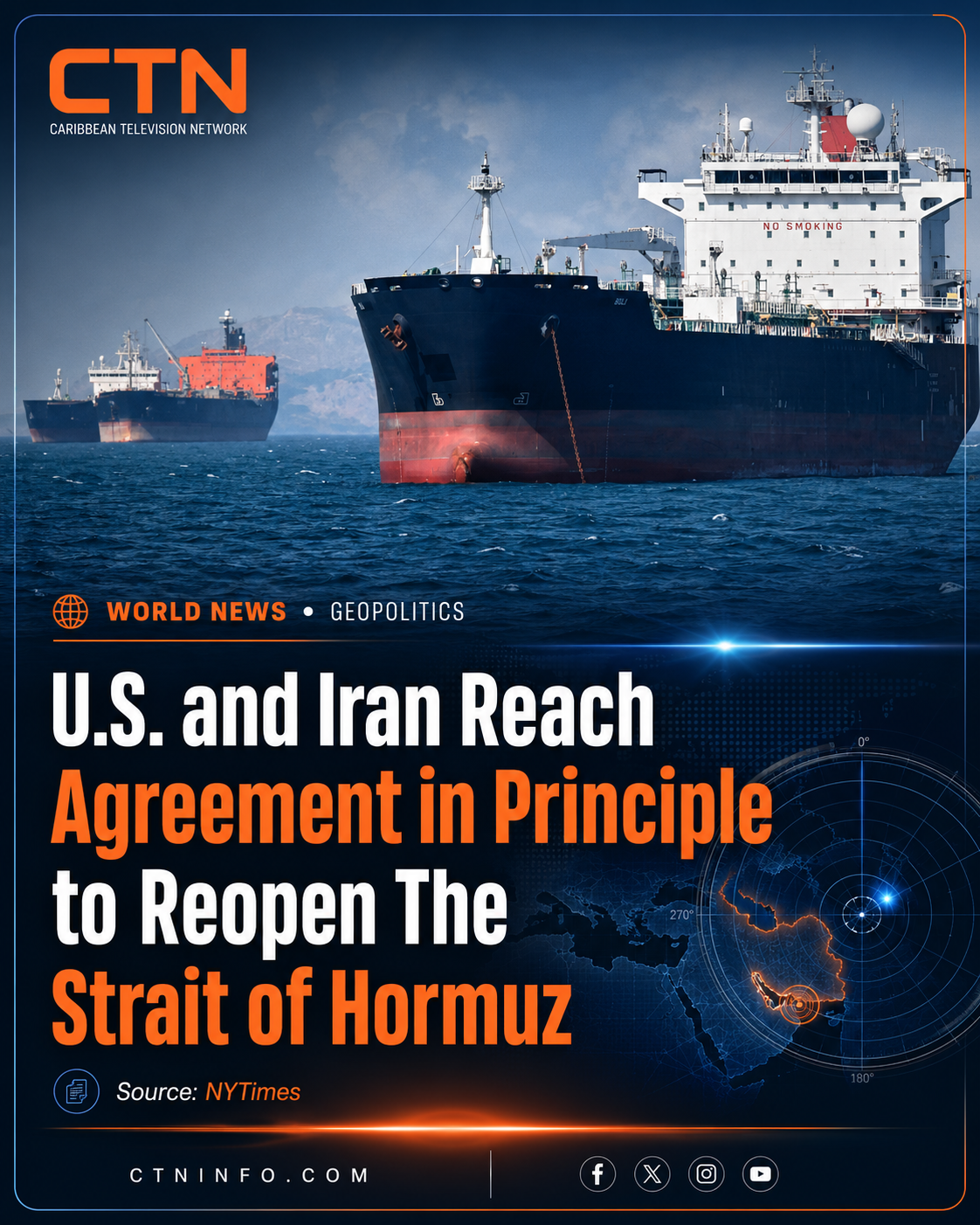
According to a senior U.S. official who briefed reporters Sunday, as reported by The New York Times, the proposed framework would have two principal components. First, Iran would commit to reopening the Strait of Hormuz — the narrow waterway between Iran and Oman that has been at the center of the conflict’s economic disruption. Second, Iran would commit to disposing of its highly enriched uranium, the material at the heart of long-standing Western concerns about its nuclear program.
President Trump has publicly insisted that the United States seize the material directly as part of any agreement, an idea that has been part of his broader posture on curbing Iran’s nuclear capabilities. The senior U.S. official told reporters that the mechanism for that disposal remains under active negotiation.
In exchange, according to the official, the United States would lift its blockade of Iranian ports — an enforcement measure imposed during the conflict to pressure Tehran to reopen the strait.

Trump confirmed elements of the framework in a social media post on Saturday, in which he announced that the two countries had largely negotiated a memorandum of understanding, in his words, pertaining to peace. On Sunday, however, the president told reporters that he had instructed his negotiators “not to rush into a deal,” as reported by The New York Times — a posture that has characterized much of his approach to the talks over the past several weeks.
Why the Strait of Hormuz Matters
The reopening of the Strait of Hormuz is the framework’s most economically consequential provision. The strait sits between Iran and Oman, connecting the Persian Gulf to the Gulf of Oman and, through it, to global shipping lanes.
It is the single most important maritime chokepoint for global oil trade. According to the International Energy Agency, an average of 20 million barrels per day of crude oil and oil products were shipped through the strait in 2025, representing approximately one-fifth of global petroleum liquids consumption. The IEA further reports that 93 percent of Qatar’s and 96 percent of the United Arab Emirates’ liquefied natural gas exports transit the strait, accounting for 19 percent of global LNG trade.
The Strait is the primary export route for oil produced by Saudi Arabia, the UAE, Kuwait, Qatar, Iraq, Bahrain, and Iran itself. According to the EIA, only Saudi Arabia and the UAE operate crude oil pipelines capable of bypassing the strait, and the combined capacity of those alternatives falls well short of replacing the volumes that ordinarily transit the waterway.
The Political Calculations
For President Trump, an agreement with Iran, even an imperfect or contested one, would offer a path out of a war that, according to The New York Times, has been broadly unpopular among the American public. The administration’s domestic political pressures, combined with the economic costs of sustained energy market disruption, have created strong incentives to bring the conflict to a close on terms that can be presented as a clear American victory.

For Iran’s leadership, the calculations are different but parallel. The Iranian economy has absorbed three months of war damage and the additional pressure of a U.S. naval blockade of its ports. The supreme leader and his negotiators face their own domestic political constraints, including hardline factions opposed to any substantive concession on the nuclear program. A framework that delays substantive commitments while delivering immediate sanctions relief and the lifting of the port blockade may be more acceptable to Tehran than a deal that locks in irreversible terms for uranium disposal.
The gap between the two sides’ descriptions of the framework may, in this light, be less a reporting discrepancy than a feature of the agreement itself: each side is presenting the version of the deal that best fits its own domestic and diplomatic narrative.
Editorial Disclaimer
This article was originally written in English. Versions in other languages, including French and Haitian Creole, are made available through AI translation software. Errors and inaccuracies may be present in translated versions. Only the English version should be considered the authoritative record.
Additionally, CTN uses AI software to convert article text into audio format for accessibility and broader community reach. Listeners are encouraged to refer to the original written English text for verification of any specific facts, names, or figures.
https://ctninfo.com/u-s-and-iran-rea…cant-gaps-remain/