


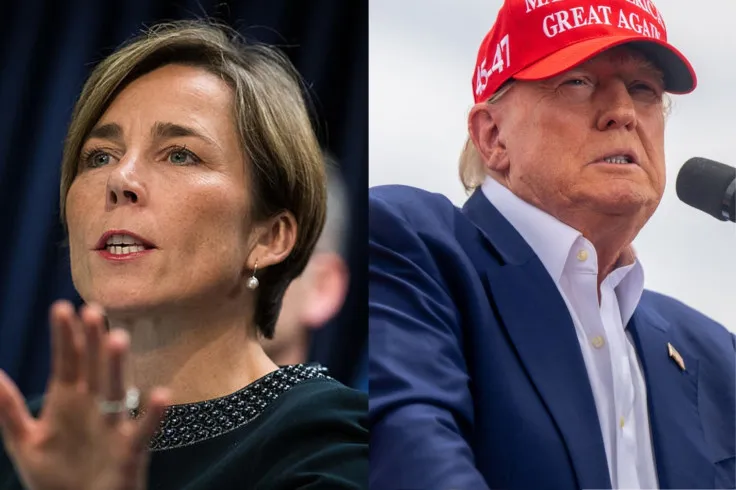
Governor Maura Healey welcomed the U.S. Supreme Court’s decision upholding birthright citizenship on Tuesday, calling it the affirmation of a bedrock constitutional principle and crediting Massachusetts Attorney General Andrea Campbell and a coalition of states for the legal fight that led to it.
The ruling, issued the same morning, struck down President Donald Trump’s executive order that sought to deny citizenship to children born in the United States to parents who are in the country illegally or on a temporary basis. For Massachusetts — home to the nation’s third-largest Haitian population and large communities of other immigrants — the decision removes a threat that had hung over thousands of families, including those whose American-born children are citizens even as their parents face the loss of their immigration status.
“Today’s decision upholds a fundamental constitutional principle that has defined our nation for generations,” Healey said in a statement.
The governor tied the ruling to the everyday security of families. “Birthright citizenship is central to who we are as a nation. It has provided certainty for families across the country and protects the rights of children born on American soil,” she said. “The Supreme Court made clear today: President Trump can’t rewrite the Constitution. I’m grateful to Attorney General Campbell and her colleagues for standing up for our communities.”

She closed by framing immigration as a source of the state’s strength. “Massachusetts is stronger because of the diversity of our people and the contributions of immigrant families,” Healey said. “We will continue working to ensure that every child has the opportunity to succeed and thrive.”
The coalition behind the case
Healey’s gratitude to Campbell points to a fight that began the moment Trump signed the order.
One day after the president issued the directive in January 2025, Campbell co-led a coalition of states — alongside the attorneys general of New Jersey and California — in suing to block it in the U.S. District Court for the District of Massachusetts. A federal judge in Boston, Leo Sorokin, granted a preliminary injunction halting the order, and in October 2025, the First Circuit Court of Appeals agreed that the order was unconstitutional and upheld a nationwide block. In February 2026, Campbell filed a Supreme Court amicus brief, co-leading two dozen attorneys general and the city of San Francisco in urging the justices to preserve the long-standing guarantee.
Campbell, the first Black woman to serve as Massachusetts attorney general, had framed the case as both constitutional and personal. “President Trump does not have the authority to take away constitutional rights,” she said as the litigation advanced, arguing in a separate statement that citizenship “should not, cannot, and must not depend on the state where a baby was born.”
The justices ruled in Trump v. Barbara, a case that reached them from a New Hampshire decision striking down the order. Chief Justice John Roberts wrote the opinion, holding that the 14th Amendment guarantees citizenship to nearly everyone born on U.S. soil. The Court rejected the administration’s argument that children of noncitizens are not “subject to the jurisdiction” of the United States and therefore fall outside the amendment’s reach.
The Court divided along two lines. On the question of whether Trump’s order was lawful, the justices ruled 6-3 against the president. On the deeper question of whether birthright citizenship is constitutionally guaranteed — beyond the power of any future Congress to change — the Court split 5-4. Roberts was joined in the majority by Justices Sonia Sotomayor, Elena Kagan, Amy Coney Barrett, and Ketanji Brown Jackson. Justice Brett Kavanaugh agreed the order was unlawful but parted from the majority on the constitutional question, while Justices Clarence Thomas, Neil Gorsuch, and Samuel Alito dissented and would have allowed the restrictions to take effect.
What it means for Haitian families
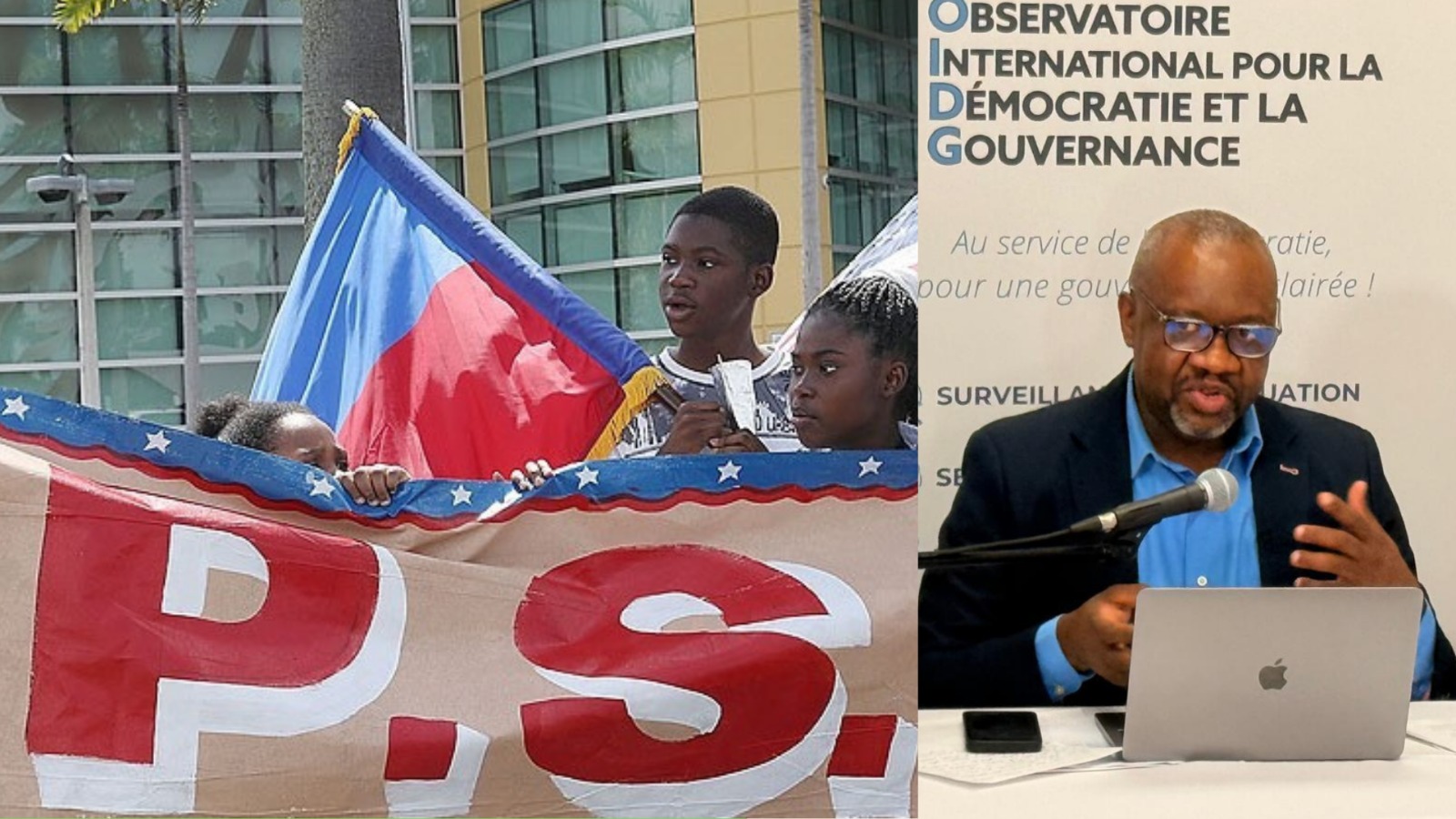
For CTN’s audience, the decision carries a clear and immediate meaning. A child born in the United States to Haitian parents is a U.S. citizen — whether those parents hold TPS, a visa, a pending application, or no status at all. That guarantee matters acutely now, just days after the same Court cleared the way to end TPS for an estimated 350,000 Haitians, a move that had left families fearful about the futures of children who are citizens by birth.

Healey and Campbell have been among the most vocal Massachusetts officials defending the state’s Haitian community through that turmoil, standing with TPS holders at rallies and in court. Tuesday’s ruling does not undo the TPS terminations, and the broader battle over the parents’ protections continues in Congress and the lower courts. But for one category of vulnerable families — the citizen children at the center of the birthright fight — the state’s leaders said the law had held.
Editorial Disclaimer: This article was originally written in English. The French and Haitian Creole versions are produced using AI translation, and errors are possible — the English version is authoritative. CTN also uses AI to convert text into audio. Readers and listeners should rely on the English text where any discrepancy arises.
https://ctninfo.com/healey-praises-s…ight-citizenship/
https://www.facebook.com/CaribbeanNewsMedia