



Some of President Trump’s most prominent hardline supporters have a complaint about his deportation of Haitians: it is not happening fast enough. In the weeks since Temporary Protected Status ended for roughly 350,000 Haitians, influential voices on the right have argued that the administration’s early pace, a handful of flights carrying a few hundred people, will do little to shrink a population they want removed en masse, and they are pressing for far more.
The frustration surfaced most bluntly from Steve Bannon, Trump’s former chief strategist. On his program on Real America’s Voice on Friday, Bannon did the arithmetic out loud, noting that at one flight a week of roughly 170 to 200 people, “you’re going to deport 10,000 this year” against “hundreds of thousands of Haitians here,” according to the Washington Examiner.
In the same segment, Bannon reprised the false claim — amplified by Trump during the 2024 campaign and repeatedly debunked by local officials — that Haitians in Springfield, Ohio, were eating residents’ pets.
Others ran similar numbers.
Daniel Di Martino, a fellow at the right-leaning Manhattan Institute, wrote on X that increasing flights from one a month to one a week, even at 200 seats each, amounts to about 10,000 a year — enough, he wrote, to deport “a max of 25,000 before 2029,” a fraction of the more than 300,000 who lost status, according to the Washington Examiner. On the same platform, the conservative activist Chandler Langevin argued that with roughly 150,000 Haitian TPS holders in South Florida alone, “these flights need to be daily,” as reported by The Western Journal.
The administration has carried out two deportation flights to Haiti in about two weeks. The first, on August 21, carried 161 people, and a second carried roughly 50, according to flight-monitoring groups including Human Rights First’s ICE Flight Monitor, though the Washington Examiner put the combined total closer to 300. Before this month, removal flights to Haiti had averaged about one a month, Human Rights First said, and The New York Times reported, based on government documents, that the administration is now working to increase that rate.

Even at the accelerated pace the hardliners are citing, the math they themselves lay out underscores the gap: roughly 10,000 removals a year set against the 350,000 Haitians who lost protection. That distance is fueling the complaints — and making the pressure to speed up removals the central thread of the current debate.
Behind the numbers are people being returned to a collapsing country.
Both flights landed not in the capital but in the northern city of Cap-Haïtien, because the main airport in Port-au-Prince is considered too dangerous to use.
The U.S. State Department classifies Haiti at its highest “Level 4 — Do Not Travel” warning, citing kidnapping, violent crime, and unrest, and the country has been under a national state of emergency since 2024. United Nations figures cited by CBS News recorded more than 3,100 people killed in Haiti in the first half of 2026 and about 1.5 million displaced by gang violence, in a nation of roughly 12 million where more than half the population needs humanitarian aid. During a special meeting at the UN Security Council this week, a French representative to the United Nations cited more than 15,000 Haitians assassinated by gangs between 2026 and 2026. More than half of the population are displaced, he said.
One deportee who arrived in Cap-Haïtien told The Associated Press that he left Haiti at age five and that his family lives in New York City, a man sent to a country he barely knew. The second flight, according to the Miami Herald, carried families and children, including a one-year-old born in the United States.
On arrival, Haitian officials offered returnees up to $65, along with food and drink. Many of those being removed had lived and worked legally in the United States since 2010, when Haiti first received TPS after a catastrophic earthquake.
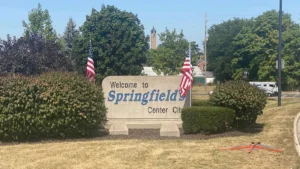
Nowhere has the enforcement push been more concentrated than Springfield, Ohio, the small city of roughly 15,000 Haitian residents that Trump singled out during the 2024 campaign with the debunked pet-eating claims. Hundreds of Haitians in the Springfield area were contacted by ICE in late July and told to check in at a local federal office, where many were fitted with ankle monitors. As of last week, 29 Haitian immigrants in the city had been taken into ICE custody, according to Theresa Hice-Fromille, a board member of the Haitian Community Help and Support Center, who spoke to the Washington Examiner.
On Friday, religious leaders in Springfield held a news conference condemning the operation and describing the city as being “under siege,” according to a local media report cited by the Examiner.
DHS and ICE declined to provide arrest counts in Springfield. “DHS does not discuss ongoing or future operations,” a spokesperson said in a statement to the Washington Examiner, adding that TPS was always meant to be temporary and had been allowed to function as “a de facto amnesty.”
For the Haitian community, the argument now playing out on the right is not really about logistics. It is about how quickly the lives of longtime residents — nurses, factory workers, parents of U.S.-born children — will be uprooted and sent to a country the U.S. government itself deems unsafe. The hardliners pressing for daily flights and tens of thousands of removals are describing, in the language of quotas and seat counts, the acceleration of a process that for each Haitian family means separation, danger, and return to a homeland in crisis.

https://ctninfo.com/hardline-trump-a…nd-want-far-more/
https://www.facebook.com/CaribbeanNewsMedia
This article was originally written in English. Other language versions are produced using AI translation software, and errors are possible — the English version is authoritative. CTN also uses AI to convert text into audio.