


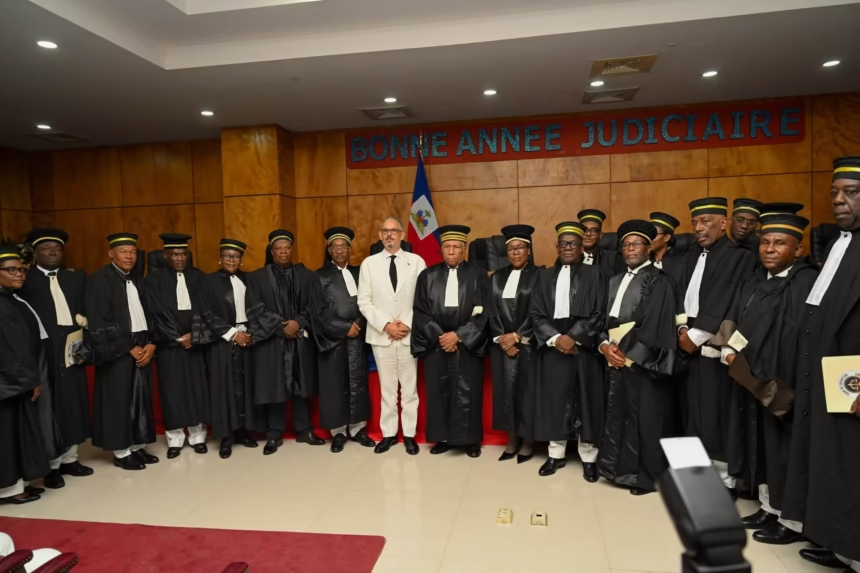
The traditional solemn ceremony marking the resumption of judicial work for the 2026-2027 year was held this Monday, October 5, 2026, at the Court of Cassation, at the Champ-de-Mars, in accordance with Article 75 of the decree of August 22, 1995. This essential event on Haiti’s institutional calendar brought together Prime Minister Alix Didier Fils-Aimé, several members of the government, actors from the judicial apparatus, representatives of the Haitian National Police (PNH) and the Armed Forces of Haiti (FAd’H), as well as members of the diplomatic and consular corps.
Speaking before the assembly, the president of the Superior Council of the Judiciary (CSPJ) and of the Court of Cassation, Magistrate Jean-Joseph Lebrun, welcomed the opening of this new judicial year. He praised the efforts made during the previous term to strengthen the judicial system, while calling on his fellow magistrates to remain committed to fulfilling their mission. According to him, every good magistrate is invested with a noble mission: to dispense justice with independence, impartiality, courage, and dignity. He urged his peers not to capitulate and not to give in to fear, in a context where pressures of all kinds threaten the serene exercise of the judicial function.
The president of the CSPJ nevertheless acknowledged, with commendable frankness, the shortcomings affecting Haiti’s judicial apparatus. He cited, among others, the slowness of proceedings, the lack of materials, the lack of adequate infrastructure, and the poor working conditions of magistrates. These are all ills that prevent justice from responding effectively to the legitimate expectations of those seeking justice. This self-criticism, rare in official speeches, reflects an awareness of the challenges to be met.
Jean-Joseph Lebrun nevertheless highlighted a few reasons for satisfaction. He welcomed the recent certification of 119 magistrates, an important step toward the professionalization of the judiciary. He also emphasized that 249 rulings were issued by the country’s five Courts of Appeal, proof that the system continues to function despite the difficulties.

The press release issued by the Prime Minister’s Office at the end of the ceremony also specified that 286 decisions were rendered by the Court of Cassation and that 6,388 cases were handled by the courts of first instance during the past year. These figures, if they are not enough to mask the structural deficiencies, demonstrate the sustained activity of the jurisdictions.
The president of the CSPJ took the opportunity to launch a solemn appeal to the other constituted powers. He called for security for the judicial institution, which needs resources and respect for its independence. This demand echoes the concerns expressed repeatedly by human rights organizations and observers of the judicial scene.
Present at the ceremony, Prime Minister Alix Didier Fils-Aimé called for strengthened cooperation between the executive branch and the judicial branch, while respecting each other’s prerogatives. “The rule of law requires a strong, independent justice system that protects citizens,” he declared, adding that lasting peace, stability, and progress depend on a justice system capable of protecting rights and enforcing laws. This speech is intended to be reassuring, but it will have to be translated into action to convince a population often skeptical of political promises.
The Announcement of a Major Reform: The New Penal Code and the New Code of Criminal Procedure
In his capacity as acting Minister of Justice, the head of government announced important news: the entry into force, on January 1, 2027, of the new Penal Code and the new Code of Criminal Procedure. He presented these two texts as major elements in the modernization of Haiti’s judicial system. This long-awaited reform aims to adapt Haitian law to contemporary realities and strengthen the effectiveness of criminal justice. It could mark a turning point in the fight against impunity and corruption, provided that human and material resources follow.

The opening of the 2026-2027 judicial year comes in a particularly difficult context for Haiti. The security crisis, massive population displacements, institutional instability, and economic challenges weigh heavily on the daily lives of citizens. In this dark picture, justice appears as an essential pillar of national reconstruction. The speeches delivered at the Court of Cassation reflect a stated desire for reform and strengthening. But words must be transformed into deeds. Magistrates, political authorities, and civil society all have a role to play so that this judicial year can be one of renewal. The Haitian people, in search of justice and dignity, await concrete results.

