


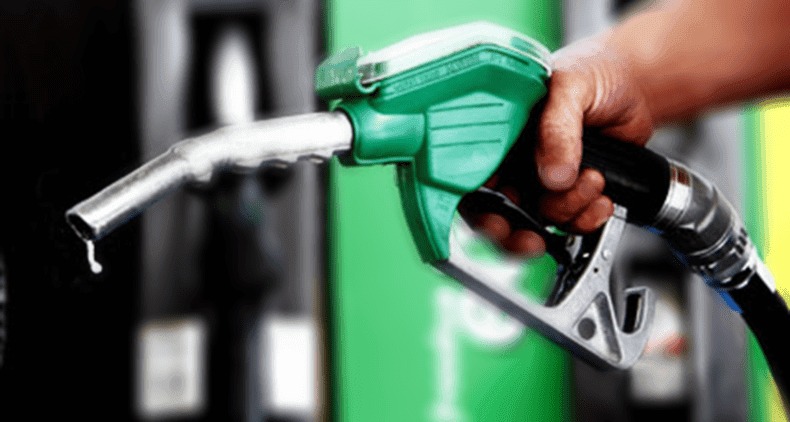
Port-au-Prince, Sunday, July 5, 2026 – After several months of economic tensions and erratic fluctuations in global markets, the Haitian government has announced a new significant decrease in petroleum product prices across the entire national territory.
This measure, formalized through a joint communiqué from the Ministry of Economy and Finance (MEF) and the Ministry of Commerce and Industry (MCI), follows the recommendations issued by the Advisory Council for Monitoring the Petroleum Market. According to official sources, it is the recent easing of crude oil prices on international stock exchanges, combined with a slight improvement in refining margins, that has allowed authorities to revise pump prices downward, following a crisis meeting held on July 3.
Concretely, the new prices are as follows: gasoline (regular unleaded) drops from 700 to 650 gourdes per gallon, a reduction of 50 gourdes, representing a decrease of approximately 7%. Diesel (gasoil), a strategic fuel for freight transport and electricity generation, is now set at 700 gourdes, compared to 790 gourdes previously, representing a substantial reduction of 90 gourdes. Finally, kerosene records the sharpest decline, with a drop of 95 gourdes, falling from 785 to 690 gourdes.
A Rollercoaster Year for Fuel Prices

This July decrease, while welcome, is not the first in 2026. It is part of a process of gradual readjustment that the government is attempting to carry out cautiously, following a major crisis that shook the country earlier this year. To recall, on April 2, 2026, as refined fuel prices reached unprecedented highs on the global market due to geopolitical tensions, the Haitian State was forced to implement a sharp increase in tariffs. Between late February and late March, kerosene had jumped by more than 100%, diesel by 85%, and gasoline by 50%, sending shockwaves throughout the country.
Faced with this surge, authorities had to respond in stages. On May 8, 2026, a first timid reduction occurred, bringing gasoline down to 700 gourdes and diesel to 800 gourdes. Then, on June 15, 2026, a second pricing grid, co-signed by Ministers Serge Gabriel Collin (Economy and Finance) and James Monazard (Commerce and Industry), brought diesel down to 790 gourdes and kerosene to 785 gourdes. Today’s measure therefore constitutes the third step in a slow journey back toward more sustainable prices, even though they remain well above the levels observed before the crisis.
A Direct Impact on the Cost of Living and Transportation
There is no denying that the price of fuel acts as a barometer of the Haitian economy, directly influencing the cost of living, and in particular the daily commutes of millions of citizens who depend on public transportation. During the major increase last April – which saw gasoline rise by 29% and diesel by 37% – the Ministry of Social Affairs and Labor had to yield to pressure from drivers’ unions by raising public transportation fares, in order to avoid a total paralysis of the network.
In the metropolitan area of Port-au-Prince, this inflation mechanically drove up the cost of short trips, which were set between 50 and 75 gourdes for usual routes such as Port-au-Prince to Carrefour, Pétion-Ville, or Clercine. For longer journeys to provincial towns, prices had become prohibitive, weighing heavily on families’ purchasing power and hindering trade. For example, a ticket to Saint-Marc reached 750 gourdes, to Gonaïves 1,300 gourdes, to Jacmel 1,165 gourdes, to Les Cayes 1,710 gourdes, and for remote destinations such as Jérémie or Port-de-Paix, passengers had to pay up to 3,150 gourdes.

By Marie Farah Fortuné and Darbouze Figaro