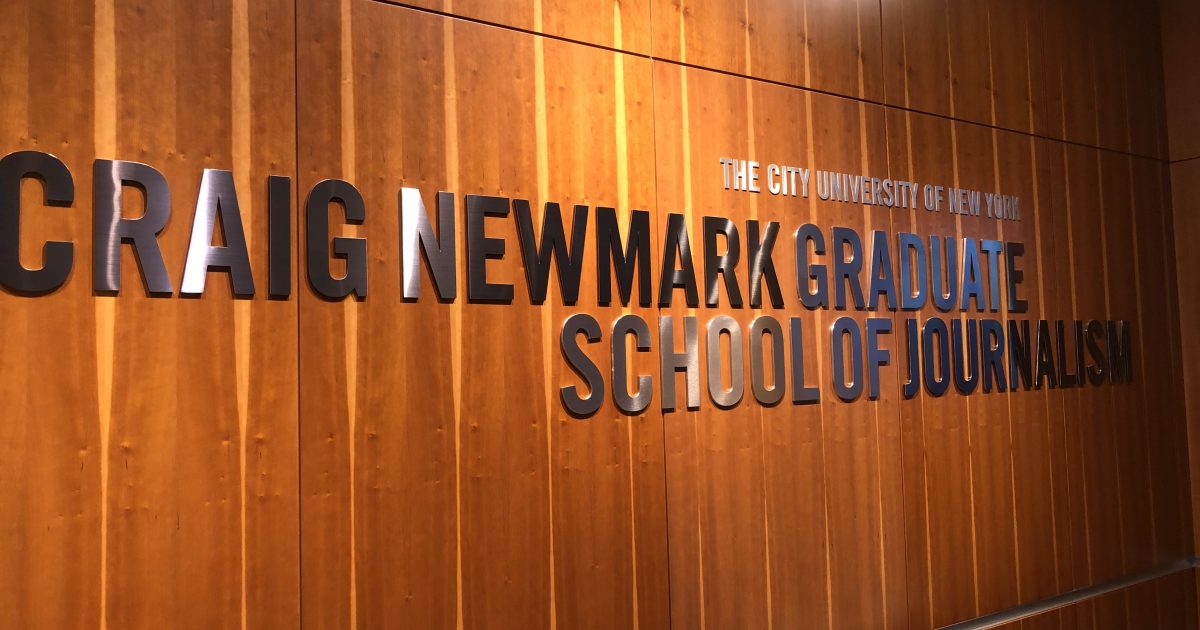
The Center for Community Media at the Craig Newmark Graduate School of Journalism spotlighted CTN’s Creole- and French-language reporting on Haiti’s return to the World Cup, placing the network among diaspora newsrooms honored across the country.
By CTN Newsroom
Caribbean Television Network (CTN) has been featured in a newsletter from one of the country’s foremost champions of community and ethnic journalism for its coverage of the 2026 FIFA World Cup. In the publication, produced by the Center for Community Media (CCM) at the Craig Newmark Graduate School of Journalism at the City University of New York (CUNY), CTN was highlighted for delivering live, in-language coverage — in Haitian Creole and French — of Haiti’s historic return to the world’s biggest sporting stage.
Contents
The Center for Community Media at the Craig Newmark Graduate School of Journalism spotlighted CTN’s Creole- and French-language reporting on Haiti’s return to the World Cup, placing the network among diaspora newsrooms honored across the country.Being featured in the CUNY newsletter carries particular weight because of where it comes from.The newsletter, titled “Fútbol, Heritage, and Home: How Diaspora Press Captured World Cup 2026,” examined how ethnic and community newsrooms across North America told the story of a tournament hosted, by the newsletter’s count, across 16 cities on the continent.CTN was one of several diaspora newsrooms the newsletter held up, and the wider feature underscored how far the tournament rippled through immigrant America.For CTN, being counted by an institution whose stated mission is to study and strengthen community journalism affirms the value of that work.
Being featured in the CUNY newsletter carries particular weight because of where it comes from.
The Craig Newmark Graduate School of Journalism is the only publicly funded graduate school of journalism in New York and across the Northeast. Its Center for Community Media, founded in 2012, has grown into a national hub dedicated to strengthening news organizations serving immigrant and communities of color.
For an independent diaspora outlet to be named in CCM’s pages is, in effect, to be held up by one of the field’s leading authorities on community journalism as an example of a job well done.
The newsletter, titled “Fútbol, Heritage, and Home: How Diaspora Press Captured World Cup 2026,” examined how ethnic and community newsrooms across North America told the story of a tournament hosted, by the newsletter’s count, across 16 cities on the continent.
Where national networks brought drone cameras, tactical breakdowns, and post-match press conferences carried to a global audience, CCM argued, diaspora press captured what the major broadcasts could not: what the tournament felt like on stoops and neighborhood fields, inside immigrant-owned restaurants, and in the living rooms of communities for whom the games were deeply personal.
CTN’s contribution sat at the heart of that argument. When Haiti’s national team reached the World Cup for the first time in 52 years, a squad whose players, like much of the diaspora itself, were largely born outside the country, the moment registered as a milestone for Haitians everywhere. Yet, as the newsletter observed, the major broadcasters who carried the match did not tell it in the language, or from the vantage point, of the community living it most intensely. In Haitian Creole, there was a silence where the diaspora’s own voice should have been. CTN set out to fill it.
The network mounted dedicated, in-language live coverage of Haiti’s return, so that Creole- and French-speaking audiences could follow the moment in their own language rather than through a translation of someone else’s telecast.
For a diaspora that spans generations and borders, many of its members are more fluent in the languages of home than in English or other languages; that distinction is not cosmetic. It is the difference between watching a historic moment and being spoken to as a participant in it.
For a diaspora that spans generations and borders, many of its members are more fluent in the languages of home than in English or other languages; that distinction is not cosmetic. It is the difference between watching a historic moment and being spoken to as a participant in it.
“Mainstream corporate broadcasts carried the game, but they did not tell it in our language, from our perspective, for our people,” Emmanuel Paul, CTN’s executive director, told the publication. “With virtually no funding, our team made sure the diaspora didn’t experience it through someone else’s cameras, but in Creole and French, in our own voice.”
CTN was one of several diaspora newsrooms the newsletter held up, and the wider feature underscored how far the tournament rippled through immigrant America.
In Philadelphia, the bilingual outlet 2Puntos Platform covered the grand final of “Los Lobos,” a youth soccer league founded by a Mexican immigrant that, per the newsletter, grew from 15 neighborhood children in 2009 into a 180-player community anchor. “For our communities, joy is not a distraction from the global event; it is the heartbeat that connects us to it,” the outlet’s founder, Emma Restrepo, told CCM.
Also in Philadelphia, FunTimes Magazine, an African diaspora publication, the newsletter traces to a 1992 founding in Liberia, mapping how the tournament’s kickoffs overlapped with the city’s cultural calendar, including Haiti taking the field against Brazil on Juneteenth, the day commemorating emancipation, in the city where the Declaration of Independence was signed.
The Washington, D.C.–area outlet TANTV News, the piece reported, tracked African nations’ road to the tournament for Black diaspora audiences nationwide, framing the sport as a shared cultural touchstone.
The feature also highlighted service journalism built around the games. In New York, the nonprofit newsroom Documented published a guide steering fans toward immigrant-owned restaurants tied to competing nations, among them, the newsletter noted, a Flatbush establishment known for the Haitian soup joumou. In Los Angeles, the independent outlet L.A. TACO assembled a directory of dozens of free and low-cost places to gather and watch across the county, as an alternative to steep ticket prices. And in Chicago, Borderless Magazine documented neighborhood venues that became gathering spaces — including a Haitian restaurant that filled with red and blue for Haiti’s return — while also covering the tournament’s harder edges, reporting on organizing efforts to keep immigration enforcement away from stadiums, fan zones, and watch parties.
Taken together, the newsletter presented the summer’s coverage as evidence of what diaspora press does that few others can: serve a community’s need not only for information, but for joy, cultural cohesion, and a sense of shared identity — and to do so, frequently, with a fraction of the resources available to the outlets working alongside them.
For CTN, being counted by an institution whose stated mission is to study and strengthen community journalism affirms the value of that work.
The network reached its audience in the languages they speak and from the perspectives they share, and, according to the CUNY Center for Community Media, demonstrated why that kind of storytelling matters.
CTN’s Creole- and French-language broadcasts of Haiti’s World Cup return reached thousands of viewers worldwide, generating high levels of engagement on digital platforms and prompting hundreds of community comments, shares, and messages of gratitude from audiences who rarely see themselves reflected in mainstream coverage. Community members expressed pride and appreciation on social media, while the network’s live engagement rates were among the highest of the year. It is also a reminder of a persistent gap. When a nation of more than two million people in the diaspora watched their team return to the World Cup after half a century, the responsibility for telling that story in their own voice fell not to the broadcasters with the largest cameras, but to a small newsroom determined not to let the moment pass in translation.

https://www.facebook.com/CaribbeanNewsMedia
https://ctninfo.com/ctn-featured-in-…rld-cup-coverage/
Fútbol, Heritage, and Home: How Diaspora Press Captured World Cup 2026
Editorial Disclaimer: This article was originally written in English. Other language versions are produced using AI translation software, and errors are possible — the English version is authoritative. CTN also uses AI to convert text into audio.

https://www.facebook.com/CaribbeanNewsMedia
https://ctninfo.com/ctn-featured-in-…rld-cup-coverage/
Fútbol, Heritage, and Home: How Diaspora Press Captured World Cup 2026
Editorial Disclaimer: This article was originally written in English. Other language versions are produced using AI translation software, and errors are possible — the English version is authoritative. CTN also uses AI to convert text into audio.