

On an official visit to Washington from April 19 to 24, 2026, Haitian Prime Minister Alix Didier Fils-Aimé held numerous high-level meetings. On the agenda: American support for the new Gang Repression Force (FRG), pressure for credible elections, the future of TPS, and economic recovery through the HOPE/HELP programs. Behind the surface-level statements, the Trump administration appears to be setting its conditions for lasting stabilization in Haiti.
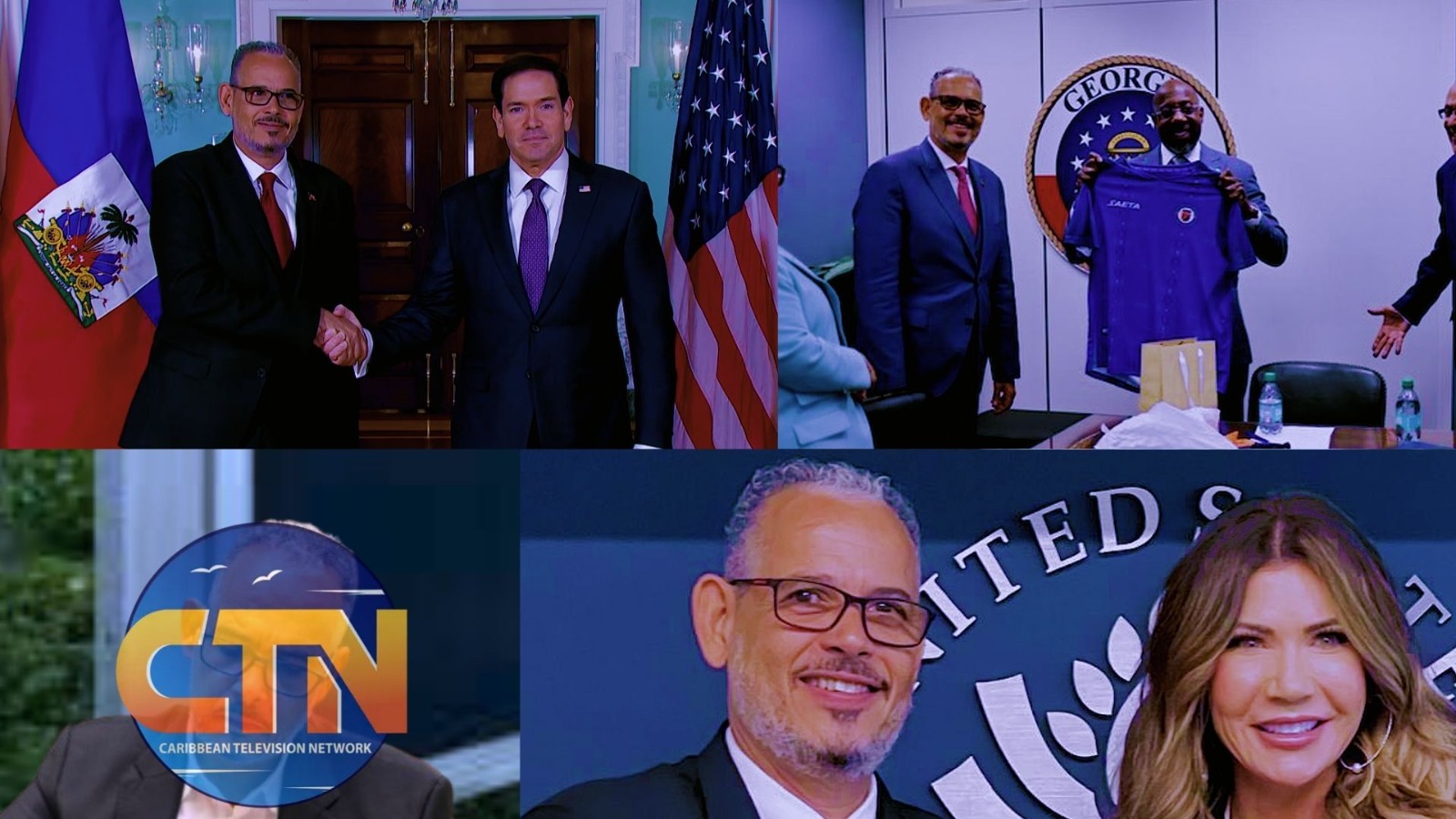
On Tuesday, April 21, 2026, in the hushed salons of the State Department in Washington, a handshake took place before the cameras. Alix Didier Fils-Aimé, head of the Haitian government, and Marco Rubio, U.S. Secretary of State, exchanged only a few words before withdrawing behind closed doors. The image is smooth, but the stakes are raw: the survival of a Haitian state still under the threat of gangs, and the American strategy to contain instability in the region.
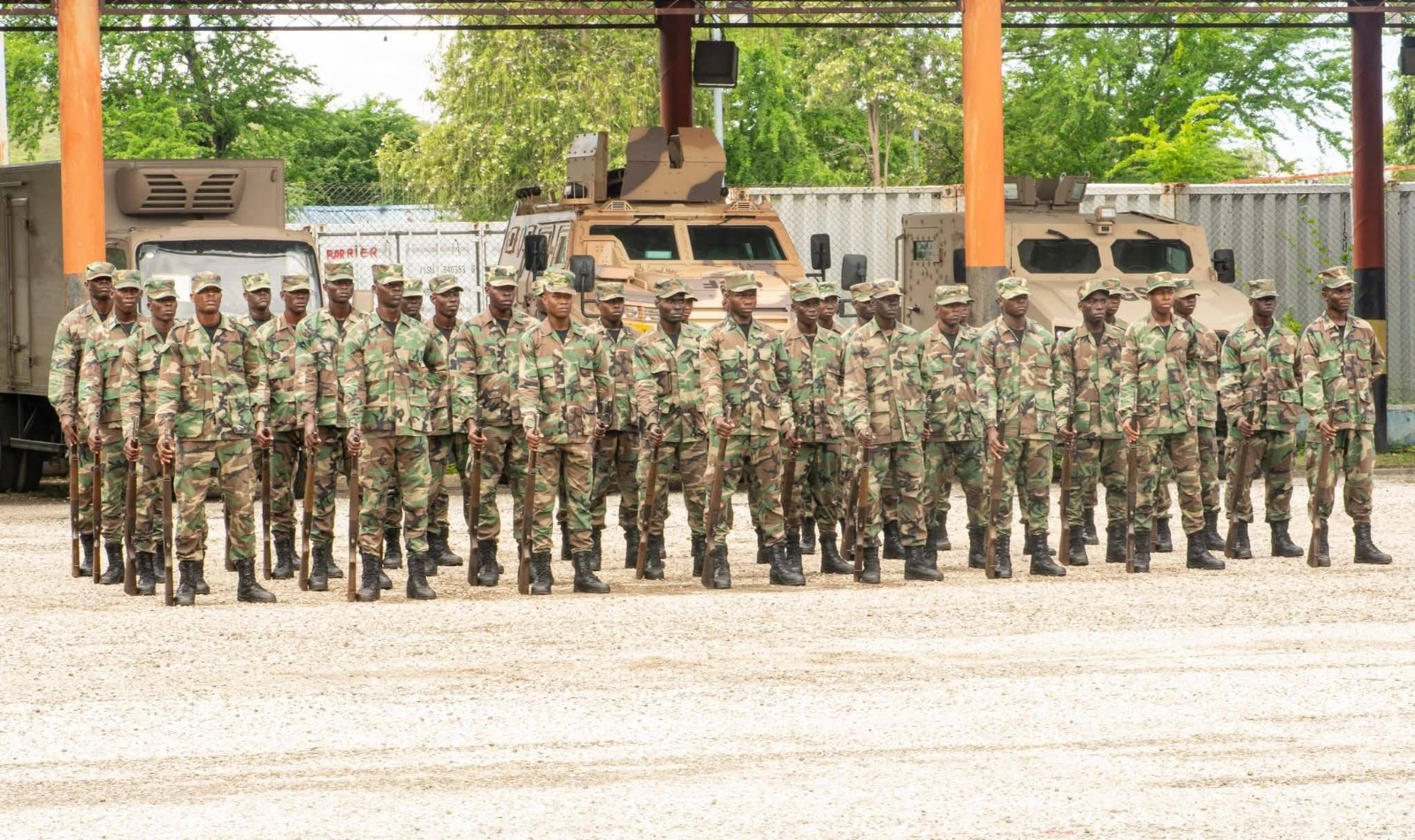
According to a statement from State Department spokesperson Tommy Pigot, Marco Rubio “reaffirmed the United States’ support for Haiti’s stability and security.” This support, however, materialized as pointed insistence on the Gang Repression Force (FRG) – whose still-partial deployment Washington presents as the decisive test of the Haitian government’s credibility.
“The Secretary welcomed the progress made in deploying the Gang Repression Force and reaffirmed the need for the rapid implementation of its mandate,” Tommy Pigot said.

A message in the form of a summons: the United States will not abandon the Haitian issue, but expects concrete results on the ground before considering political normalization.
“Shield of the Americas”: A Security Umbrella with Blurry Outlines
Following the meeting with Rubio, the Prime Minister met Kristi Noem, special envoy for the “Shield of the Americas” initiative – a regional security framework promoted by the Trump administration. Officially, this “shield” aims to combat drug trafficking, transnational criminal networks, and irregular migration.
The Haitian Prime Minister’s office hailed this tool as a “decisive strategic lever for restoring public order.” In practice, the American initiative resembles more of an expanded coordination mechanism than a dedicated intervention force. For Haiti, the challenge is to secure some of the promised funding and intelligence without eroding its sovereignty.
“The discussions also underscored the importance of reinforced cooperation with regional partners to combat drug trafficking effectively,” the Prime Minister’s statement specified.
The Security Litany as Electoral Prerequisite
One constant of the marathon day on April 21 was the repetition, before each interlocutor, of the same mantra: no elections without security. The Prime Minister presented the FRG to Congressman Brian Mast (Chairman of the House Foreign Affairs Committee), then to Mario Díaz-Balart (Vice-Chairman of the Appropriations Committee), as the cornerstone of the democratic transition.

The formula was well-rehearsed: “Security remains the essential condition for any democratic transition and the holding of general elections,” Fils-Aimé hammered home, according to the official record.
For their part, American lawmakers expressed cautious support. Díaz-Balart “encouraged continued efforts” without announcing any new funding releases. The message was clear: Washington will not endorse an election organized in chaos, but it will not indefinitely fund a security force without a clear political horizon.
This position was reaffirmed during the meeting with Democratic Senator Raphael Warnock – one of the few elected officials to mention, beyond security, the country’s “economic and institutional priorities.” The meeting ended with a symbolic gesture: the Prime Minister gave Warnock a jersey from the national soccer team, referencing Haiti’s qualification for the upcoming World Cup – an attempt to project an image of resilience and normality, light-years away from the reality of massive population displacements in Port-au-Prince.
TPS and the Diaspora: The Other Silent War
A less publicized but equally explosive issue: the fate of the roughly 350,000 Haitians benefiting from Temporary Protected Status (TPS) in the United States. The Prime Minister met with Senator Chuck Schumer, a historic figure of the Democratic Party and longtime TPS advocate. The discussion focused on the “critical importance” of maintaining this status, given the still-precarious humanitarian situation in Haiti.
Haiti’s request is clear: to obtain a multi-year renewal of TPS, sheltered from American political vagaries. But the Trump administration, which attempted to end TPS for several countries during its first term, remains unpredictable. The Fils-Aimé government is therefore playing a double game: reassuring Washington about its ability to control migrant departures, while advocating for the protection of those already settled.
“The Haitian government considers its diaspora an essential pillar of national development,” the statement recalls. A declaration of principle that must translate into concrete actions, given that remittances from Haitians abroad represent more than a quarter of the national GDP.
Economy and Humanitarian Aid: The Blind Spot of Discussions
Only one meeting with Representative Gregory Murphy truly addressed the economic and humanitarian dimensions. The discussions highlighted the HOPE/HELP programs – preferential trade agreements for Haitian textiles – whose multi-year renewal is deemed crucial to preserving jobs in industrial parks.
But beyond the statements, the situation on the ground remains catastrophic. Nearly half of Haiti’s population suffers from acute food insecurity, and gangs still control 80% of the capital. No concrete announcement of new humanitarian aid emerged from this day of meetings. The United States appears to have chosen its angle of attack: security first, the rest will follow – or not.
The Haitian head of government remains in the United States until April 24, with scheduled stops in Washington and New York. Officially, this mission is part of “strengthening strategic dialogue” with international partners. Unofficially, Alix Didier Fils-Aimé came seeking guarantees of his government’s survival, as the transition process stalls and American fatigue grows.
The signals from Washington are contradictory: on the one hand, Rubio praises the Prime Minister’s “leadership”; on the other, members of Congress condition any new aid on rapid, verifiable progress on the security front. As for the “Shield of the Americas,” it could quickly become a tool of regional pressure, serving U.S. immigration and anti-drug priorities.
In the meantime, Haiti holds its breath. The window of opportunity opened by the FRG’s deployment is narrow. If results are not forthcoming by the end of the year, there is a significant risk that Washington will reconsider its commitment downward – and with it, the last glimmers of hope for an exit from the crisis.
https://ctninfo.com/fils-aimes-washi…ocratic-progress/
https://www.linkedin.com/company/100253760/admin/dashboard/