


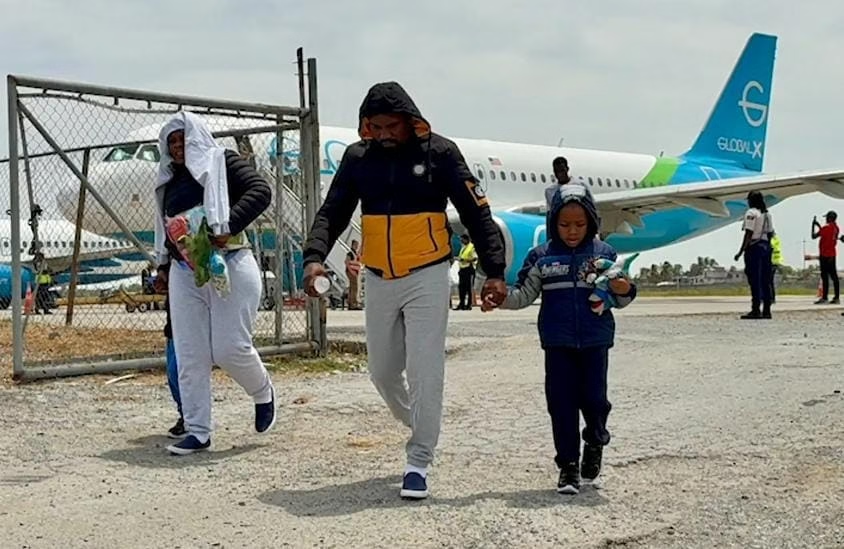
The appeal launched Monday by the UN High Commissioner for Human Rights, Volker Türk, to suspend deportations of migrants to Haiti resonates with a pressing reality. In recent weeks, U.S. authorities have significantly accelerated repatriation flights to the country, plunging thousands of families into anguish and raising fundamental questions about the safety of those being returned.
July 27, 2026, marked a decisive turning point. The official end of Temporary Protected Status (TPS), which had shielded some 350,000 Haitians from forced deportation, opened the door to an unprecedented wave of removals. The U.S. Supreme Court had upheld this revocation weeks earlier, despite warnings about the catastrophic situation prevailing in Haiti.
As early as August 20, the first post-TPS deportation flight landed in Cap-Haïtien with more than 160 people on board, including former beneficiaries of the humanitarian program. A second flight followed on August 27, carrying several dozen additional nationals. These operations are part of a plan announced by U.S. authorities: two weekly flights are now scheduled, moving about 250 people per week, or nearly a thousand per month.
The progression of numbers is telling. After flights carrying 21 people in February and 46 in March, the loads have continued to grow: 96 in June, then 132 in September, including, for the first time, children aged 4 to 11. Haitian authorities are struggling to manage this influx in an already toxic context.

A Return to a Country “Too Dangerous to Travel To”
The paradox is striking. While the U.S. State Department classifies Haiti at “Level 4: Do Not Travel” due to gang-related crime, terrorism, and civil unrest, Washington is massively sending nationals back to that same country. More than 3,100 people have been killed in Haiti in the first half of 2026 due to gang violence, and 1.5 million Haitians are already displaced within their own country.
Deportees often arrive in a territory they no longer recognize. As one of them, a professional boxer born in the Bahamas and deported to Haiti after twenty years in the United States, declared: “I know nothing about Haiti. I wasn’t born here.” Stripped of resources, without housing or strong family ties, these returnees face a brutal reality: their original neighborhoods have sometimes fallen under the control of armed groups, and the country’s social infrastructure is on its last legs.
Humanitarian and Diplomatic Pressure
Volker Türk’s appeal reflects growing international awareness. The UN independent expert on human rights in Haiti, William O’Neill, had already stated that “no one” should be deported to this country, emphasizing that conditions do not allow for a safe and dignified return.
The responsibility of the United States is all the more urgent as 23 migrants have died in detention on U.S. soil since the beginning of 2026, including four since the High Commissioner’s last intervention. Testimonies from deportees describe discriminatory and humiliating detention conditions, demanding respect for their dignity.
As deportation flights continue to intensify, the Haitian state, overwhelmed, has announced no national reception or reintegration plan for these thousands of forced returnees. Each wave of deportation adds new pressure on a country already on the brink of saturation, transforming a U.S. migration problem into a humanitarian crisis with lasting consequences for Haiti and for families torn apart by these removals.
https://ctninfo.com/deportations-to-haiti-the-alarming-intensification-of-forced-returns/
https://www.facebook.com/CaribbeanNewsMedia