

MIAMI GARDENS, Fla. — On July 3, 2026, Hard Rock Stadium played host to an instant classic. Argentina suffered, trembled, and ultimately survived, edging Cape Verde 3-2 after 120 minutes of almost unbearable tension — but the defending champions were dragged to the very edge of one of the greatest upsets in World Cup history by an island nation of roughly 526,000 people.
Cape Verde, an archipelago off the west coast of Africa competing in its first-ever World Cup, did not merely make up the numbers. The Blue Sharks came from behind twice, equalizing in regulation and again in extra time, and forced the tournament favorites to claw for a winner they never truly earned in open play. When it finally came, it came off the wrong man’s boot.
Messi strikes, then Cape Verde refuses to fold
The match began as expected. In command of the ball, Argentina pressed the Cape Verdean defense from the opening whistle, and the favorites’ logic held in the first half when Lionel Messi produced a moment of magic. In the 29th minute, he opened the scoring with a delicate finish — his 20th career World Cup goal, extending his own all-time record, and his seventh of this tournament. The stadium roared, and Argentina looked bound for a comfortable evening.
They had not counted on the Blue Sharks’ mentality. Rather than crumble, Cape Verde raised their level, defending with military discipline and threatening on the counter. Around the hour mark, the structure that had looked so secure gave way: Deroy Duarte drilled home from a tight angle to level the match at 1-1 — his first-ever goal for his country — and a formality turned into a war of attrition.

At the heart of the resistance stood the man the world has come to know this summer: goalkeeper Vozinha. Argentina pushed and pushed but kept crashing into a 40-year-old wall. He denied Messi one-on-one in the 63rd minute, turned aside a free kick minutes later, and, deep in stoppage time, somehow blocked a quickly taken Messi free kick that looked destined for the net — a save that sent the game to extra time. By full time, he had made eight saves, four of them at Messi’s expense.
Two goals, two answers, and a cruel ending
Extra time only deepened the drama. Argentina struck first again in the 92nd minute, as Lisandro Martínez — who had also set up the opener — lashed a left-footed finish inside the near post. The lead lasted barely a moment. Sidny Lopes Cabral answered with a stunning curling strike from some 26 yards that flew into the top corner, one of the goals of the tournament, and Cape Verde had drawn level for a second time.
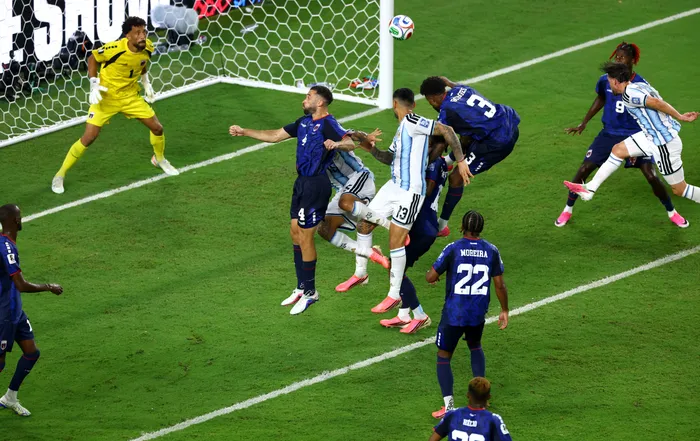
As the match drifted toward a penalty shootout, the decisive blow arrived in the cruelest fashion. Messi, turned creator, whipped in a corner that Cristian Romero met with a header; the ball deflected off Cape Verde’s Diney Borges and into his own net in the 111th minute. Argentina had its 3-2 win, and its passage to the round of 16, but the one-goal margin flattered them against a side ranked 64th in the world to their 2nd.
Vozinha, 40, the hero of a fairy tale
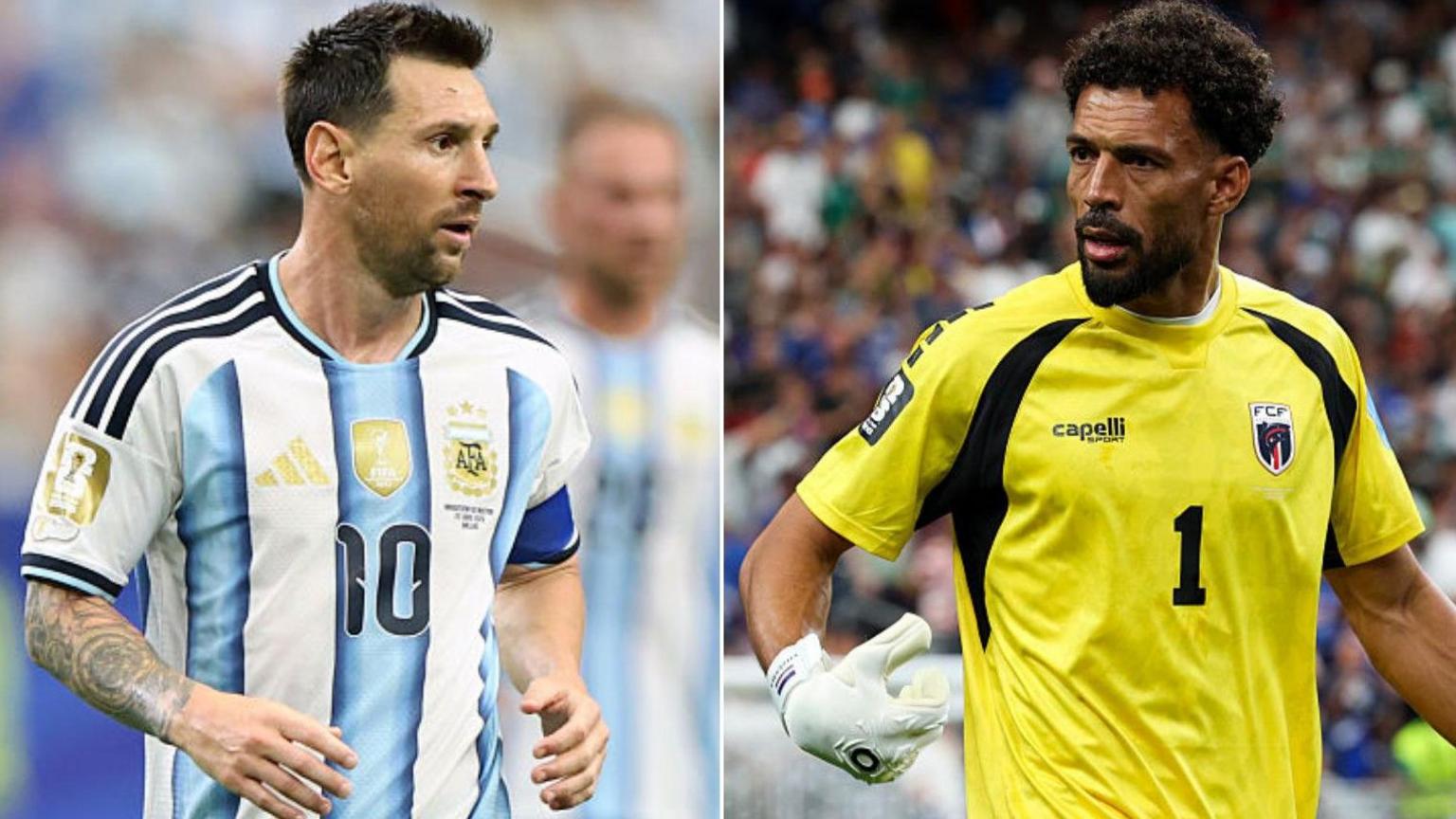 Once again, the story belonged to Vozinha. Born Josimar José Évora Dias, the goalkeeper who has represented Cape Verde since 2012 and built his club career in Cyprus and Slovakia, arrived at this World Cup an unknown and left it a national hero. He kept clean sheets against European champions Spain and against Saudi Arabia in the group stage, becoming, by some counts, only the third goalkeeper in World Cup history to record multiple clean sheets after turning 40. His Instagram following reportedly leaped from around 500,000 to more than 17 million during the run.
“I’m still trying to wrap my head around everything that has happened,” Vozinha wrote in a message to fans during the tournament, saying the global outpouring of support had taken him “completely by surprise.” Against Argentina, he was beaten only by Messi’s brilliance, a deflected own goal, and the passage of time.

Cape Verde’s achievement is historic in its own right: the smallest country ever to reach the World Cup knockout rounds, and the lowest-ranked team still standing when the round of 32 began. Unbeaten through a group that included Spain (0-0), Uruguay (2-2), and Saudi Arabia (0-0), the Blue Sharks turned dreamers into believers.
Boston and Brockton feel every kick
Nowhere was that felt more deeply than in Massachusetts. The state is home to the largest Cape Verdean population outside Cape Verde itself — around 70,000 people, according to census figures — with Boston and Brockton at its heart. Brockton, where Cape Verdeans make up close to a fifth of the population, is affectionately called Cape Verde’s “11th island,” and Boston’s Cape Verdean community is concentrated in Dorchester and Roxbury.
Through this improbable run, those neighborhoods have pulsed with pride, flags, and Kriolu chants, and the fervor was intense enough that Brockton officials imposed an overnight curfew ahead of the Argentina match, citing public-safety concerns after earlier celebrations. When the final whistle blew on this heartbreaking near-miss, the diaspora poured back into the streets — this time to salute a team that had made history and refused to be embarrassed by the world champions.
For CTN’s New England audience, the pride cut across communities: Brockton and Dorchester are home to Haitian and Cape Verdean families alike, neighbors bound by the same immigrant story.
The rest of the round of 16 takes shape
While Argentina endured its qualification from hell, other nations punched their tickets to the round of 16 with varying degrees of ease, and the bracket delivered both the expected hierarchy and a few genuine shocks.
France, the 2018 world champions, beat Sweden 3-0 and will face Paraguay, which stunned Germany to reach this stage. Brazil, the five-time champions, edged Japan 2-1 and will meet Norway, back at a World Cup after 28 years and a 2-1 winner over Côte d’Ivoire. Portugal saw off Croatia 2-1 and will renew a fierce rivalry with Spain, which beat Austria 3-0. England beat the Democratic Republic of the Congo 2-1 and will play Mexico, which downed Ecuador 2-0 for its first knockout-round win since 1986. Belgium survived Senegal 3-2 after extra time.
The tournament’s underdogs kept writing their own stories. Co-host Canada eliminated South Africa 1-0 and now faces Morocco, which knocked out the Netherlands on penalties to reaffirm its status as Africa’s standard-bearer once again.
With a round of 16 that pits Brazil against Norway, France against Paraguay, Portugal against Spain, and Mexico against England, the 2026 World Cup is entering its most intense phase. For Argentina, the road to a possible title defense is still long — and, on this evidence, far more treacherous than anyone imagined.
Apply for health insurance through the Health Connector by clicking here.

Editorial Disclaimer: The English version of this article is authoritative. The French and Haitian Creole versions are produced using AI translation, and errors are possible. CTN also uses AI to convert text into audio. Readers and listeners should rely on the English text where any discrepancy arises.
https://ctninfo.com/cape-verde-pushe…nk-in-a-3-2-epic/