


Michael Davis, senior counsel at Haynes Novick Kohn Immigration, told Dayton’s WHIO-TV that filing an asylum application shields a person from deportation while the case is decided. The pathway is real, but it now carries a filing deadline most TPS holders have already passed, mandatory fees that cannot be waived, and a wait measured in years.
By Caribbean Television Network (CTN)
Temporary Protected Status for Haitians ends Monday, and an Ohio immigration attorney is telling the roughly 15,000 Haitians in Springfield and some 350,000 nationwide that there is a legal route that can keep them in the country: apply for asylum.
Michael Davis, senior counsel at Haynes Novick Kohn Immigration, laid out the reasoning in an interview with WHIO Dayton. “Once you apply for asylum, you are protected from removal,” Davis told WHIO. He said an application must be decided before the government can deport the person who filed it.
That is the central appeal of the asylum route as protections lapse. A pending application creates its own status, and the Springfield News-Sun has reported that many Haitians in the city already hold work permits tied to something other than TPS, including pending asylum claims.

But the pathway Davis describes is narrower and more expensive than it was even a year ago, and for most people losing TPS on Monday, the hardest obstacle comes first.
What the court actually did
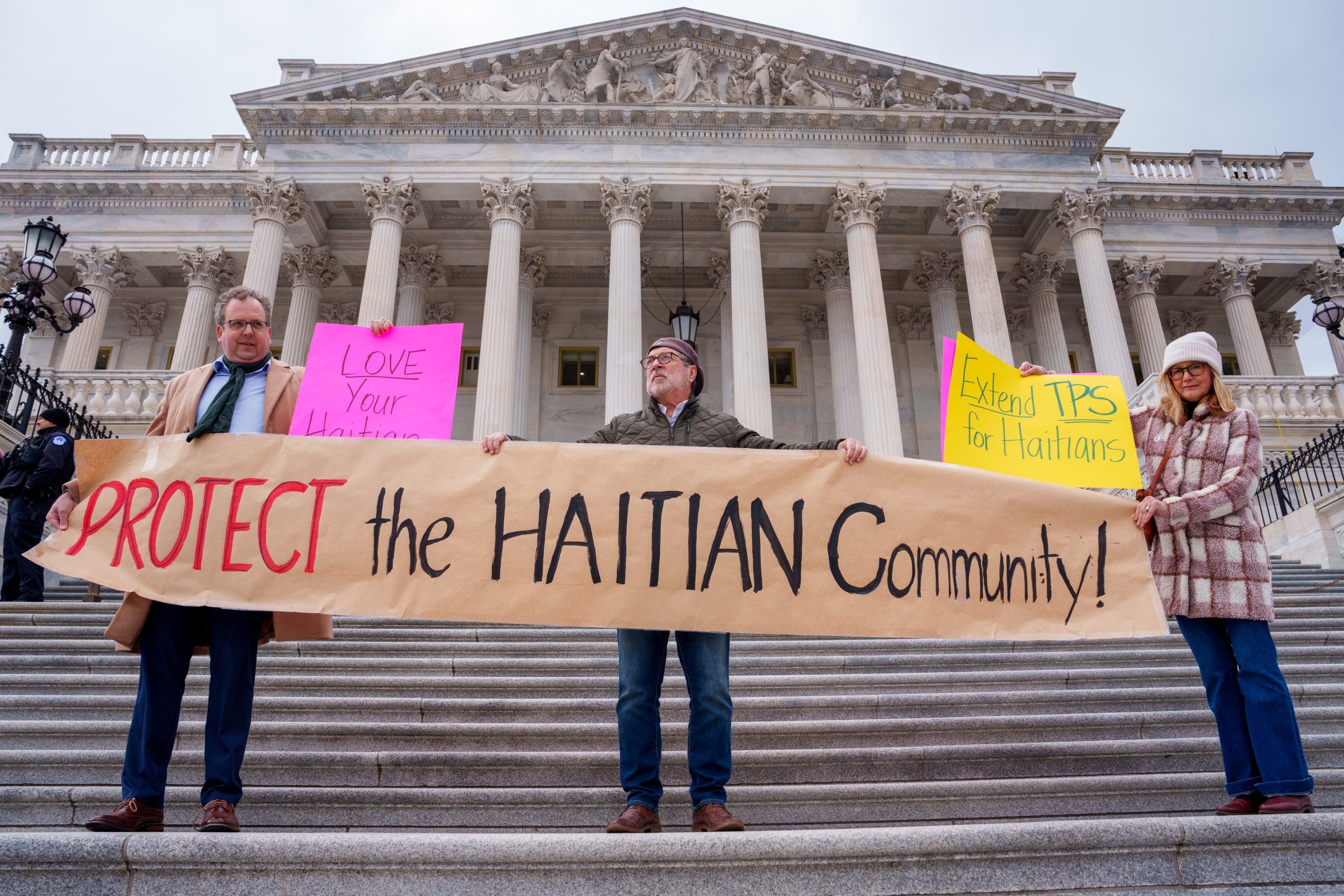
The Monday deadline is itself the product of a ruling last week that went against the Trump administration.
On July 22, a three-judge panel of the U.S. Court of Appeals for the D.C. Circuit rejected the government’s renewed motion to lift a lower court order that had been holding the termination in place, along with its request for an emergency administrative stay. The panel found the administration had not met the legal standard for a stay, noting in its order that the case would be returned to the court on July 27, 2026.
The practical effect was to push the end of Haitian TPS from Friday, July 24, to Monday, July 27, a gain of three days, not a reprieve. The date corresponds to the point at which the Supreme Court’s June 25 decision formally returns to the lower courts for implementation.
Haiti has been designated for TPS since 2010. Homeland Security Secretary Kristi Noem announced the termination in November 2025, and Judge Ana C. Reyes of the U.S. District Court for the District of Columbia blocked it on February 2, 2026. The Supreme Court ruled 6-3 on June 25 that the administration has the authority to end the designation, without deciding whether Haiti is safe.
The one-year problem
Davis flagged the obstacle himself. He told WHIO that, as a general matter, a person must apply for asylum within one year of their last arrival in the United States, and that this requirement could prove difficult for the population now losing TPS.
A legal point of view contested by other immigration specialists, who argued that the one-year deadline starts when an individual becomes undocumented, meaning one year after July 27, 2027, for Haitian TPS holders.

For Haitians who have lived in the United States since the 2010 designation, or who arrived years ago and have simply renewed TPS since, that window closed long ago.
There is an exception, and it is specific enough to matter. Federal regulations treat the maintenance of Temporary Protected Status as an extraordinary circumstance that can excuse a late filing, provided the applicant files within a reasonable period after that status ends. The regulation names TPS explicitly, alongside lawful status and parole.
That exception is the argument most Haitian TPS holders will have to make, and it comes with its own clock. Neither the statute nor the regulations define what constitutes a reasonable period, which is why practitioners generally advise filing promptly rather than waiting to see what happens, explains attorney Davis.
The cost, and a rule that can end a case
Davis told WHIO the process can be expensive and that applicants should carefully consider the costs, adding that the asylum application fee cannot be waived.
The figures bear that out. The One Big Beautiful Bill Act, signed into law on July 4, 2025, created the first-ever filing fee for Form I-589, the asylum application, set at $100 and expressly non-waivable. It also created an Annual Asylum Fee charged for every year an application remains pending. That fee is indexed to inflation and is $102 for the fiscal year 2026. There is no poverty-based waiver for either.
The most consequential development is a rule that took effect on May 29, 2026. Under it, an applicant who fails to pay the annual fee within 30 days of being notified will have their pending asylum application rejected by USCIS, and a person left without another status can then be placed in removal proceedings. In other words, a $102 missed payment can undo the very protection Davis describes.
That rule is being contested. On July 21, a federal judge in a litigation brought by the Asylum Seeker Advocacy Project temporarily blocked USCIS from penalizing applicants who missed the payment deadline. The order is recent, and the litigation is ongoing.
Years, not months
Davis was candid with WHIO about timing, saying a case could take months or years and citing significant backlogs at U.S. Citizenship and Immigration Services.
The backlog data is stark. USCIS reported approximately 1.6 million pending affirmative asylum applications as of March 2026, a 22 percent increase over the prior year. Estimated wait times for a decision at the agency now exceed 6 years. If USCIS does not grant a case, it is referred to immigration court, where the national backlog surpassed 3.2 million cases in early 2026, and the median time from charging document to a merits hearing exceeds 5 years.
For a family in Springfield, that is the trade-off in plain terms: protection from removal that begins immediately upon filing, purchased with an annual fee and a wait that may outlast a presidential administration.
Springfield’s Haitian community — estimated at 12,000 to 15,000 people, with thousands more in Columbus and Lima — became a national political flashpoint in 2024 and has remained one since.
The contradiction running underneath Monday’s deadline is a matter of public record. The Department of Homeland Security’s position is that Haiti is safe enough for its nationals to return. The State Department maintains a Level 4 “Do Not Travel” advisory for Haiti, its highest warning, reserved for countries where the risks include armed conflict, violent crime, terrorism, and wrongful detention.
WHIO reported that it had sought comment from Springfield leaders, the office of Congressman Mike Turner, and the Haitian Community Support and Help Center, and had not received responses.
https://ctninfo.com/?p=43897&preview=true
https://www.facebook.com/CaribbeanNewsMedia
This article is based in part on reporting by WHIO-TV in Dayton, Ohio, which conducted the interview with Michael Davis. Additional reporting by CTN. This article is not legal advice; asylum eligibility depends on individual circumstances, and readers should consult a licensed immigration attorney or a DOJ-accredited representative.
This article was originally written in English. Other language versions are produced using AI translation software, and errors are possible — the English version is authoritative. CTN also uses AI to convert text into audio.