



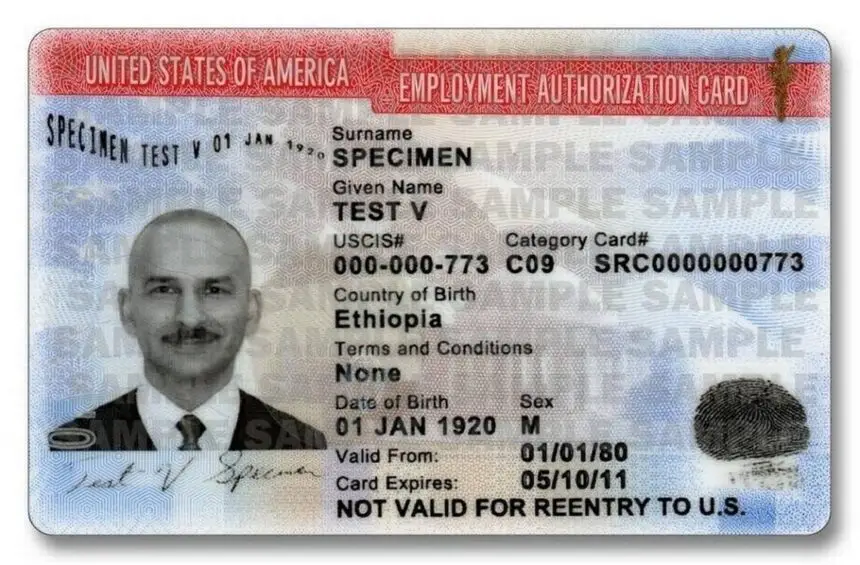
New federal guidance issued July 24 supersedes earlier instructions and directs employers to enter July 27, 2026, as the work-authorization expiration date in I-9 and E-Verify systems for Haitian TPS holders. The agency calls the extension “limited relief” that lasts only until the courts implement the Supreme Court’s ruling.
By Manny Paul — Caribbean Television Network (CTN)
U.S. Citizenship and Immigration Services issued new guidance on July 24, setting July 27, 2026, as the date Haitian nationals’ Temporary Protected Status work permits expire for federal employment-verification purposes, and instructing employers across the country to update their records accordingly.
The guidance supersedes instructions the agency had posted just two weeks earlier, on July 10. Its most concrete effect is on payroll and hiring systems: employers are instructed to enter “as per court order” in Section 1 of the Form I-9 and “July 27, 2026” in Section 2, along with a note in the additional information box. When running a case through E-Verify, the electronic system used to confirm work eligibility, employers are to enter the same July 27 expiration date.

That is a change from the prior guidance, which had used earlier dates. It moves the operative date to Monday, on which the litigation over Haiti’s TPS is scheduled to return to the federal appeals court in Washington.
What the guidance says, and what it signals
The document extends the validity of Employment Authorization Documents issued under Haiti’s TPS designation across a long list of printed expiration dates — running back through cards that expired as early as July 2017 — so that they remain valid until the new July 27 date. USCIS states that the extension is due to a court order and describes it in pointed terms: “limited relief until the lower courts align with the U.S. Supreme Court’s favorable decision in Mullin v. Doe.”
That single sentence is the signal underneath the paperwork. The agency is telling employers and workers that this is a countdown, not a reprieve. The protection persists only until the courts carry out the Supreme Court’s June 25 decision, and USCIS is characterizing that outcome as already settled.
One point of precision matters for anyone reading the notice. USCIS calls the Supreme Court ruling “favorable,” but that describes the government’s litigation position, not a finding about safety in Haiti. The Supreme Court held on June 25 that federal courts generally cannot review a decision to end TPS. It did not rule that conditions in Haiti have improved or that the country is safe for returnees.
How the date became July 27
The July 27 figure is the product of a court fight the government lost days earlier.

On July 22, a three-judge panel of the U.S. Court of Appeals for the D.C. Circuit denied the administration’s renewed motion to end Haiti’s TPS on July 24, along with its request for an emergency administrative stay. The panel found the government had not met the legal standard for a stay, noting that the case would return to the court on July 27, 2026. The order did not disturb the Supreme Court’s June 25 decision; it held off implementation for a matter of days.
The underlying timeline is set out in the USCIS guidance itself. Former Homeland Security Secretary Kristi Noem determined that Haiti no longer met the conditions for TPS and moved to terminate the designation, published at 90 Fed. Reg. 54733 on November 28, 2025. The termination was slated to take effect on February 3, 2026. On February 2, 2026, Judge Ana C. Reyes of the U.S. District Court for the District of Columbia stayed that termination in Miot v. Trump. The Supreme Court’s June 25 ruling in the consolidated litigation then cleared the way for the termination to proceed, and the recent appellate orders concern only the speed of its implementation.
The guidance refers to “former Secretary” Noem, reflecting the change at the top of the department; Markwayne Mullin is the named respondent in the Supreme Court case and now leads DHS.
What it means for Haitian workers and their employers
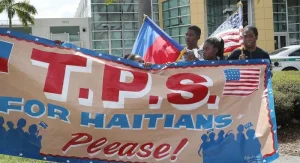
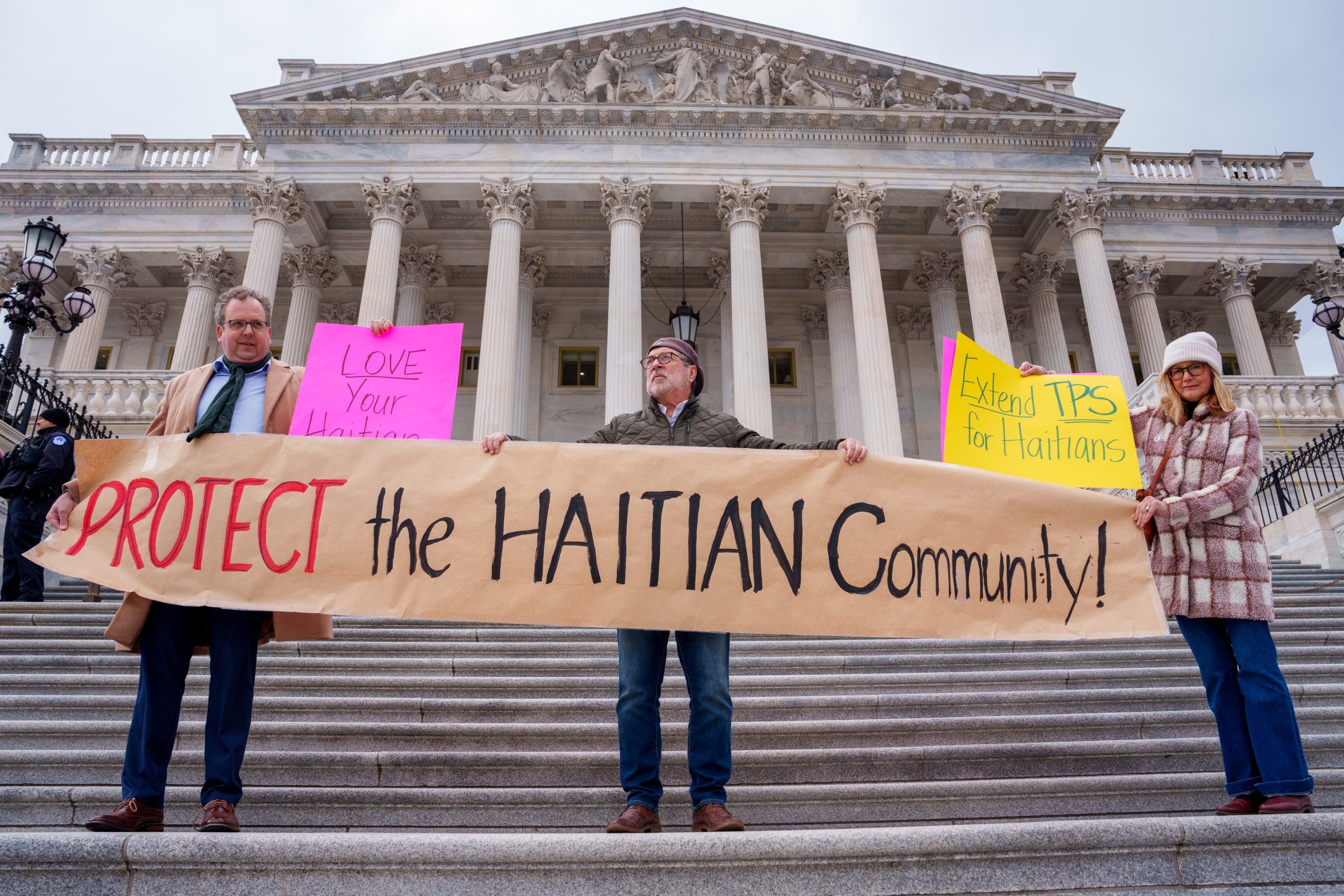
For the roughly 350,000 Haitian nationals nationwide who have held TPS — a population that includes an estimated 15,000 in Springfield, Ohio, and thousands more across Massachusetts, Florida, and New York — the guidance confirms that legal work authorization tied to TPS is now scheduled to lapse on July 27.
Until that date, the guidance is explicit that the affected EADs remain valid, and USCIS advises employers that they may download the alert and the TPS Haiti webpage and attach them to the Form I-9 as documentation. The agency directs both employers and workers to check its websites regularly, language that itself acknowledges the situation remains subject to further court action.
Haiti has been designated for TPS since the 2010 earthquake. The program shields nationals of designated countries from deportation and authorizes them to work while conditions in their home country make return unsafe. The designation’s end has proceeded on the strength of the Secretary’s determination that Haiti no longer qualifies, even as the U.S. State Department continues to advise Americans not to travel there under its highest-level warning.
https://ctninfo.com/?p=43902&preview=true
https://www.facebook.com/CaribbeanNewsMedia
This article was originally written in English. Other language versions are produced using AI translation software, and errors are possible — the English version is authoritative. CTN also uses AI to convert text into audio.