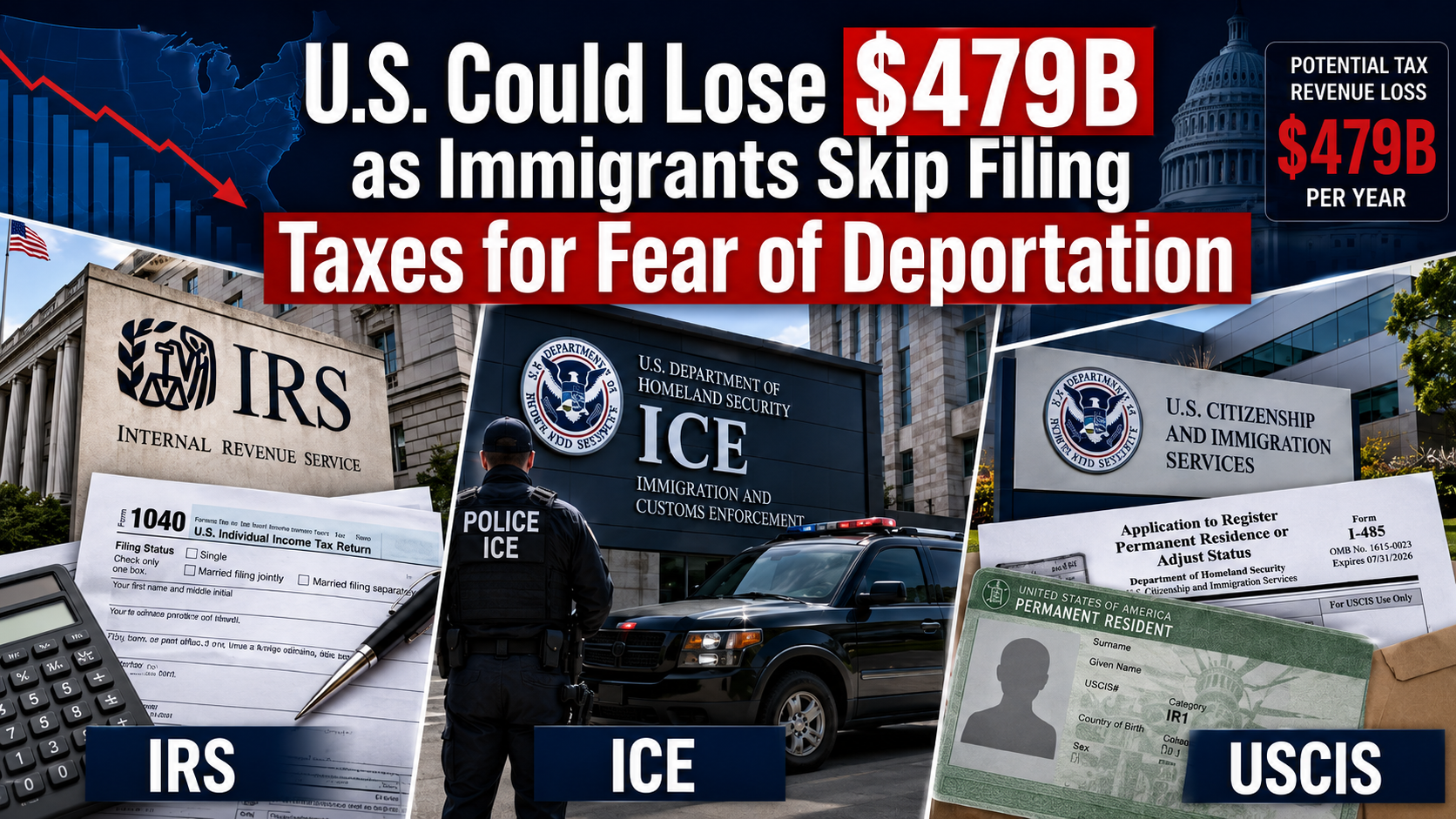


After a court decision forcing the Trump administration to reverse its policy on the adjustment-of-status program, the administration has returned with an even tougher measure along the same lines.
The new decision prevents individuals with temporary status—such as tourist visas, the Biden parole program, student visas, and others—from obtaining permanent residence while remaining in the United States.
According to DHS, those with pending green card applications would be required to return to their home countries and wait there for a decision on their residency applications.
USCIS will now restrict most foreign nationals on temporary visas from obtaining permanent residency from within the U.S., directing them to apply abroad through American consular offices.
The agency announced the change on Tuesday, saying it returns to the original text of federal immigration law and closes what officials call longstanding green card loopholes. This is one of the most significant changes in legal immigration since the second Trump administration began.
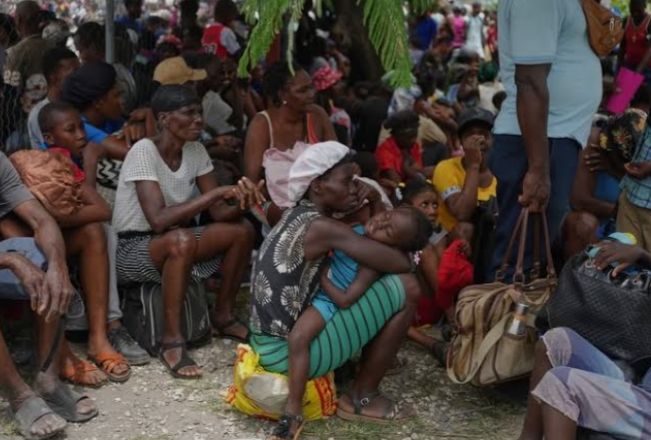
For the Haitian community—most of whom entered through temporary or humanitarian categories—this policy immediately and significantly raises barriers to permanent residency.
What the Policy Does
According to the USCIS announcement, agency officers will now be directed to determine on a case-by-case basis whether applicants for adjustment of status qualify for what the agency now characterizes as an “extraordinary form of relief.”
In a statement issued through the agency, USCIS Spokesman Zach Kahler said: “We’re returning to the original intent of the law to ensure aliens navigate our nation’s immigration system properly. From now on, an alien who is in the U.S. temporarily and wants a Green Card must return to their home country to apply, except in extraordinary circumstances.”
Kahler added that the change is intended to redirect adjustment-of-status applications back through the U.S. State Department’s network of consular offices overseas, a process commonly referred to as consular processing.
“This policy allows our immigration system to function as the law intended instead of incentivizing loopholes,” Kahler said in the agency statement. “When aliens apply from their home country, it reduces the need to find and remove those who decide to slip into the shadows and remain in the U.S. illegally after being denied residency.”
Kahler also addressed temporary visa categories directly: “Nonimmigrants, like students, temporary workers, or people on tourist visas, come to the U.S. for a short time and for a specific purpose. Our system is designed so they can leave when their visit is over. Their visit should not function as the first step in the Green Card process.”
The agency says redirecting these applications abroad will free up space for naturalization, U visa, and human trafficking case processing within USCIS.
The Legal Background
The policy memorandum touches a procedural distinction at the heart of U.S. immigration law: the difference between adjustment of status, in which a person already inside the United States transitions to permanent residency without leaving, and consular processing, in which a person applies for an immigrant visa from outside the United States.
Both pathways have existed in federal law for decades. For many years, the choice between the two has typically depended on the applicant’s location, the visa category they qualify under, and various procedural and legal factors. According to the U.S. Department of State, consular processing typically takes place at the American consulate in the applicant’s country of nationality and culminates in the issuance of an immigrant visa that permits entry into the United States as a lawful permanent resident.
The new memorandum shows USCIS now treats adjustment of status from inside the country as the exception, not the norm, for temporary visa holders.
Immigration attorneys have warned for months that an internal shift along these lines could carry significant consequences for individuals on student, tourist, employment-based temporary, and humanitarian visas who had been planning to adjust status through marriage, employer sponsorship, or other qualifying mechanisms.
What This Means for the Haitian Community
The change carries particular weight for Haitian nationals in the United States. According to data published by the U.S. Department of Homeland Security and the Migration Policy Institute, the overwhelming majority of Haitian immigrants in the country today entered through temporary or humanitarian categories rather than as direct immigrant visa holders.
Among the most significant entry pathways for Haitians over the past two decades:
The Temporary Protected Status designation, first granted to Haiti following the catastrophic 2010 earthquake and renewed multiple times under successive administrations until the Trump administration’s recent effort to terminate it, is currently before the U.S. Supreme Court.
The Cuban Haitian Nicaraguan Venezuelan parole program, launched in late 2022, authorized hundreds of thousands of Haitians to enter the United States on temporary humanitarian parole. The program was terminated by the current administration, and litigation over its wind-down continues.
Family-based and humanitarian reunification programs, including the Haitian Family Reunification Parole Program, which operated under the Biden administration and was suspended early in 2025.
Tourist visas issued to Haitian nationals visiting family members in the United States, many of whom subsequently pursued adjustment of status through marriage or employment.
Student visas, particularly for Haitian nationals attending universities in Massachusetts, Florida, and New York, are in demand, as these three states have the largest Haitian American populations.
Previously, Haitians entering on temporary or humanitarian status who became eligible for permanent residency could apply for adjustment of status from within the U.S., keeping families together and allowing continued work during the process.
Now, USCIS officers will be much less likely to approve such applications from within the U.S. The agency hasn’t issued details on what qualifies as “extraordinary circumstances.”
Returning to Haiti as a Practical Question
For many Haitians, returning to Haiti for consular processing is not just a bureaucratic hurdle—it can be an insurmountable barrier to legal status due to security concerns.
The U.S. State Department currently maintains a Level 4 advisory for Haiti, its highest warning level, instructing American citizens to avoid travel to the country due to widespread gang violence, kidnapping, civil unrest, and the collapse of essential services in much of the country. The U.S. Embassy in Port-au-Prince operates with significantly reduced staffing, and consular operations have been disrupted multiple times since 2024.
The contradiction has been raised repeatedly in recent litigation over Haitian Temporary Protected Status. During oral arguments at the U.S. Supreme Court earlier this term, attorneys for TPS beneficiaries argued that the federal government’s position is internally inconsistent: instructing American citizens to avoid Haiti while simultaneously requiring Haitian nationals to return there to access basic immigration benefits.
Immigration attorneys interviewed in past coverage of the Haiti security crisis have noted that consular processing in Port-au-Prince has been operating with significant backlogs, limited appointment availability, and recurring security-related closures. The American Immigration Lawyers Association has previously warned that consular processing requirements in dangerous countries effectively amount to a denial of relief for individuals who cannot travel safely.
Reaction From the Immigration Community
While a formal response to the new USCIS memorandum is still developing, immigration advocates have been preparing for weeks for an announcement along these lines.
The American Immigration Council, a Washington-based research and advocacy organization, has previously documented the practical consequences of requiring applicants to leave the United States during the green card process, including separation of families during the months or years that consular processing can require, loss of employment authorization during the period of departure, and the risk of triggering inadmissibility bars that prevent re-entry for years.
Federal law currently imposes a three-year or ten-year bar on re-entry for individuals who accumulate certain periods of unlawful presence in the United States before leaving the country. For an individual whose temporary visa has expired before they leave for consular processing, that bar could prevent them from returning to the United States for as long as a decade, even if they would otherwise qualify for permanent residency.
Whether the new USCIS memorandum will trigger such bars for individuals who comply with its requirements remains a significant open question for immigration attorneys and the families they represent.
What Comes Next
The new USCIS memorandum becomes effective immediately, according to the agency’s announcement. Officers reviewing pending and incoming adjustment-of-status applications are expected to begin applying the new framework right away, with applications already in process subject to the revised standards.
USCIS has not yet released the full text of the memorandum or the agency’s internal guidance on how officers should evaluate the “extraordinary circumstances” exception. Immigration attorneys are expected to file legal challenges to the policy in the coming weeks, arguing that the agency lacks statutory authority to redefine adjustment of status as an extraordinary remedy rather than a routine procedural option.
For Haitian families in Boston, New York, Miami, and across the country, the immediate practical question is whether pending applications will be processed under the previous framework or the new one, and whether the announcement will prompt withdrawals, refilings, or, in some cases, departures from the United States by individuals who can no longer pursue residency from within the country.
CTN will continue to follow the implementation of this policy and its impact on the Haitian community across the United States.
This article was originally written and published in English. Versions in other languages are translations generated by artificial intelligence tools. While CTN strives for accuracy across all language editions, only the original English version should be considered authoritative. Caribbean Television Network assumes editorial responsibility solely for the original English text and is not liable for translation errors, omissions, or misinterpretations that may appear in non-English versions.
https://ctninfo.com/?p=42947&preview=true
https://www.facebook.com/CaribbeanNewsMedia