


The Trump administration on Thursday temporarily lifted sanctions on Russian oil currently in transit at sea. This directed those barrels toward global markets to contain an energy price surge driven by the ongoing U.S.-led war against Iran.
The Treasury Department announced the decision, effective through April 11, which will lift specific sanctions and significantly affect U.S.-Russia economic relations since Russia invaded Ukraine in 2022.
Treasury Secretary Scott Bessent framed the move as a narrow, time-limited measure with minimal benefit to the Kremlin. “This narrowly tailored, short-term measure applies only to oil already in transit and will not provide significant financial benefit to the Russian government, which derives the majority of its energy revenue from taxes assessed at the point of extraction,” Bessent wrote in a social media post Thursday, according to The New York Times.
In a podcast the same day, he acknowledged the awkward optics. Asked about Russia benefiting financially from a war the U.S. is fighting against a different adversary, Bessent called it “unfortunate” but hoped Moscow’s windfall would last only a “micro period.”
The declaration, reported by The New York Times on March 12, 2026, was not without precedent. A week earlier, the Treasury issued a narrower waiver allowing India to receive Russian oil already at sea, stranded amid the chaos of the Iran conflict. Thursday’s action expanded that waiver to all buyers worldwide.
The Energy Crisis Behind the Decision
The trigger is the war in Iran. Since U.S. and Israeli forces launched joint strikes on Iran on February 28, global energy markets have been in turmoil. Iran controls the Strait of Hormuz, the narrow waterway through which about one-fifth of the world’s daily oil flows. Tehran closed the strait after the strikes, halting shipments and sending crude prices soaring. At their peak, oil exceeded $120 a barrel — a level last seen during past supply crises.
By Monday, March 9, prices retreated toward $90 a barrel after President Trump, at a Miami press conference, said the war could end quickly and hinted at sanction relief for oil-producing countries. “So in some countries, we’re going to take those sanctions off until this straightens out,” Trump said, without naming which countries were under consideration. By Thursday, the administration had named one: Russia.
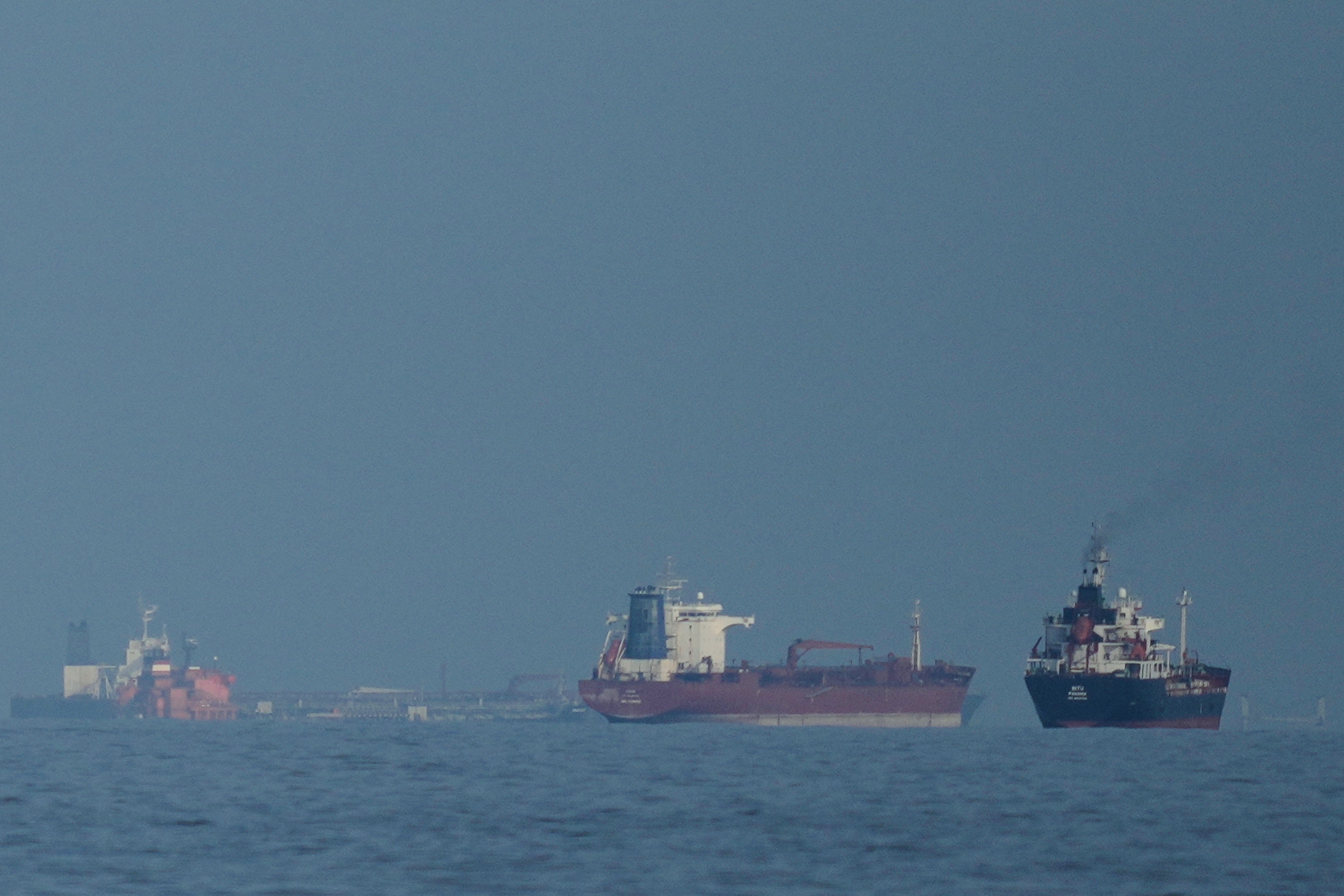
According to the commodities tracking firm Kpler, approximately 130 million barrels of Russian crude are currently stranded at sea—a massive supply. If released, Bessent estimated, this oil could significantly boost global supply, potentially lowering prices to levels Americans could more easily afford at the pump. Currently, oil is hovering near $100 a barrel as of Thursday.
A Blow to Four Years of Sanctions Policy
The action represents a significant rupture in the sanctions system that the United States and its Group of 7 allies built after Russia’s February 2022 invasion of Ukraine. These penalties included a price cap on Russian crude, a crackdown on the shadow fleet of unmarked tankers that Russia and its trading partners used to evade restrictions, and secondary sanctions imposing financial penalties on buyers transacting with sanctioned Russian entities.
The irony cuts sharply. As recently as last summer, the Trump administration doubled tariffs on India to punish its continued purchases of Russian oil. Thursday’s action effectively inverts that posture. It authorizes the very transactions Washington had been penalizing.
Edward Fishman, a senior fellow at the Council on Foreign Relations and author of a book on economic warfare, was unsparing in his assessment when speaking to the New York Times. “In one fell swoop, we’ve undone a huge amount of pressure on Russia,” Fishman said, referring to the impact of recent policy decisions. He explained that since the earlier waiver for India did not increase oil prices, he doubted that this broader waiver would have a different effect on global markets. This increases the likelihood that the current relief will be extended beyond April 11, further diminishing the effectiveness of existing sanctions. “I do worry that this is effectively the destruction of the oil sanctions on Russia,” he said.
Independent analysts largely shared his concern about the beneficiary. Russian Urals crude had already flipped to a premium by early this week. For much of the past four years, it traded at a significant discount to the global benchmark due to sanctions pressure. On Monday, Urals closed above $100 a barrel while Brent crude sat just below it. This is a remarkable inversion driven by renewed demand for Russian supply. Henning Gloystein of Eurasia Group estimated Russian oil cargoes were selling at around $90 a barrel. This is roughly double the pre-war price of about $50.
Congressional and Allied Criticism
Top Senate Democrats attacked the decision as a self-inflicted wound. In a joint statement, they argued that the United States was now managing the economic consequences of a conflict of its own making. “This war has resulted in huge spikes in gas prices for Americans. They are now paying more at the pump than at any point in either of President Trump’s two terms,” they wrote.
The move also deepened the divide between Washington and its European partners. These partners have maintained a harder line on Russian energy. European Commission President Ursula von der Leyen addressed the underlying tension directly in a speech to the European Parliament this week. She warned against returning to Russian fossil fuels. “In the current crisis, some argue that we should abandon our long-term strategy and even go back to Russian fossil fuels. This would be a strategic blunder,” she said.
The EU has spent years reducing its dependence on Russian energy following the 2022 invasion, cutting Russian oil imports to below 3 percent of total supply in 2025, down from 27 percent in 2021. The EU Council adopted an outright ban on Russian gas imports in January. The Iran war has put that trajectory under pressure, particularly for Moscow-friendly states like Hungary and Slovakia, which have continued importing Russian energy through the Druzhba pipeline.
Russia: The Unintended Beneficiary
American analysts across the political spectrum agree that Russia stands to benefit financially from the sanction waiver, gaining increased revenue and market influence during the Iran conflict.
Ian Bremmer, president of the Eurasia Group, put it plainly: “Russia’s the obvious country that wins because they end up with higher energy prices and more leverage on countries that need their oil and gas.” Nicholas Mulder, an economist at Cornell University who studies sanctions, told Axios the United States was dismantling its own economic tool to defend against Iran’s. “In order to defend themselves against Iran’s economic weapon, the U.S. is now loosening its own economic weapon on Russia,” Mulder said.
Russian President Vladimir Putin has signaled awareness of the opening. This week, he met with Russia’s top energy producers and government officials. Putin said Moscow should “take advantage of the current situation” to gain a foothold in markets that need increased supplies, including the Asia-Pacific region and parts of Europe.
Whether Thursday’s 30-day waiver is a temporary tactical concession or the start of a permanent erosion of the sanctions regime remains the central question for policymakers and markets alike. For now, the answer depends on how quickly — or whether — the war in Iran ends.
Sources: NewYorkTimes