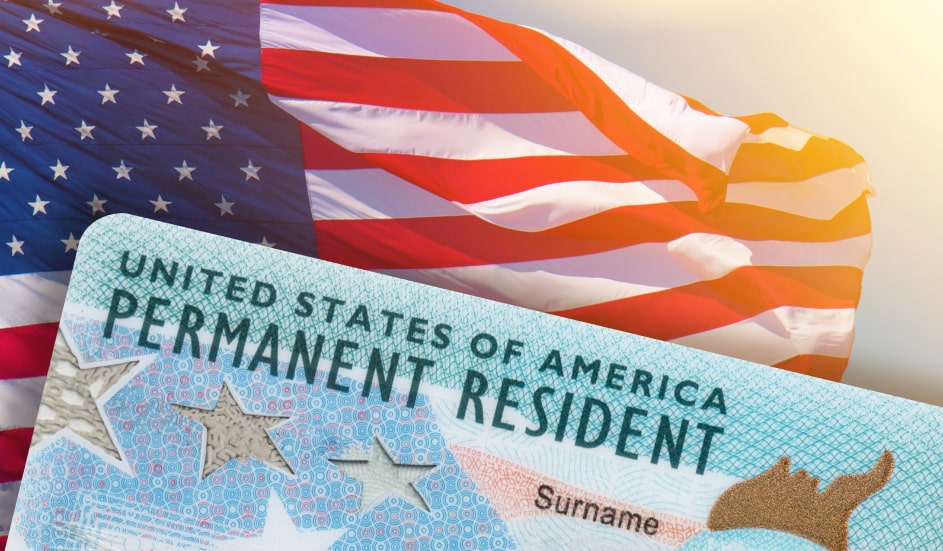



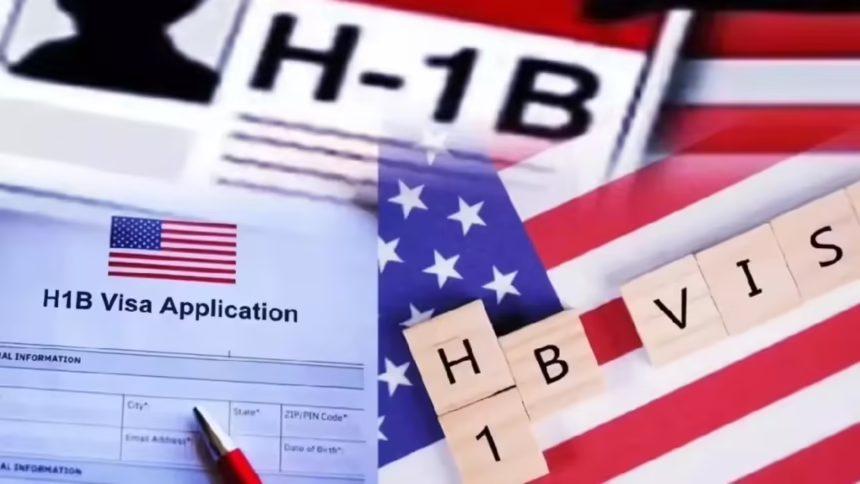
A new legal setback for President Donald Trump, as a federal judge in Massachusetts has struck down one of his administration’s major immigration-related measures, ruling that the $100,000 fee imposed on H-1B visa petitions exceeded presidential authority.
The ruling was issued Monday by U.S. District Judge Leo Sorokin of the District of Massachusetts. According to JURIST, Judge Sorokin vacated the policy connected to President Donald Trump’s September proclamation, which had imposed the $100,000 fee as part of a broader change in H-1B immigration policy, according to jurist.org.
The H-1B visa program allows U.S. employers to hire foreign workers for specialty occupations. USCIS describes H-1B as a nonimmigrant classification for people performing services in specialty occupations, while the U.S. Department of Labor says the program applies to employers seeking to hire nonimmigrant workers in specialty occupations or as fashion models of distinguished merit and ability.
The Trump administration had defended the fee as a response to what it described as abuse of the H-1B program. The administration argued that some employers had used the visa category to hire foreign workers at lower wages, reduce demand for U.S. workers, and weaken employment opportunities in certain sectors, according to jurist.org.

A coalition of Democratic state attorneys general, led by California Attorney General Rob Bonta, challenged the policy in court. In announcing the lawsuit in December 2025, Bonta’s office said the $100,000 fee on new H-1B visa petitions would affect employers seeking highly skilled foreign workers, including physicians, researchers, nurses, and other workers in fields facing labor shortages.
Judge Sorokin ruled in favor of the states. According to Reuters, the court concluded that the $100,000 charge constituted an unauthorized tax. Reuters also reported that the ruling bars the State Department and USCIS from enforcing the fee.
The decision is significant because the H-1B program remains one of the main legal pathways used by U.S. employers to bring skilled foreign professionals into the country for temporary work. USCIS says H-1B specialty occupations may include fields such as architecture, engineering, mathematics, physical sciences, social sciences, and medicine. ([USCIS][5])
For immigrant communities, including Haitian professionals, students, and families pursuing employment-based opportunities, the ruling highlights the continuing legal fight over how far a president can go in changing immigration policy without congressional action.
The court’s decision does not eliminate the H-1B program or change the basic eligibility rules for H-1B workers. Instead, it removes the $100,000 fee requirement imposed by the Trump administration’s proclamation.
Reuters reported that the White House expects the ruling to be overturned on appeal. For now, however, the federal government cannot enforce the fee unless a higher court intervenes.

The case comes as immigration policy remains one of the most contested issues in the United States. Employers, states, and immigrant-rights advocates have repeatedly challenged executive actions in federal court, while the Trump administration has continued to pursue stricter immigration measures.
For businesses, universities, hospitals, and research institutions that rely on skilled foreign workers, the Massachusetts ruling provides immediate relief from a fee critics said could have made the H-1B process unaffordable for many employers. For immigrant workers and families, the decision is another reminder that major immigration changes often depend not only on presidential action, but also on congressional authority and judicial review.
The legal fight may not be over. If the administration appeals, a higher federal court could be asked to decide whether the executive branch had the authority to impose such a large fee on H-1B petitions without direct congressional approval.
This article was originally written in English. The French and Haitian Creole versions were produced using AI translation software; errors may occur, and the English version is authoritative. CTN also uses AI to convert text to audio.
https://ctninfo.com/?p=43127&preview=true
https://www.facebook.com/CaribbeanNewsMedia