



The Treasury Department and the Internal Revenue Service have proposed a rule that would take away the cash portion of several major tax credits from hundreds of thousands of immigrants who work legally and pay taxes in the United States, unless they fall within a narrow category defined by a nearly 30-year-old welfare law.
The proposal, posted on Aug. 19 and published in the Federal Register the next day, opens a comment period that runs into October and could reshape who collects a tax refund as soon as next year’s filing season.
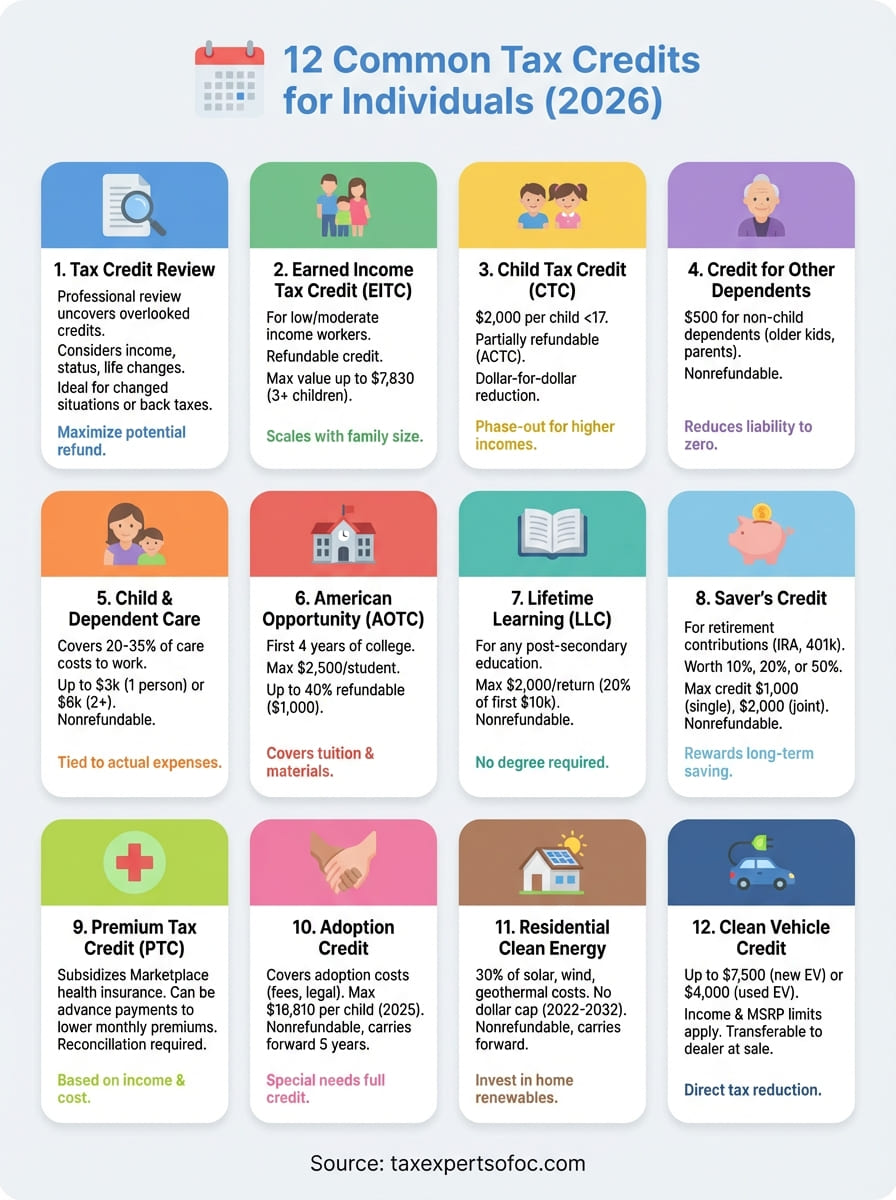
At issue are the refundable parts of four credits familiar to working families: the Earned Income Tax Credit, the refundable portion of the Child Tax Credit, the American Opportunity Tax Credit for college costs, and the Adoption Tax Credit.
A refundable credit can put money in a filer’s pocket beyond what they owe in income tax; a low-income parent of two, for example, can receive as much as $3,400 through the refundable Child Tax Credit even after their tax bill reaches zero. Under the proposal, only the refunded amounts are treated as off-limits; the portions that merely reduce a tax bill are not affected.

The administration casts the change as enforcing a law already on the books. “Under President Trump, the days of illegal aliens collecting taxpayer-funded benefits are over. The federal law is clear, and Treasury is enforcing it,” Treasury Secretary Scott Bessent said in the agency’s announcement.
The department said the proposal follows an opinion from the Justice Department’s Office of Legal Counsel concluding that the refunded portions of the credits are “federal public benefits” reserved, under the 1996 Personal Responsibility and Work Opportunity Reconciliation Act, or PRWORA, for citizens, U.S. nationals and a defined set of “qualified” immigrants.
Immigrant-rights advocates say that reading rewrites decades of practice and sweeps in people who are neither undocumented nor newly arrived.
“No federal agency has considered tax credits to be federal public benefits available only to qualified immigrants under PRWORA,” the National Immigration Law Center wrote in an analysis of the proposal, noting that Congress addressed tax-credit eligibility in a separate part of the same 1996 law and made the Earned Income Tax Credit available to a broader group of noncitizens with valid Social Security numbers. Congress already barred undocumented immigrants from most of these credits; the people newly affected are, by and large, lawfully present and authorized to work.
The rule turns on immigration status, not nationality.
PRWORA’s “qualified” category covers lawful permanent residents, refugees, people granted asylum, and certain others. It excludes a long list of immigrants who nonetheless live and work legally in the country. According to the National Immigration Law Center, those who would lose access to the refundable credits include people with Temporary Protected Status, recipients of Deferred Action for Childhood Arrivals, asylum applicants who hold work permits, people paroled into the country for less than a year, holders of U and T visas for crime and trafficking survivors, and various student and employment visa holders.
For Haitian and other Caribbean families, the impact would fall unevenly, depending on precisely which status a taxpayer holds.
The proposal would preserve eligibility for citizens, green-card holders, refugees, asylees and, notably, for “Cuban and Haitian entrants,” a specific humanitarian category that PRWORA counts as qualified. But many Haitians in the United States hold other statuses that the rule would exclude, among them asylum seekers still waiting on their cases with work authorization in hand, and recent parolees. As a result, two Haitian neighbors who both work, file taxes, and are lawfully present could end up on opposite sides of the line: one still able to claim a full refund and the other not.

The reach is wide. The rule could affect up to 700,000 taxpayers, according to estimates in the proposal itself, and the National Immigration Law Center notes that more than 300,000 of them live in households with a DACA recipient, including some 188,000 U.S. citizen children. Independent analysts put the potential population higher still. The proposal could touch “several million people,” Margot Crandall-Hollick, a tax-policy researcher, told CNBC, citing the millions of pending asylum applicants and others with work authorization who fall outside the qualified category. The Treasury and IRS estimate that between $700 million and $2.6 billion could be taken from families’ hands.
Because mixed-status families are common, the rule’s design produces sharp cutoffs.
Under the proposal, a household stays eligible on a joint return as long as one spouse is a citizen or qualified immigrant. But if both parents are lawfully present without “qualifying status”, their U.S. citizen children would not shield the family; the entire household would lose the refundable credits, according to the National Immigration Law Center’s reading of the rule.
The proposal would also change how families prove they qualify.
The IRS has never asked filers to declare their immigration status on a tax return, and, unlike Medicaid or food assistance, it has no system to verify one.
Under the rule, taxpayers claiming the affected credits would have to attest, under penalty of perjury, that they are a citizen, national, or qualified immigrant, according to the agencies. Advocates warn that the “qualified” test rests on technical immigration-law distinctions that even seasoned tax preparers struggle to apply, raising the risk that some eligible filers walk away from money they are owed out of fear, while others wrongly certify themselves and expose themselves to civil or criminal penalties, the National Immigration Law Center said.
Supporters of the change frame it as protecting the tax system and public resources.
The proposed regulations “protect the integrity of the tax system, and put Americans first,” Bessent said in the agencies’ release. The rule is one of several efforts by the administration to widen PRWORA’s definition of “federal public benefit”; earlier notices by five agencies attempting a similar expansion drew lawsuits from state attorneys general and were largely blocked by court order in those states, according to the National Immigration Law Center.
The credits at stake have long been credited with lifting families out of poverty. Expanded versions of the Child Tax Credit and Earned Income Tax Credit cut child poverty by three percentage points in 2021, and refunds tend to be spent quickly in local shops and services, according to the National Immigration Law Center, which argues that clawing them back would ripple through neighborhood economies. As many as 30 states tie their own earned-income credits to the federal standard, meaning affected families in those states could lose even more.
The public can weigh in before the final decision.
Treasury and the IRS are accepting written comments through early October at regulations.gov and have scheduled a public hearing for Oct. 14. The agencies must consider the comments they receive before deciding whether to issue a final rule, which, if adopted this year, could apply to 2026 returns filed in 2027.
https://ctninfo.com/?p=44324&preview=true
https://www.facebook.com/CaribbeanNewsMedia
Source:
This article was originally written in English. Other language versions are produced using AI translation software, and errors are possible — the English version is authoritative. CTN also uses AI to convert text into audio.