A 6-3 decision removes the court order that had kept protections in place while the legal challenge continued.
The U.S. Supreme Court has handed the Trump administration a major victory in its effort to end Temporary Protected Status for immigrants from Haiti and Syria, allowing the government to move forward with terminating the protections while related legal challenges continue.
The decision places hundreds of thousands of people at risk of losing the ability to live and work legally in the United States unless they qualify for another form of immigration relief. It also carries consequences beyond Haiti and Syria, as the administration has pursued terminating TPS designations affecting several other countries.
Politico first reported the ruling in an article by Josh Gerstein.
TPS is a humanitarian immigration program created by Congress for people who cannot safely return to their countries due to armed conflict, natural disasters, or other extraordinary conditions. It does not create a direct path to permanent residency or citizenship, but it can provide work authorization and protection from deportation while a designation remains in effect.

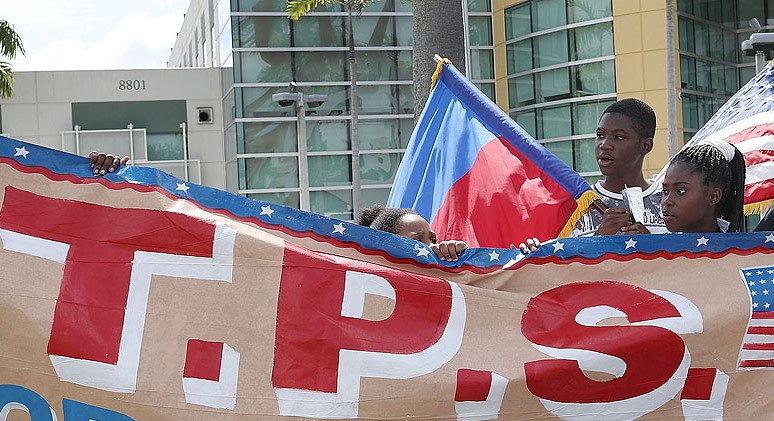
For Haitian families, the ruling comes as the country continues to face armed violence, displacement, political instability, and severe humanitarian conditions. Haiti received TPS after the 2010 earthquake, and the designation was later extended repeatedly as conditions deteriorated.
In the consolidated cases involving Haiti and Syria, the central legal dispute was whether federal courts could review the Department of Homeland Security’s decisions to terminate TPS designations.
The Trump administration argued that Congress had made those determinations largely immune from court review. The TPS statute states that there is “no judicial review” of a decision by the Homeland Security secretary concerning the designation, extension, or termination of TPS for a foreign country.
Writing for the majority, Justice Samuel Alito concluded that the lower courts could not block the administration’s TPS decisions on the procedural grounds raised by the challengers. The Court also found that the allegations of racial discrimination presented by Haitian TPS beneficiaries did not justify keeping the lower-court injunction in place.
The outcome means the Trump administration may proceed with ending TPS for Haitians and Syrians unless individual beneficiaries obtain another lawful immigration status, such as asylum, family-based relief, employment-based status, or another form of protection for which they qualify.

The ruling does not automatically create deportation orders for every TPS recipient. However, losing TPS can result in the loss of work authorization and protection from removal, leaving affected individuals vulnerable to immigration enforcement if they do not secure another legal basis to remain in the country.
The decision may also influence other pending disputes involving TPS holders from countries including Venezuela, Honduras, Afghanistan, Nepal, and others. The immediate effect of the ruling depends on the specific status of each country’s designation, court order, and federal agency guidance.
For the Haitian community, the ruling is especially significant because many TPS holders have lived in the United States for years, built families, purchased homes, worked in essential industries, and raised U.S.-born children. Many may now face urgent decisions about whether they have another immigration option available.
Immigration attorneys and community organizations are urging TPS holders not to make rushed decisions and to seek qualified legal advice before filing applications, traveling outside the United States, or responding to immigration enforcement actions.
The Supreme Court’s ruling changes the legal landscape, but it does not resolve every question facing Haitian TPS holders. Their individual cases may differ widely depending on immigration history, family relationships, prior applications, and possible eligibility for asylum or other protection.
https://ctninfo.com/supreme-court-cl…ians-and-syrians/
https://www.politico.com/news/2026/06/25/supreme-court-temporary-protected-status-ruling-00975658