


Facing years of escalating security and institutional challenges, the Organization of American States (OAS) unveiled a roadmap on Wednesday, August 20, 2025, aimed at restoring peace and stability in Haiti. OAS Secretary General Albert Ramdin presented the plan to the organization’s Permanent Council, alongside representatives from the Haitian authorities, CARICOM, the United Nations, the Inter-American Development Bank (IDB), and other international partners.
The $2.6 billion plan, covering the period 2025–2028, is structured around five main pillars: security and peace, political consensus, elections, humanitarian aid, and sustainable development. Its dual objective is to stabilize the country while laying the foundations for effective governance and sustainable economic growth.
On the security front, the OAS emphasizes securing key corridors, strengthening the national police, and reforming the judicial system. The situation in Haiti is dire: nearly 90% of Port-au-Prince is reportedly under the control of armed gangs, and over 5,600 people were killed in 2024. Additionally, 1.3 million citizens, many of them children, have been displaced. Ramdin stressed the urgency of the security challenge, noting that “Haiti is facing a severe crisis that demands our immediate attention. No country can bear this burden alone. Solidarity among member states is essential.”
The second pillar, political consensus, aims to support Haiti’s transitional process and prepare a new constitution. The OAS seeks to bolster institutional legitimacy and encourage dialogue among political actors. Elections constitute the third pillar, with the organization committing to support a free, fair, and transparent electoral process.

Humanitarian aid forms the fourth pillar, including provisions of food, clean water, healthcare, education, and shelter for displaced and vulnerable populations. The plan also emphasizes support for essential services and sustainable development, promoting agriculture, small businesses, and economic revitalization.
To ensure transparency and oversight, the roadmap calls for the creation of a monitoring dashboard and the organization of an international donors’ conference. The OAS stresses that the plan must remain flexible and adaptable to evolving conditions on the ground.
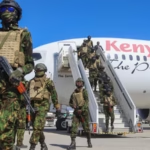
However, despite its ambition, the roadmap raises several questions. Haiti is already the focus of multiple international initiatives: the CARICOM Group of Eminent Personalities (GPE), the Kenya-led Multinational Security Support Mission (MMAS), UN mandates and specialized agencies, as well as programs from the IDB, the Pan American Health Organization (PAHO), and the Inter-American Institute for Cooperation on Agriculture (IICA). Experts warn of overlapping initiatives, excessive bureaucracy, and continued reliance on foreign donors.
The challenge remains immense. The plan’s success will depend as much on the effective mobilization of funding as on coordination among donors, national authorities, civil society, and the diaspora. While the OAS emphasizes solidarity and international cooperation, the Haitian population is primarily awaiting tangible results regarding security, living conditions, and the ability to determine its own future.
In summary, the OAS roadmap is both ambitious and necessary, but it faces the same obstacles that have hindered previous initiatives. Haiti no longer has the luxury of theoretical plans; it needs concrete, coordinated action that addresses the real needs of its citizens.