

Iran publicly rejected the Trump administration’s ceasefire proposal and instead listed demands unlikely to gain U.S. approval. Major outlets, including CNBC, NPR, and Associated Press, as well as Iran’s Press TV and Fars News Agency, reported the exchange on March 25, 2026.
The rejection followed nearly four weeks of conflict that started on February 28, when the United States and Israel conducted joint strikes against Iran. In response, Iran blocked most Western and Arab shipping through the vital Strait of Hormuz, sharply raising global energy prices.
The United States transmitted a 15-point ceasefire plan to Tehran through Pakistani intermediaries, according to AP and Euronews. Pakistani officials said the proposal addressed sanctions relief, Iran’s nuclear program, limits on missile capabilities, and reopening the Strait of Hormuz. President Trump said Tuesday that negotiations with Iran were underway. Iran flatly denied this claim and insists it will not talk directly with Washington. Any communication, they say, must pass through third parties.
What Tehran Answered
Iran’s state broadcaster Press TV, citing a senior Iranian political-security official, published Tehran’s five-point counteroffer on Wednesday. It is as follows, as reported by CNBC and confirmed by multiple outlets:
First, Iran demands a complete halt to what it calls “aggression and assassinations” by the opposing side. Second, Iran wants binding mechanisms that would guarantee war will not be reimposed. Third, Iran requests that the United States and its allies pay war reparations. Fourth, Iran seeks a simultaneous end to fighting across all fronts, including groups allied with Tehran. Fifth, Iran insists on formal international recognition of its sovereignty over the Strait of Hormuz, which Press TV called Iran’s “natural and legal right.”
The same official told Press TV that Iran “will end the war when it decides to do so and when its own conditions are met,” according to Euronews. A separate source quoted by the Fars News Agency was even more categorical: “Iran does not accept a ceasefire. Basically, it is not logical to enter into such a process with those who violate the agreement,” the source said, according to a translation cited by CNBC.
The Strait: The Demand Washington Cannot Accept
Of Iran’s five conditions, the demand for sovereignty over the Strait of Hormuz is almost certainly the most difficult for the United States to consider because it would grant Iran control over a vital global oil corridor. Under international maritime law, the strait — which runs between the Iranian and Omani coasts — is treated as an international waterway through which all vessels have the right of transit passage. The United States has long held that position.
Trump signaled the difficulty on Monday, suggesting the strait could be jointly controlled—”me and the ayatollah”—as CNBC reported. Iran’s full sovereignty demand goes beyond this, seeking not shared oversight but uncontested Iranian legal authority over the passage.
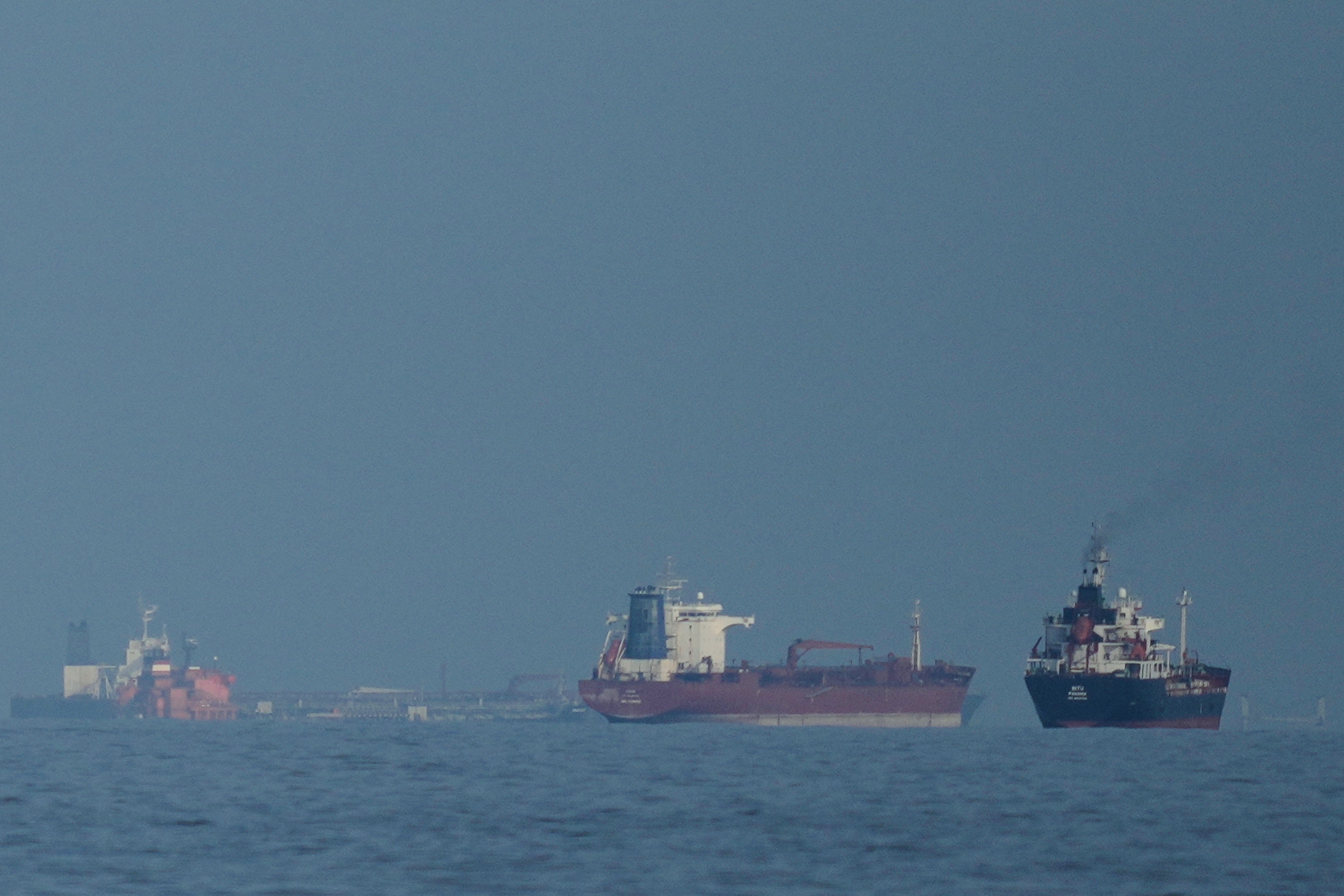
More than 1,000 ships, most of them oil tankers, are stranded near the strait, according to NPR. NPR also reported that about 20,000 seafarers are caught in the standoff. Iran has recently allowed vessels from neutral countries, such as those linked to Pakistan and India, to pass. Ships linked to the United States, Israel, and their allies remain blocked.
The International Energy Agency has warned that the resulting oil price surge is now more severe than the combined energy shocks of 1973 and 1979, as reported in previous CTN coverage of the conflict.
Diplomacy Through Third Parties
Even though Iran rejects direct talks, diplomatic channels remain open. Pakistan delivered the U.S. proposal and may host indirect negotiations. Turkey and Oman are also involved, continuing their longstanding diplomatic roles.
Iran’s Foreign Ministry said Tuesday it would allow ships from “non-hostile” countries to pass through the strait. This is a limited opening but shows that Tehran has not ruled out negotiated arrangements, even as it publicly rejects American ceasefire terms.
Iran’s rejection of the American proposal came the same day its forces kept striking targets in the region. A drone attack caused a large fire at Kuwait International Airport on Wednesday, according to AP reporting cited by The Hill. Israeli strikes on Beirut and southern Lebanon continued overnight. Lebanon’s health ministry said at least 33 people were killed, including a three-year-old child, according to NPR. Israel has killed over 1,000 people in Lebanon this month and displaced more than one million, Lebanese authorities told NPR.
At least 1,000 soldiers from the U.S. Army’s 82nd Airborne Division are expected to deploy to the Middle East in the coming days, according to AP. The Pentagon is also sending about 5,000 additional Marines and thousands of sailors to the region.
According to previous CTN reporting based on New York Times sources, the death toll since February 28 has surpassed 2,000, the majority in Iran and Lebanon.
What It Means for the World Economy
For families in the Haitian diaspora and across the Caribbean, the consequences of a prolonged conflict are already tangible. Every week that the Strait of Hormuz remains closed or restricted adds to the cost of gasoline, cooking gas, electricity, food, and goods transported by sea. The energy shock does not stay in the Persian Gulf — it arrives at the pump, the grocery store, and the utility bill in Dorchester, in Little Haiti, and in Port-au-Prince.
Trump’s periodic hints at a diplomatic solution have produced temporary drops in oil prices — Tuesday’s suggestion of active negotiations sent prices down roughly 10 percent before Iran’s Wednesday rejection reversed some of those gains. Whether the back-and-forth between Washington and Tehran represents the beginning of a genuine peace process or a prolonged war of attrition remains unclear.
Source: CNBC