


Tension has escalated in Haiti. Four Salvadoran soldiers have been missing since Sunday, October 18, 2026, following an ambush on their armored vehicle in the Santo area of Croix-des-Bouquets, about a dozen kilometers from Port-au-Prince. The personnel — aviation technicians belonging to Task Force Freedom II, the Salvadoran contingent within the UN-mandated Gang Suppression Force (GSF) — were returning from a trip to buy food at a nearby market when they were attacked. The assailants used firearms and explosives, setting the vehicle on fire. Although all four managed to escape the burning vehicle, their trail has since gone cold, and both ground and air rescue attempts have met heavy fire from armed groups.
The Santo area is controlled by two of the country’s most powerful gangs: Chen Mechan and 400 Mawozo. According to multiple sources, the attack was likely carried out by Chen Mechan, with support from 400 Mawozo, which is led by Wilson Joseph, alias “Lanmò san Jou” (Death without Days), a gang leader wanted by the FBI. The two organizations, once rivals, now appear to be joining forces — a development that considerably complicates the security situation.
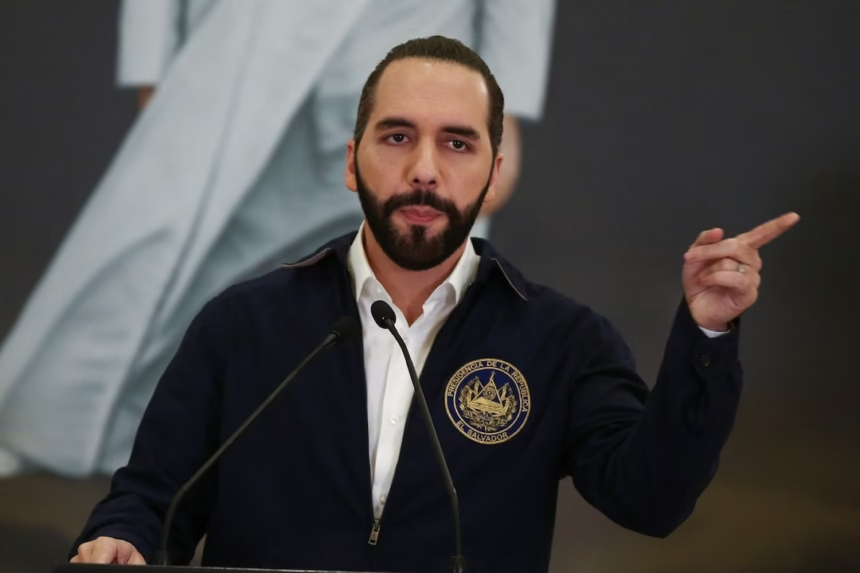
Faced with the crisis, Salvadoran President Nayib Bukele responded forcefully.
In a message posted on social media and delivered in Haitian Creole so that it would be understood directly by the captors, he issued an unequivocal ultimatum: “Men, mwen vle chèf gang yo, konprann yon bagay byen klè: atak jodi a pa anyen devan sa k ap vini si nou pa remèt toule kat otaj yo vivan. Epi pa pran pawòl nou yo pou menas san fondman. Nou deja fini ak gang yo nan El Salvador, e nou kapab fini ak nou tou.” In English: “But I want the gang leaders to understand one thing very clearly: today’s attack is nothing compared to what is coming if you do not return all four hostages alive. And do not take our words as empty threats. We have already finished off the gangs in El Salvador, and we can finish you off too.” The message, which echoes Bukele’s hardline policy against gangs at home, leaves no doubt about his determination to use force.
At the same time, the Salvadoran president was careful to clarify the status of his men, rejecting any justification for their capture: “Mesye nou kidnape yo pa konbatan. Yo se teknisyen nan domèn avyasyon ki fè pati misyon nou ann Ayiti, nan kad yon misyon entènasyonal. Misyon nou an gen sèlman pilòt ak pèsonèl teknik, nou kidnape yo an lach pandan yo t ap retounen apre yo te fin achte manje nan yon makèt.” In English: “The men you kidnapped are not combatants. They are aviation technicians who are part of our mission in Haiti, under the framework of an international mission. Our mission consists only of pilots and technical personnel; you kidnapped them, in cowardly fashion, as they were returning from buying food at a market.” The clarification seeks to delegitimize the gangs’ actions and to present the soldiers as civilian, technical personnel whose role is limited to medical evacuations.

Alongside these statements, a large-scale operation was launched on the night of Sunday, October 18, into Monday, October 19, and intensified on Wednesday, October 21.
The Haitian National Police (PNH), the Task Force, and the Gang Suppression Force (GSF) have joined forces to mount a major offensive in Croix-des-Bouquets, specifically targeting the strongholds of the Chen Mechan and 400 Mawozo gangs. Heavy gunfire and explosions were reported in the early morning hours, forcing residents to flee certain neighborhoods. The operation, which has mobilized specialized units, aims to dismantle the criminal networks and locate the four missing soldiers.
This joint show of force by Haitian and international forces underscores the urgency of the situation. As the search continues and Nayib Bukele’s ultimatum reverberates as a warning, pressure is mounting on the gangs of Port-au-Prince. The international community, speaking through the U.S. Ambassador to the UN, Mike Waltz, also voiced support for the forces involved, warning that “the days of Haitian gangs are numbered.” Bukele’s decision to go on the offensive marks a turning point in the handling of the Haitian crisis, in which the release of the hostages has become the precondition for any de-escalation.
https://www.facebook.com/CaribbeanNewsMedia