


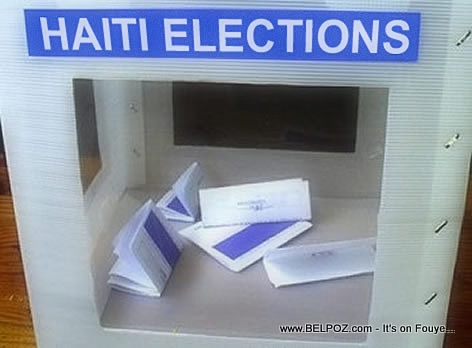
The Provisional Electoral Council (CEP) in Haiti officially released the updated electoral calendar in a press release dated October 28, 2026. Based on the promulgation of the Electoral Decree of October 6, 2026, which revises earlier texts, the document now sets the first round of the presidential, legislative, and popular-ratification elections for July 18, 2027, with the second round scheduled for October 4, 2027.
While the CEP states that the calendar is the product of consultations with the security forces, political actors, civil society, and the private sector, aimed at organizing elections that are “inclusive, credible, and transparent,” the postponement nonetheless carries major political, economic, and social consequences.
The first is the prolonging of an already lengthy transition. The country will have to wait several more months before it has elected leaders. As long as the elections are not held, institutions remain fragile and major decisions are made without a clear electoral mandate. The population continues to wait for leaders legitimized by the ballot, while political actors operate amid persistent uncertainty. This fuels distrust and weakens the credibility of institutions; it can also discourage investment and delay responses to security and social emergencies, even as the CEP itself promises rigor and professionalism.
The postponement also weighs heavily on candidates.
A campaign stretched over such a long period demands considerable financial resources: travel, campaign offices, communications, security, and logistics. Many candidates risk being financially exhausted even before the vote is held. Those with fewer resources could be forced to withdraw, or to rely on opaque funding, which would undermine the fairness of the competition. This financial strain threatens to turn the campaign into an endurance race reserved for the best-funded, at the expense of pluralism and the quality of democratic debate.

Politically, February 7, 2027, risks becoming a breaking point. Traditionally associated with the transfer of power in Haiti, the date could be marked by strong calls for the Prime Minister to step down, since he will not have honored the commitment to hold the first round on December 13, 2026, as previously scheduled. The opposition and several civil society organizations are expected to denounce the government’s failure to respect the announced calendar. Protests, blockades, and a crisis of legitimacy are to be feared. The head of government could be accused of prolonging his time in office by postponing the elections, even though the CEP cites technical and security constraints to justify the delay.
The new calendar nevertheless sets out a series of sensitive steps: updating the electoral register, recruiting polling supervisors, preparing tablets, installing departmental tabulation centers, acquiring sensitive materials, and conducting simulations at voting centers. Any delay in one of these steps could trigger yet another postponement, and citizens’ trust will not withstand unfulfilled promises indefinitely.
It is therefore urgent that the authorities clearly explain the reasons for the postponement, publish a credible timeline, and guarantee funding for the process. The CEP has reaffirmed its willingness to move forward through dialogue and respect for the law. But without concrete results, the country will go on waiting for elected leaders, candidates will be worn down, and the political crisis risks deepening around February 7, 2027. Haiti cannot afford an endless transition.

https://ctninfo.com/haiti-long-postp…kens-the-process/
https://www.facebook.com/CaribbeanNewsMedia