

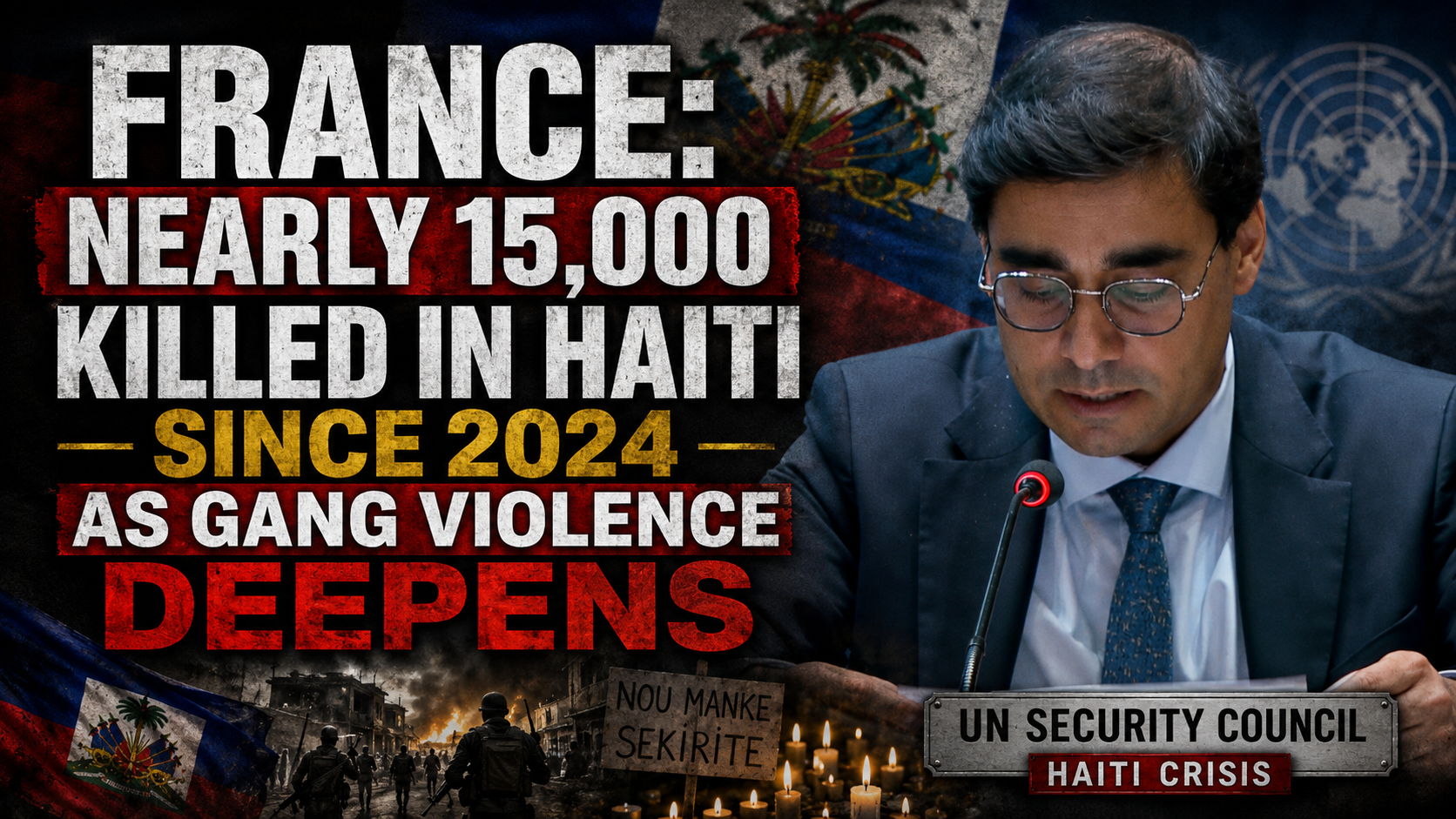
France has called for a stronger international response to Haiti’s worsening security and humanitarian crisis, warning that nearly 15,000 people have been killed since the beginning of 2024 as armed gangs expand their capacity to carry out large-scale attacks.
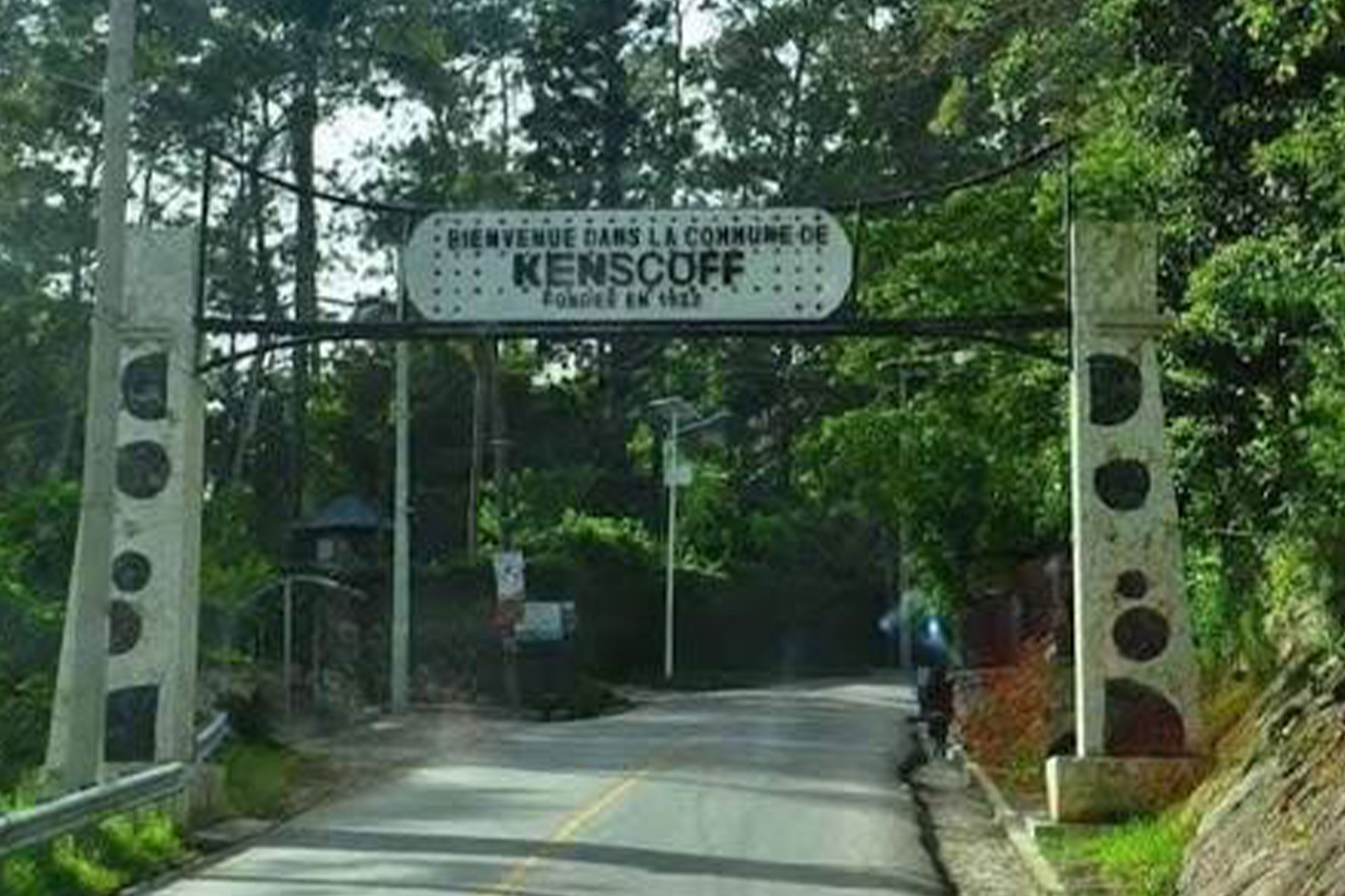
Speaking before the United Nations Security Council during a special session about the situation in Haiti, Jay Dharmadhikari, chargé d’affaires of France’s mission to the United Nations in New York, pointed to the recent massacre in Kenscoff, in the hills above Port-au-Prince, as another devastating example of the violence confronting Haitians.
“This new massacre in Kenscoff, in the hills above Port-au-Prince, is a tragic reminder of the fate of Haitian women and men who endure the violence of criminal gangs every day, and of these gangs’ capacity to carry out large-scale attacks,” Dharmadhikari told the Council.
He added bluntly: “This situation has gone on far too long.”
His remarks came during a Security Council discussion on Haiti’s deteriorating security situation and the international effort to restore state authority, curb gang violence and create conditions for a credible political transition.

Dharmadhikari presented a grim assessment of the human toll.
“Since the beginning of 2024, nearly 15,000 people have lost their lives in Haiti,” he said.
He also said the number of displaced people has increased by more than 325%, while more than half of Haiti’s population now requires humanitarian assistance.
But the French diplomat warned against viewing the crisis only through statistics.
“Let us not forget, behind these figures, the plight of women who are victims of unspeakable sexual violence, nor that of children who are abducted, recruited and sacrificed by criminal gangs,” he said.

His comments underscored the multidimensional nature of Haiti’s emergency, where gang violence has become intertwined with displacement, hunger, sexual violence, the recruitment of children and the weakening of public institutions.
Dharmadhikari said the scale of the crisis requires urgent action to restore security and the rule of law.
“This situation requires us to act in response to the urgent need to restore security and the rule of law in Haiti,” he said.
He pointed to the Security Council’s decision to establish a gang-suppression force backed by a United Nations support structure, saying progress had been made in putting the new international security architecture in place.
France, he said, welcomed the commitment of troop-contributing countries.
However, Dharmadhikari acknowledged that the force has not yet been fully deployed or achieved the impact expected of it.
“The force has not yet been able to deploy fully, and it must produce the expected results,” he said.
France does not believe the international community should abandon the current strategy. Instead, Dharmadhikari argued that countries should intensify their efforts to implement it.
“The way forward is not to change strategy,” he said. “It is to intensify our efforts to implement the strategy we have already adopted.”
According to the French representative, the first major step will come in September, when the Security Council is expected to consider renewing the mandate of the gang-suppression force.
France also wants international partners to continue supporting the deployment of personnel and equipment. Dharmadhikari said Paris continues contributing to the trust fund supporting the mission.
France seeks tougher sanctions against gang supporters
A second priority, according to Dharmadhikari, is renewing the international sanctions regime in October.
France wants sanctions to be used more aggressively to disrupt the supply of weapons to gangs and cut off the financial networks sustaining them.
“The second step will be the renewal of the sanctions regime in October in order to obstruct the flow of weapons to criminal gangs and dry up the financial flows that sustain them,” he said.
But Dharmadhikari argued that sanctions should not be limited to individuals directly participating in gang violence.
“For this to have an effect, sanctions must be extended to individuals providing political or financial support to criminal gangs,” he said.
That statement reflects increasing international concern that Haiti’s armed groups do not operate solely through street-level violence but can also benefit from broader political, economic and financial networks.
While strongly supporting immediate security measures, France cautioned that policing and military operations alone cannot resolve Haiti’s deeper crisis.
“This immediate security response is essential, but it is not sufficient to build lasting peace in Haiti,” Dharmadhikari said.
He called for a broader strategy strengthening Haiti’s institutions, particularly the police and justice systems.
France, he said, supports the work of the United Nations Integrated Office in Haiti, or BINUH, in efforts to combat impunity and strengthen specialized judicial structures.
Dharmadhikari also said France is prepared to work with other Security Council members on proposals from the U.N. Secretary-General concerning a program of disarmament, dismantling and reintegration.
The ultimate objective, according to France, is not simply to suppress armed groups but to rebuild institutions capable of enforcing the law over the long term.
Dharmadhikari stressed that international assistance cannot replace action by Haitian authorities.
France is encouraging Haiti’s leaders to increase the capacity of the Haitian National Police and the country’s armed forces while strengthening controls over borders, weapons and ammunition.
He also emphasized Haitian authorities’ responsibility to complete the country’s political transition.
“It is obviously their responsibility to bring the political transition process to completion through the holding of credible elections necessary for restoring the country’s democratic institutions and ending massive human rights violations,” he said.
Haiti’s political crisis and security collapse have remained closely connected, with armed groups controlling or contesting territory while the country struggles to rebuild functioning democratic institutions.
‘Transform solidarity into tangible results’
Dharmadhikari closed his remarks by calling on the international community to move beyond expressions of concern and deliver measurable improvements for Haitians.
“The solidarity of the international community is real,” he said. “Let us transform it into tangible results on the ground in order to give the Haitian population the opportunity to build a different future.”
France’s message was both urgent and cautionary: the international framework to confront Haiti’s armed groups is already in place, but Paris believes it now needs personnel, equipment, financing, stronger sanctions, and sustained political commitment to produce results.
https://ctninfo.com/?p=44407&preview=true
https://www.facebook.com/CaribbeanNewsMedia