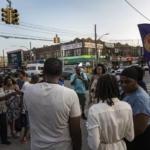



El Salvador has deployed around 1,000 soldiers to Haiti after four of its troops serving in a United Nations-backed force went missing during a gang ambush on the edge of the capital, a Haitian security official told Reuters, in a sudden escalation of foreign military involvement in a country whose capital is largely controlled by armed groups.
The Salvadoran contingent arrived on a series of flights in the days after the October 18 ambush, the official said, speaking on condition of anonymity because of the sensitivity of the security situation. Much about the deployment remains unsettled: who will command the new troops, how long they will stay in Haiti, and how many more could follow.
The Haitian and Salvadoran governments did not immediately respond to Reuters’ requests for comment.
Part of the airlift was carried out with U.S. help. A U.S. military official said the U.S. Southern Command had provided C-130 transport planes to assist in moving some of the Salvadoran troops to Haiti, according to Reuters. Other flights between San Salvador and Port-au-Prince, both commercial and military, appeared on the tracking website Flightradar24, and some were reported by the Miami Herald.
The deployment grew out of the search for four Salvadorans who have not been seen since the October 18 ambush.
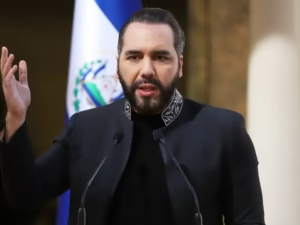
El Salvador’s president, Nayib Bukele, announced a military operation last week to recover them but did not say at the time how many troops he would commit. The men disappeared after leaping from a burning vehicle during the attack, and Bukele has said they were Gang Suppression Force air force technicians returning to base from a market — not combat troops — whom he believes are being held hostage by criminal groups.

No Haitian gang has claimed the attack. Wilson Joseph, the leader of the gang known as 400 Mawozo, has released videos denying that his group is holding the Salvadorans and rejecting responsibility for what became of them. Before the ambush, El Salvador had contributed at least 124 personnel to the UN-backed force, according to a United Nations report; Bukele has said they were pilots and technicians sent to evacuate injured soldiers rather than to fight.
The reinforcements arrive as the Gang Suppression Force has struggled to meet either its size or its goals.
A year into its mandate, the force has reached roughly 2,000 troops — just over a third of its planned strength — and has had limited effect on security in Haiti, Reuters reported. The Salvadoran surge would represent a significant share of personnel on the ground, though its command and legal relationship to the existing UN-backed mission were not clear.
Haitian authorities have looked beyond the multinational force as well. While awaiting fuller deployments, the government contracted a private military company run by Erik Prince, the founder of Blackwater and an ally of U.S. President Donald Trump, which has carried out anti-gang drone operations in Haiti since 2025, according to Reuters.
The crisis the Salvadorans are entering has been years in the making. Armed gangs have steadily expanded their hold over Port-au-Prince and surrounding areas through extortion and violent assaults, displacing nearly 1.5 million people and hollowing out the country’s economy and institutions. Since 2022, Haiti’s leaders have asked for international security help — despite a long and painful history of foreign interventions in the country — after the 2021 assassination of President Jovenel Moïse touched off a surge in gang violence and left a vacuum of authority. Successive transitional governments have repeatedly postponed elections, citing the violence, and the terms of the country’s lawmakers were allowed to expire.
The region is watching the deployment closely.
President Luis Abinader of the Dominican Republic, the only country that shares a land border with Haiti, said at a news conference on Monday that his government was prepared to provide logistical support to the arriving Salvadoran troops.

Bukele’s decision to project force abroad flows from a record that has made him popular at home. He has built broad domestic support through aggressive anti-crime policies that several other right-wing governments in the Americas have sought to copy — an approach that human rights groups say has come at the cost of due process and has been accompanied by hundreds of deaths in custody. For Haiti and its diaspora, the immediate questions are more basic: whether the expanded deployment can do what the Gang Suppression Force so far has not, and whether the four missing Salvadorans will be found. As of Tuesday, they remained unaccounted for.
https://ctninfo.com/el-salvador-send…iti-after-ambush/
Source: Reuters
AI Use Policy:
Some of CTN’s journalists are not native English speakers and draft their work in French or Haitian Creole. We then use AI-assisted translation software to produce the English versions, and traces of machine-generated phrasing may occasionally remain. Every article — in any language — is written, reviewed, and edited by CTN’s staff writers and editors, who remain responsible for its accuracy. CTN also uses AI to convert text into audio.